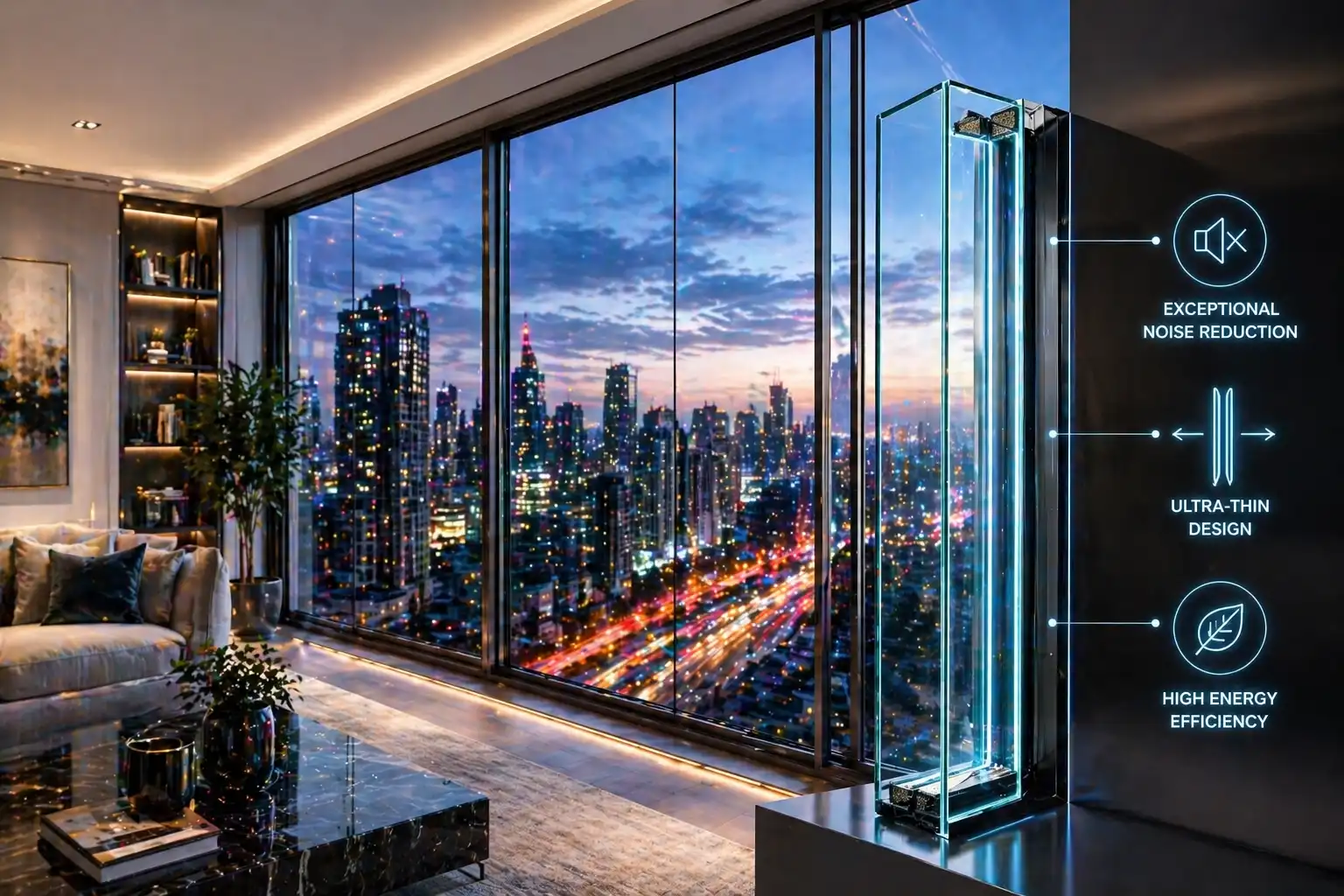
Creating a peaceful home environment is no longer a luxury—it’s a necessity. Whether you live near a busy road, construction site, or in a bustling urban area, unwanted noise can disrupt your comfort, sleep, and overall well-being. This is where noise cancelling windows come into play. Designed with advanced technology and smart materials, these windows are built to significantly reduce outside noise and create a calm indoor atmosphere.
In this comprehensive guide, we’ll explore the most advanced types of noise cancelling window, how they work, and why they are a must-have in modern homes.
Why Noise Cancelling Windows Are Essential Today
Modern lifestyles demand comfort, and sound control plays a major role in achieving it. Constant exposure to noise can lead to:
- Sleep disturbances
- Reduced productivity
- Increased stress levels
- Difficulty concentrating
Installing noise cancelling windows is one of the most effective ways to tackle these issues without compromising on design or ventilation.
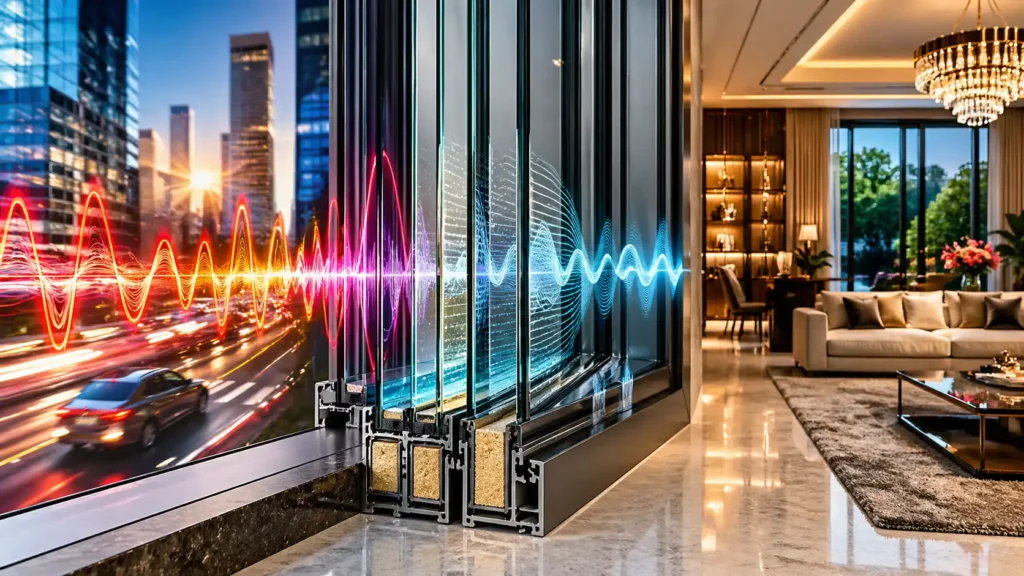
How Noise Cancelling Windows Work
Before diving into the different types, it’s important to understand the basic principle behind noise cancelling windows.
They work using a combination of:
- Multiple glass layers – to block sound waves
- Air or gas gaps – to absorb vibrations
- Laminated glass – to dampen sound transmission
- Tight seals – to prevent noise leakage
The result is a significant reduction in external noise, sometimes by up to 90%, depending on the window type.
Quick Comparison of Noise Cancelling Window Types
| Window Type | Noise Reduction Level | Best For | Cost Level |
|---|---|---|---|
| Double Glazed | Medium | Residential areas | Moderate |
| Triple Glazed | High | Busy urban locations | High |
| Laminated Glass | High | High traffic zones | Moderate |
| Acoustic Windows | Very High | Studios & offices | Premium |
| Secondary Glazing | High | Renovation projects | Moderate |
1. Double Glazed Noise Cancelling Windows
Double glazed windows are one of the most popular choices for homeowners seeking a quieter environment.
Key Features
- Two layers of glass separated by an air gap
- Reduces moderate external noise
- Improves insulation
Why Choose Them
These noise cancelling windows are ideal for suburban homes where noise levels are noticeable but not extreme. They offer a balance between cost and performance.
2. Triple Glazed Windows
If you live in a high-traffic area, triple glazing is a game changer.
Key Features
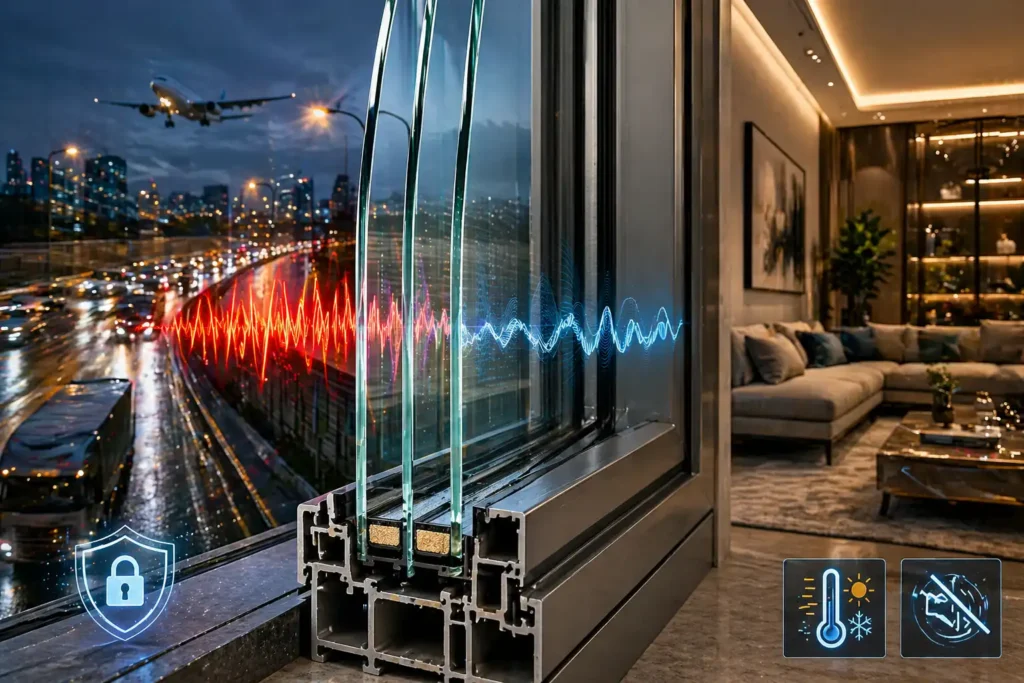
- Three glass panes
- Two insulating air or gas layers
- Superior soundproofing
Benefits
- Blocks heavy traffic noise
- Enhances energy efficiency
- Adds extra security
These advanced noise cancelling windows are perfect for homes located near highways or airports.
3. Laminated Glass Windows
Laminated glass windows are specifically engineered for sound reduction.
How They Work
They use a special interlayer (usually PVB) that absorbs sound vibrations.
Advantages
- Excellent noise reduction
- Increased safety (shatter-resistant)
- UV protection
These noise cancelling windows are widely used in both residential and commercial spaces.
4. Acoustic Windows
Acoustic windows are designed with precision to deliver maximum soundproofing.
What Makes Them Special
- Combination of different glass thicknesses
- Advanced sealing technology
- Custom-built designs
Ideal For
- Recording studios
- Home offices
- Apartments in noisy cities
Among all noise cancelling windows, these offer some of the highest performance levels.
5. Secondary Glazing Windows
Secondary glazing involves adding an extra window layer inside your existing one.
Key Benefits
- Cost-effective solution
- Minimal structural changes
- High noise reduction
Best Use Case
Perfect for older homes where replacing windows isn’t feasible, these noise cancelling windows provide excellent results without major renovation.

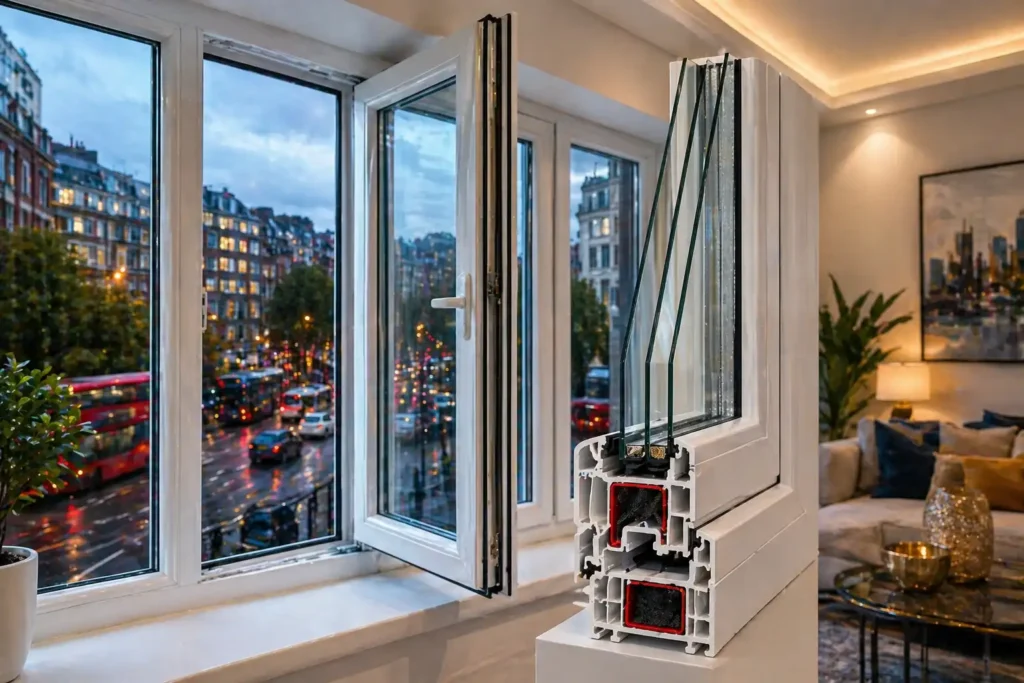
6. UPVC Noise Cancelling Windows
UPVC frames play a crucial role in reducing sound leakage.
Features
- Airtight sealing
- Durable material
- Low maintenance
Why They Work
When combined with double or triple glazing, UPVC frames enhance the effectiveness of cancelling windows by preventing gaps where sound can enter.
Design Tips for Maximum Noise Reduction
Even the best noise cancelling need proper installation and design to perform effectively.
1. Ensure Proper Sealing
- Use high-quality rubber gaskets
- Seal all edges properly
2. Choose the Right Glass Thickness
- Thicker glass blocks more sound
- Combine different thicknesses for better results
3. Avoid Gaps and Leaks
- Even small gaps can reduce efficiency
- Professional installation is highly recommended
Common Mistakes to Avoid
When investing in noise cancelling windows, avoid these common errors:
- Choosing design over performance
- Ignoring frame quality
- Poor installation
- Not considering room orientation
Benefits Beyond Noise Reduction
Installing noise cancelling offers multiple advantages beyond just silence:
1. Energy Efficiency
- Reduces heat loss
- Lowers electricity bills
2. Improved Comfort
- Stable indoor temperature
- Better sleep quality
3. Increased Property Value
- Attractive feature for buyers
- Modern home upgrade
Who Should Invest in Noise Cancelling Windows?
These windows are ideal for:
- City apartment owners
- Homes near highways or railways
- Work-from-home professionals
- Families seeking better sleep quality
7. Acoustic Glass Cancelling Windows
Acoustic glass is specially engineered to reduce sound transmission more effectively than standard glass.
Key Features
- Multiple laminated layers
- Sound-dampening interlayer
- Superior vibration control
Why It Works
These noise cancelling windows are designed to disrupt sound waves, making them ideal for extremely noisy environments like city centers.
8. Vacuum Insulated Cancelling Windows
Vacuum-insulated windows represent cutting-edge innovation in soundproofing.
How They Work
They use a vacuum layer between glass panes, eliminating the medium through which sound travels.
Benefits
- Exceptional noise reduction
- Ultra-thin design
- High energy efficiency
These advanced noise cancelling windows are perfect for modern, high-performance homes.
9. Wooden Frame Noise Cancelling Windows
Wood may seem traditional, but it’s surprisingly effective in sound insulation.
Advantages
- Natural sound absorption
- Elegant appearance
- Eco-friendly option
When paired with double or triple glazing, these noise cancelling windows provide both beauty and functionality.

10. Aluminum Acoustic Windows
Modern aluminum frames are now designed with thermal and acoustic breaks.
Features
- Strong and durable
- Slim profiles
- Enhanced sealing technology
These noise cancelling windows are ideal for contemporary homes that prioritize aesthetics without compromising performance.
11. Sliding Noise Cancelling Windows with Seals
Sliding windows can also be optimized for sound reduction with proper sealing.
Key Enhancements
- Brush seals
- Double-track systems
- Laminated glass panels
Best For
Apartments and compact spaces, these noise cancelling windows offer convenience along with improved sound insulation.
12. Smart Noise Cancelling Windows
Technology has taken window design to the next level.
What Makes Them Smart
- Active noise control technology
- Sensors to detect sound frequency
- Automatic adjustments
These futuristic noise cancelling windows actively counteract external noise, offering a next-generation solution for urban living.
Cost Breakdown of Noise Cancelling Windows
Understanding the cost helps you plan your investment wisely.
| Window Type | Approx Cost Range (₹) | Lifespan | Maintenance Level |
|---|---|---|---|
| Double Glazed | 500–1200/sq ft | 15–20 years | Low |
| Triple Glazed | 800–2000/sq ft | 20–25 years | Low |
| Laminated Glass | 600–1500/sq ft | 20 years | Low |
| Acoustic Windows | 1200–3000/sq ft | 25+ years | Moderate |
| Vacuum Insulated | 2000–4000/sq ft | 25+ years | Low |
Investing in high-quality noise cancelling windows may seem expensive initially, but the long-term benefits outweigh the cost.
Installation Tips for Maximum Performance
Proper installation is just as important as choosing the right window.
1. Hire Professionals
- Ensures airtight fitting
- Prevents sound leakage
2. Use Quality Sealants
- Silicone or rubber seals work best
- Avoid low-quality materials
3. Check Wall Insulation
- Windows alone aren’t enough
- Combine with insulated walls for best results
Correct installation enhances the efficiency of your noise cancelling windows significantly.

Maintenance Guide for Long-Lasting Results
To keep your noise cancelling windows performing at their best:
Regular Cleaning
- Use mild cleaners
- Avoid harsh chemicals
Inspect Seals
- Replace worn-out gaskets
- Check for gaps
Lubricate Moving Parts
- Especially for sliding windows
- Ensures smooth operation
Consistent maintenance ensures your noise cancelling windows continue to provide optimal performance for years.
Additional Ways to Enhance Soundproofing
While noise cancelling windows are highly effective, combining them with other elements can improve results:
- Heavy curtains
- Wall panels
- Carpets and rugs
- Door seals
These additions create a layered sound barrier, further reducing noise levels.
Frequently Asked Questions
1. Do noise cancelling windows completely block sound?
No, but high-quality noise cancelling windows can reduce noise by up to 80–90%.
2. Are they worth the investment?
Absolutely. They improve comfort, health, and property value.
3. Which type is best for heavy traffic noise?
Triple glazed or acoustic noise cancelling windows are the most effective.
4. Can I install them in an existing home?
Yes, options like secondary glazing make it easy to upgrade without major renovations.
Final Thoughts
Transforming your home into a peaceful retreat is entirely possible with the right choices. From double glazing to smart technology, today’s noise cancelling windows offer a wide range of solutions for every need and budget.
Whether you’re aiming for better sleep, improved productivity, or simply a quieter lifestyle, investing in high-quality noise cancelling windows is a decision you won’t regret.
By combining advanced window technologies with proper installation and maintenance, you can create a truly serene living environment—no matter how noisy the outside world may be.