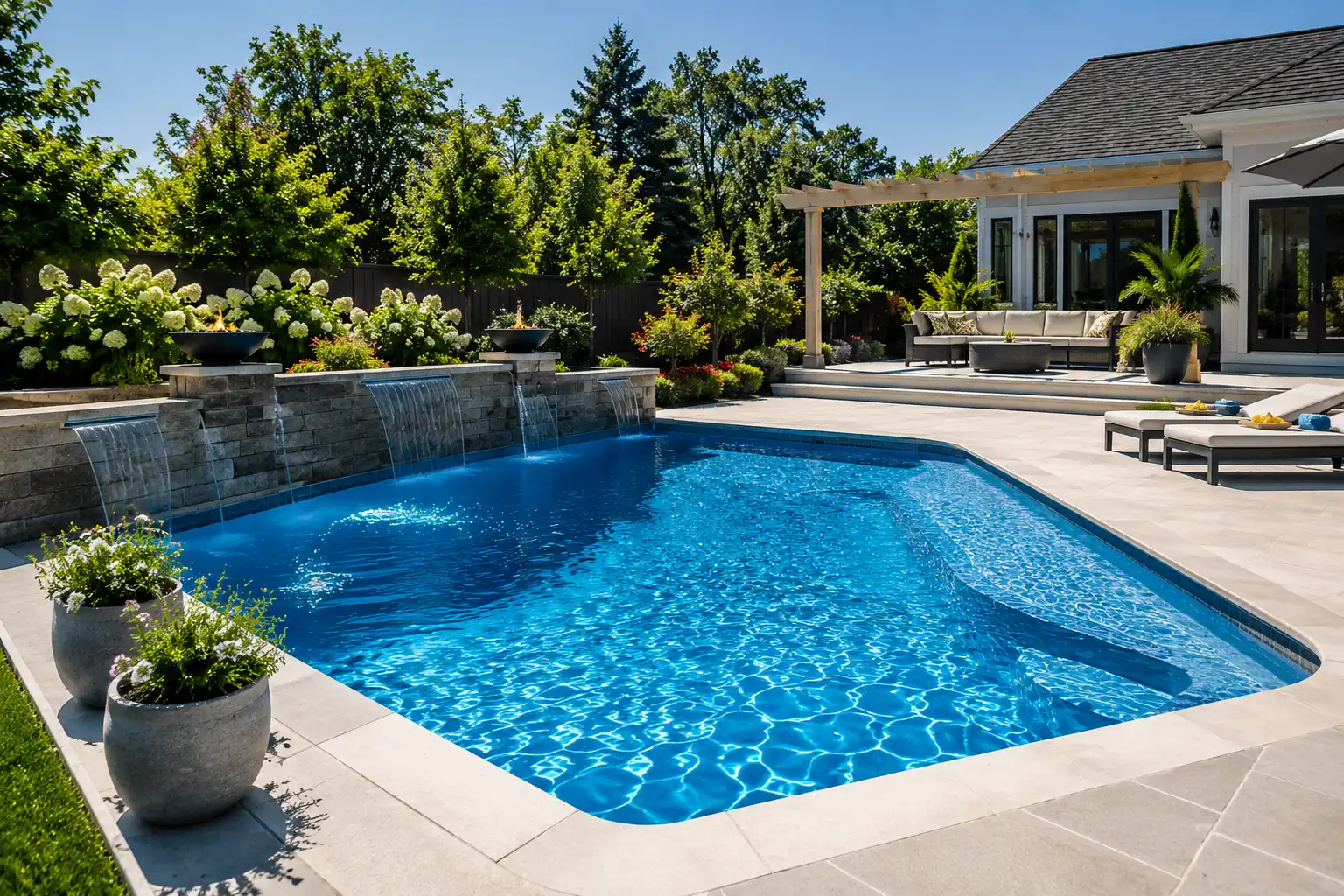
If you’re planning to build a backyard oasis, fiberglass pool swimming has become one of the smartest investments for homeowners. Fiberglass swimming pools are known for their durability, elegant appearance, quick installation, and low maintenance requirements. Whether you’re looking for a family-friendly pool, a luxurious outdoor retreat, or a fitness-focused lap pool, fiberglass pools offer a perfect balance of beauty and functionality.
Unlike traditional concrete pools that require months of construction or vinyl liner pools that need periodic liner replacements, fiberglass pools are manufactured as a single shell and installed within days or weeks. Their smooth, non-porous surface helps resist algae growth, reduces chemical consumption, and provides a comfortable swimming experience for people of all ages.
In recent years, advancements in manufacturing technology have expanded the variety of fiberglass pool designs available. Homeowners can now choose from dozens of shapes, sizes, colors, tanning ledges, built-in spas, and premium finishes that complement every style of home. With rising labor costs and an increasing demand for energy-efficient outdoor living spaces, fiberglass pools continue to gain popularity across residential properties worldwide.
This comprehensive guide covers everything you need to know about fiberglass pool swimming, from understanding how these pools are made to comparing them with other pool types, estimating installation costs, maintaining crystal-clear water, improving safety, selecting the right accessories, and avoiding common buying mistakes. Whether you’re purchasing your first swimming pool or upgrading an existing backyard, this guide will help you make an informed decision.
What Is Fiberglass Pool Swimming?
Fiberglass pool swimming refers to swimming in a pool that is built using a pre-manufactured fiberglass shell rather than concrete, gunite, or vinyl liner materials. These pools are factory-made using multiple layers of fiberglass reinforced with durable resin, creating a strong, waterproof structure that is transported to the installation site as a single piece.
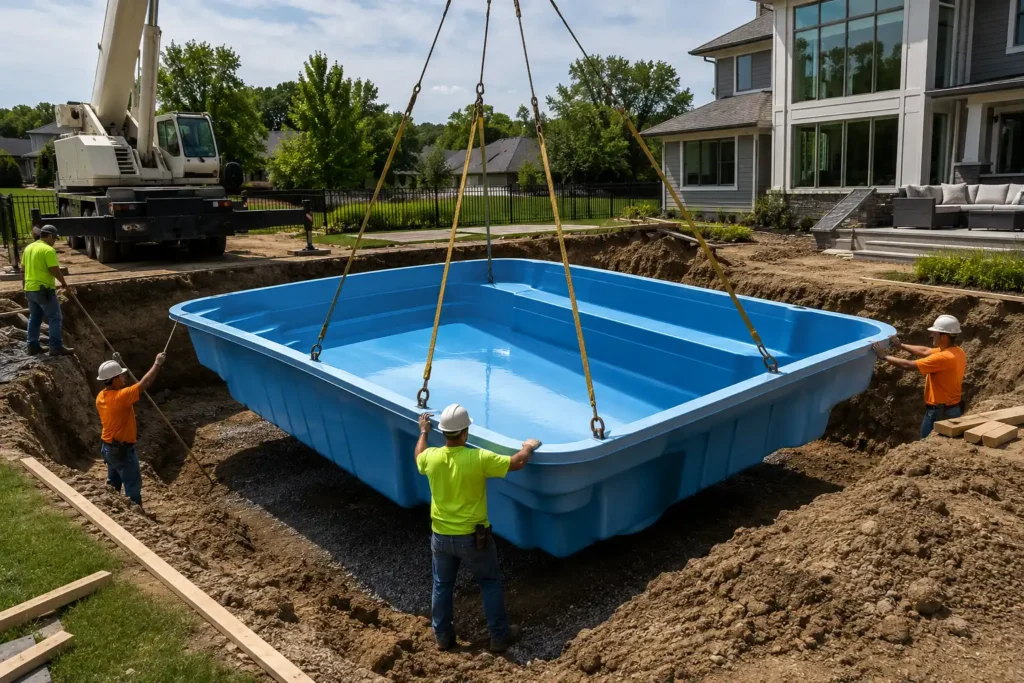
Once delivered, the fiberglass shell is carefully placed into an excavated area using specialized equipment. Plumbing, filtration, electrical systems, and decking are then completed before the pool is filled with water and prepared for use.
Fiberglass swimming pools are widely recognized for their:
- Smooth and comfortable surface
- Exceptional durability
- Quick installation process
- Low maintenance requirements
- Resistance to algae growth
- Long service life
- Attractive modern designs
- Excellent energy efficiency
Unlike concrete pools, which require on-site construction, fiberglass pools arrive nearly complete from the factory. This significantly reduces installation time and minimizes disruption to your property.
Today, fiberglass pools are available in numerous sizes and styles, making them suitable for compact urban homes, suburban backyards, luxury villas, vacation properties, hotels, and wellness centers.
Why Fiberglass Pool Swimming Is Becoming So Popular
The popularity of fiberglass pool swimming has grown dramatically over the past decade. Homeowners increasingly prioritize convenience, lower maintenance costs, and faster project completion, making fiberglass pools an appealing alternative to traditional options.
Several factors have contributed to this growing demand.
Fast Installation Saves Time
One of the biggest reasons homeowners choose fiberglass pools is the remarkably short installation timeline.
Since the shell is manufactured before arriving at your property, installers simply prepare the excavation, place the shell, connect the plumbing and electrical systems, complete the decking, and fill the pool.
Many fiberglass pools can be installed within two to four weeks, depending on site conditions and local regulations.
This means homeowners can begin enjoying their pool much sooner than with traditional concrete construction.
Lower Maintenance Requirements
Fiberglass pools require significantly less maintenance throughout their lifespan.
Their non-porous gel coat surface discourages algae growth, reducing the need for frequent brushing, heavy chemical treatments, and aggressive cleaning routines.
As a result, pool owners typically spend less time maintaining the pool and more time enjoying it.
Long-Term Cost Savings
Although the initial purchase price may be similar to or slightly higher than some pool options, fiberglass pools often cost less to own over time.
Savings come from:
- Reduced chemical usage
- Lower electricity consumption
- Fewer repairs
- Minimal resurfacing requirements
- Less frequent professional maintenance
These ongoing savings make fiberglass pools an attractive long-term investment.
Comfortable Swimming Experience
Comfort is another major advantage.
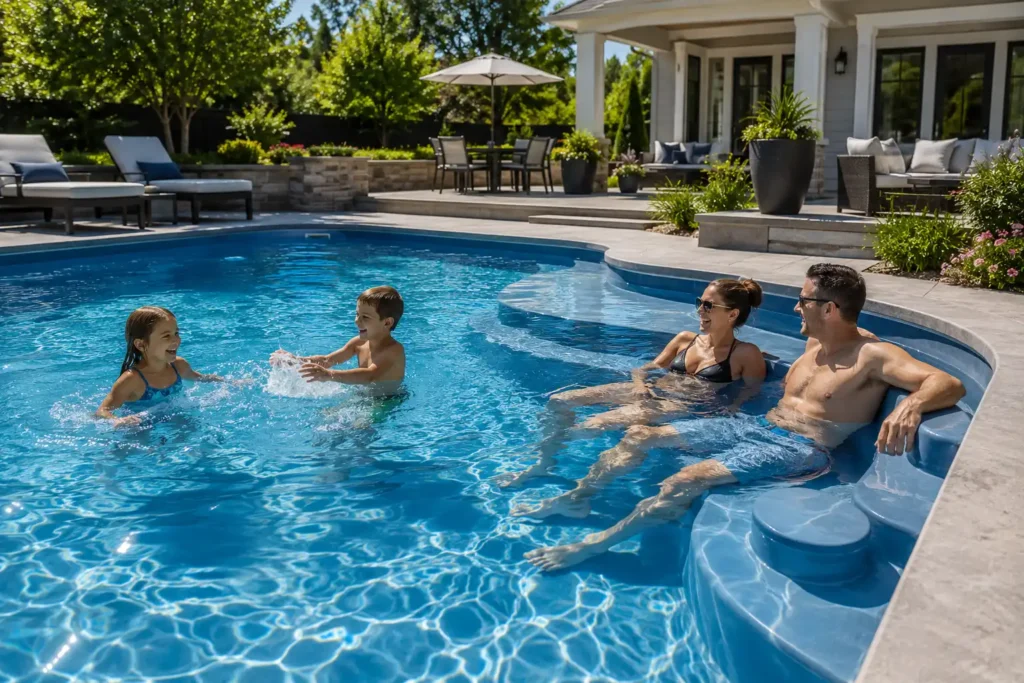
The smooth fiberglass surface is gentle on the skin, reducing scrapes, cuts, and irritation that can occur with rough concrete finishes.
Families with young children especially appreciate the safer, more comfortable surface during play and swimming lessons.
Attractive Modern Designs
Manufacturers now produce fiberglass pools in numerous premium styles.
Popular design options include:
- Rectangular pools
- Modern geometric pools
- Freeform pools
- Roman-end pools
- Kidney-shaped pools
- Lap pools
- Plunge pools
- Built-in spa combinations
- Beach entry designs
- Tanning ledges
Many models also feature integrated seating, entry steps, benches, and sun shelves for enhanced comfort.
Who Should Choose Fiberglass Pool Swimming?
Fiberglass pools are suitable for a wide range of homeowners and lifestyles.
Families
Parents appreciate the smooth surfaces, built-in safety features, shallow tanning ledges, and easy maintenance.
Children can enjoy swimming with reduced risk of scraped knees and elbows compared to rough concrete surfaces.
Busy Professionals
People with demanding work schedules often prefer fiberglass pools because they require less weekly maintenance.
Instead of spending weekends cleaning the pool, owners can spend more time relaxing with family and friends.
Fitness Enthusiasts
Many fiberglass pools are designed specifically for exercise.
Lap pools provide enough length for swimming workouts, while swim jet systems create adjustable resistance for continuous swimming in compact spaces.
Luxury Homeowners
Premium fiberglass pools complement modern architecture beautifully.
High-end finishes, LED lighting, waterfalls, spas, and elegant landscaping create resort-style outdoor living spaces that enhance property value.
Retirees
Older homeowners often prioritize easy maintenance and lower ownership costs.
Fiberglass pools provide both while offering a comfortable space for relaxation, water aerobics, and low-impact exercise.
History and Evolution of Fiberglass Pool Swimming
Understanding the history of fiberglass pool swimming helps explain why today’s fiberglass pools are considered among the most advanced residential swimming pool options available.
Early Swimming Pool Construction
Before fiberglass technology became available, nearly every permanent swimming pool was built using concrete.
While concrete pools allowed unlimited customization, they also required extensive construction, long curing times, higher maintenance, and regular resurfacing.
Although durable, concrete pools demanded considerable time and money throughout their lifespan.
Introduction of Fiberglass Technology
Fiberglass began gaining popularity in various industries during the mid-20th century because of its exceptional strength, lightweight properties, and resistance to corrosion.
Manufacturers soon recognized that fiberglass could also revolutionize swimming pool construction.
The first fiberglass pools were relatively simple in design and available in limited sizes.
However, they demonstrated significant advantages over traditional pool construction methods.
Technological Improvements
Modern manufacturing techniques have dramatically improved fiberglass pool quality.
Today’s premium pools feature:
- Advanced composite materials
- UV-resistant gel coats
- Stronger structural reinforcement
- Improved color technology
- Enhanced impact resistance
- Better flexibility for changing soil conditions
These innovations have made fiberglass pools more durable, visually appealing, and longer-lasting than earlier generations.
Growing Worldwide Demand
The increasing popularity of outdoor living spaces has fueled demand for fiberglass swimming pools around the world.
Homeowners now seek backyard environments that combine entertainment, wellness, fitness, and relaxation.
Fiberglass pools perfectly align with these lifestyle trends by offering:
- Faster installation
- Modern aesthetics
- Reduced maintenance
- Lower operating costs
- Improved energy efficiency
- Long-lasting performance
As manufacturing technology continues to evolve, fiberglass pools are expected to remain one of the fastest-growing segments of the residential swimming pool industry.
How Fiberglass Swimming Pools Are Made
One of the reasons fiberglass pool swimming offers exceptional durability is the highly controlled manufacturing process. Unlike concrete pools that are built outdoors under varying weather conditions, fiberglass pools are produced inside specialized factories where every stage is carefully monitored for quality and consistency.
Mold Creation
The manufacturing process begins with a precision-engineered mold that determines the pool’s final shape, dimensions, depth, seating areas, steps, and integrated features.
These molds are designed to produce identical pools with accurate measurements, ensuring every shell meets strict quality standards.
Manufacturers offer molds in dozens of designs, ranging from compact plunge pools to expansive family-sized models with tanning ledges and built-in spas.
Applying the Gel Coat
The first layer applied inside the mold is the gel coat, which forms the pool’s visible interior surface.
This premium coating serves several important purposes:
- Creates a smooth, comfortable finish
- Protects against water penetration
- Resists UV damage and fading
- Helps prevent algae buildup
- Enhances stain resistance
- Provides the pool’s final color and glossy appearance
Modern gel coats are available in various shades, including crystal blue, white, gray, sand, and shimmering finishes that mimic natural water.
Fiberglass Reinforcement and Structural Layers
After the gel coat has been applied and allowed to cure properly, manufacturers begin building the structural body of the pool. This stage determines the pool’s overall strength, durability, and ability to withstand years of use.
Multiple layers of premium fiberglass mat are carefully placed inside the mold. Each layer is saturated with high-quality resin that bonds the materials together into a single, incredibly strong shell.
The layering process is performed with precision because each section of the pool experiences different levels of stress. Areas such as the deep end, stairs, benches, and corners often receive additional reinforcement to maximize structural integrity.
Modern fiberglass pool manufacturers use advanced composite engineering to ensure the shell remains both strong and slightly flexible. This flexibility allows the pool to adapt to small shifts in surrounding soil without cracking under normal conditions.
The combination of fiberglass and resin creates a structure that is:
- Extremely durable
- Lightweight compared to concrete
- Waterproof
- Corrosion-resistant
- Resistant to chemical damage
- Designed for decades of reliable use
Unlike traditional concrete pools, which rely on steel reinforcement and poured cement, fiberglass pools achieve their strength through carefully engineered composite materials.
Structural Support Layers
Premium fiberglass pools include several structural layers that work together.
These typically consist of:
Surface Gel Coat
This is the visible layer swimmers see and touch. It provides a glossy finish while protecting the underlying fiberglass from UV rays, pool chemicals, and water exposure.
Vinyl Ester Barrier
Many high-quality manufacturers include a vinyl ester resin layer that improves water resistance and helps prevent osmotic blistering over time.
Fiberglass Reinforcement
Several layers of fiberglass mat create the main structural body of the pool. These layers distribute pressure evenly throughout the shell.
Resin Matrix
The resin binds all fiberglass materials together into one seamless structure, adding strength and waterproofing.
Reinforced Support Zones
Areas around steps, benches, skimmers, drains, and plumbing connections often receive extra reinforcement because they experience higher stress.
Curing Process
Once all fiberglass and resin layers have been applied, the shell enters a controlled curing phase.
Temperature and humidity are carefully monitored to ensure proper hardening.
A properly cured fiberglass shell offers exceptional structural stability while maintaining the slight flexibility needed to accommodate normal ground movement.
This controlled manufacturing environment is one reason fiberglass pools consistently achieve high quality compared to pools constructed entirely outdoors.
Quality Inspection Before Delivery
Before a fiberglass pool leaves the factory, it undergoes extensive quality inspections.
Manufacturers carefully examine:
- Surface smoothness
- Color consistency
- Structural thickness
- Plumbing openings
- Step alignment
- Bench construction
- Shell dimensions
- Gel coat finish
- Edge strength
Any imperfections are corrected before shipment.
Premium manufacturers often perform multiple inspections throughout production to ensure each pool meets strict engineering standards.
This quality control process helps reduce installation problems and improves customer satisfaction.
Transportation to the Installation Site
One of the unique characteristics of fiberglass pool swimming is that the entire pool arrives at your home as a single completed shell.
Special transport vehicles carefully deliver the pool to the property.
Because fiberglass is both lightweight and strong, transportation is generally much easier than many homeowners expect.
Upon arrival, a crane lifts the shell and lowers it into the prepared excavation with remarkable precision.
Experienced installation crews can often position the pool within a few hours.
Once properly aligned, plumbing connections, electrical systems, backfilling, and decking installation begin.
This efficient process is one of the biggest reasons fiberglass pools are installed much faster than concrete pools.
Types of Fiberglass Swimming Pools
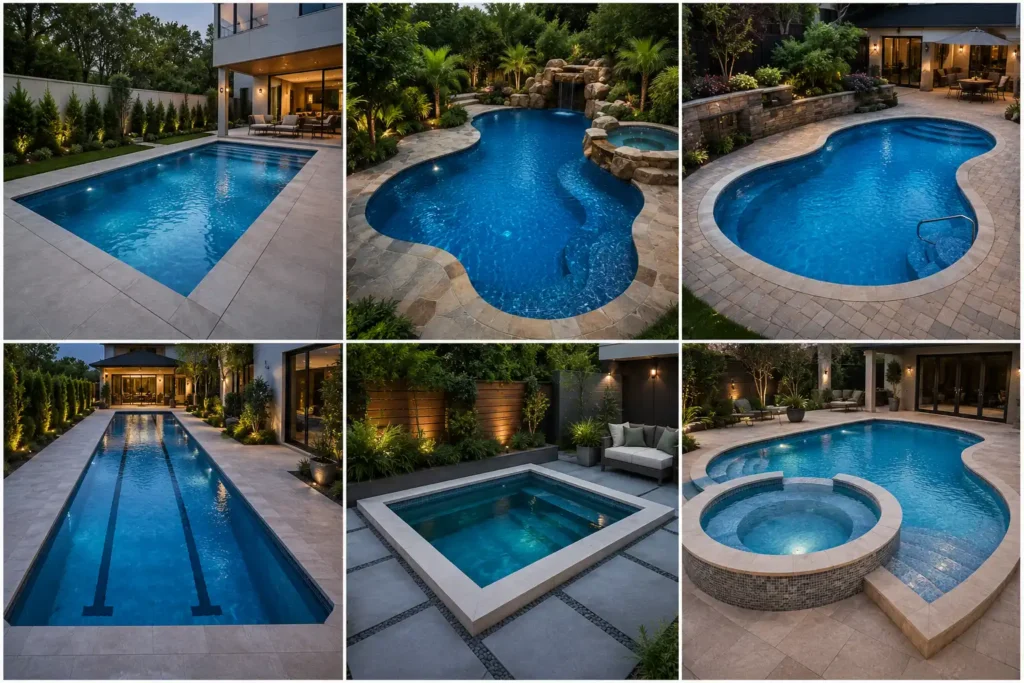
One of the biggest misconceptions is that fiberglass pools come in only a few designs. Modern manufacturers now offer hundreds of models that suit nearly every backyard, lifestyle, and budget.
Understanding the available options helps homeowners choose the ideal pool for long-term enjoyment.
Rectangular Fiberglass Pools
Rectangular pools remain the most popular choice.
Their clean lines complement contemporary architecture while maximizing swimming space.
Benefits include:
- Excellent for lap swimming
- Modern appearance
- Efficient use of backyard space
- Easy pool cover installation
- Ideal for automatic cleaning systems
These pools work well for both entertaining guests and everyday family recreation.
Freeform Fiberglass Pools
Freeform pools feature natural curves that create a relaxed resort-like atmosphere.
They blend beautifully with landscaping elements such as:
- Tropical gardens
- Natural stone
- Waterfalls
- Palm trees
- Rock features
Families often choose freeform pools because they create a softer, more inviting outdoor environment.
Kidney-Shaped Pools
Kidney-shaped pools have remained popular for decades.
Their curved design naturally separates shallow and deep swimming areas while adding visual interest.
Advantages include:
- Classic appearance
- Comfortable swimming layout
- Efficient use of irregular yards
- Attractive landscaping opportunities
Lap Pools
Fitness enthusiasts frequently choose fiberglass lap pools.
These long, narrow pools are specifically designed for exercise and endurance training.
Benefits include:
- Daily fitness routines
- Low-impact cardiovascular workouts
- Swim training
- Rehabilitation exercises
- Efficient backyard use
Many lap pools can also be equipped with swim jets that create adjustable resistance for continuous swimming.
Plunge Pools
Not every homeowner needs a large swimming pool.
Plunge pools are compact models designed primarily for:
- Cooling off
- Relaxation
- Hydrotherapy
- Small urban backyards
- Courtyards
- Rooftop installations where appropriate
Despite their smaller size, plunge pools often include premium features like seating ledges and spa jets.
Family Fiberglass Pools
Family-oriented pools prioritize versatility.
These models typically include:
- Wide entry steps
- Multiple seating areas
- Shallow play zones
- Moderate deep ends
- Safety ledges
- Spacious swimming areas
They provide enough room for children, adults, and entertaining guests simultaneously.
Fiberglass Pools with Built-in Spa
Luxury homeowners increasingly select combination pools that include an integrated spa.
These systems allow users to enjoy:
- Relaxing hot water therapy
- Family swimming
- Massage jets
- Year-round enjoyment
- Elegant backyard aesthetics
An integrated spa also increases the property’s entertainment value.
Infinity-Edge Fiberglass Pools
Although less common than concrete infinity pools, some premium fiberglass models incorporate vanishing-edge designs.
These create breathtaking visual effects, especially on elevated properties overlooking lakes, mountains, or oceans.
Benefits of Fiberglass Pool Swimming
There are many reasons homeowners continue choosing fiberglass pool swimming over other pool types.
Let’s explore these advantages in detail.
Quick Installation
Perhaps the greatest advantage is installation speed.
Because the shell is manufactured before arriving at the property, on-site construction is dramatically reduced.
Typical fiberglass installations may be completed within:
- Two weeks for simple projects
- Three to four weeks for most residential installations
- Slightly longer if landscaping or custom features are included
By comparison, concrete pools may require several months before they’re ready for swimming.
Exceptional Durability
Fiberglass is incredibly strong.
Unlike brittle materials that may crack under minor movement, fiberglass possesses controlled flexibility that helps absorb natural ground shifts.
Properly installed fiberglass pools commonly remain structurally sound for decades.
Smooth Surface
One of the most appreciated aspects of fiberglass pool swimming is comfort.
The smooth gel coat feels pleasant against the skin and helps prevent:
- Scraped knees
- Abrasions
- Rough feet
- Skin irritation
Children especially benefit from this softer surface while learning to swim or playing in the pool.
Reduced Algae Growth
The non-porous surface gives algae very few places to attach and multiply.
This offers several advantages:
- Easier cleaning
- Lower chlorine demand
- Improved water clarity
- Reduced brushing
- Less frequent shock treatments
Although algae can still develop if water chemistry is neglected, fiberglass pools generally require less effort to keep clean.
Lower Chemical Consumption
Since algae growth is naturally reduced, homeowners often use fewer pool chemicals.
This can lower annual operating expenses while making the swimming environment more comfortable.
Balanced water chemistry also helps protect pool equipment and extends its lifespan.
Energy Efficiency
Fiberglass pools naturally retain heat better than concrete.
The shell transfers less heat into the surrounding ground, helping maintain comfortable water temperatures.
Homeowners can improve efficiency even further by adding:
- Solar covers
- Variable-speed pumps
- Heat pumps
- Solar heating systems
- Automatic covers
Lower energy consumption translates into reduced utility bills over time.
Long Lifespan
A professionally manufactured and properly installed fiberglass pool can last 30 years or more with routine maintenance.
Unlike vinyl liner pools that require liner replacements or concrete pools that need resurfacing, fiberglass pools generally maintain their finish for many years.
Routine care helps maximize their longevity.
Low Maintenance Requirements
Maintenance is often one of the biggest concerns for new pool owners.
Fortunately, fiberglass pools simplify routine care.
Typical weekly maintenance includes:
- Testing water chemistry
- Emptying skimmer baskets
- Cleaning the filter as needed
- Vacuuming debris
- Brushing steps occasionally
- Checking equipment operation
Compared with concrete pools, this routine generally requires less time and effort.
Increased Home Value
A professionally installed fiberglass pool can enhance a property’s overall appeal.
Many buyers appreciate:
- Modern outdoor living spaces
- Low maintenance
- Energy-efficient equipment
- Beautiful landscaping
- Resort-style amenities
While the exact return on investment varies by location and market conditions, an attractive pool can make a home more desirable to potential buyers.
Beautiful Appearance
Modern fiberglass pools are available in stunning finishes that create sparkling, inviting water.
Popular colors include:
- Crystal Blue
- Caribbean Blue
- Arctic White
- Sandstone
- Slate Gray
- Aqua Blue
- Lagoon Blue
Premium shimmer finishes reflect sunlight beautifully, giving the water a luxurious appearance throughout the day.
Comfortable Water Temperature
Fiberglass has insulating properties that help reduce heat loss into the surrounding soil.
As a result, pool water often warms faster and maintains a comfortable temperature longer than concrete pools, especially when paired with a quality heating system or solar cover.
This can extend the swimming season and make every swim more enjoyable.
Fiberglass Pool Swimming vs Concrete Pools
One of the most common questions homeowners ask before investing in a swimming pool is whether they should choose a fiberglass or concrete pool. Both options have advantages, but the right choice depends on your budget, maintenance expectations, desired appearance, and long-term goals.
For many homeowners, fiberglass pool swimming offers a better balance of convenience, durability, and cost-effectiveness, while concrete pools provide unlimited customization.
Let’s compare them in detail.
Installation Time
Installation is one of the biggest differences between these two pool types.
Since fiberglass pools are manufactured in a factory before arriving at your property, much of the construction work is completed in advance.
A typical fiberglass installation involves:
- Site preparation
- Excavation
- Delivery of the pool shell
- Crane placement
- Plumbing installation
- Electrical connections
- Backfilling
- Deck construction
- Filling and balancing the water
Most fiberglass pools can be completed within 2–4 weeks, depending on weather conditions, local permits, and additional landscaping.
Concrete pools, on the other hand, require extensive on-site construction. The excavation is followed by steel reinforcement, plumbing installation, concrete or gunite application, curing, plastering, tile work, and finishing.
Because each stage depends on the previous one, concrete pools often take 3–6 months or longer before they are ready for use.
Winner: Fiberglass
Initial Cost
The upfront cost varies based on pool size, location, site conditions, and optional features.
Fiberglass pools generally have predictable pricing because they are pre-manufactured.
Concrete pools may begin with a competitive base price, but custom designs, premium finishes, labor, and material costs can significantly increase the final expense.
For homeowners working within a planned budget, fiberglass pools often provide better cost certainty.
Winner: Fiberglass (for predictable budgeting)
Maintenance Requirements
Maintenance is an area where fiberglass pools truly excel.
The smooth, non-porous gel coat resists algae growth, making cleaning much easier.
Routine maintenance generally includes:
- Testing water chemistry
- Emptying skimmer baskets
- Cleaning filters
- Vacuuming debris
- Occasional brushing
Concrete pools have rough, porous surfaces that encourage algae growth. Owners typically need to:
- Brush the walls more frequently
- Use more pool chemicals
- Acid wash when necessary
- Replaster the interior after years of use
Over time, these additional maintenance tasks increase both effort and cost.
Winner: Fiberglass
Durability
Both pool types are durable when properly installed.
Concrete is extremely strong and can handle almost any custom shape.
Fiberglass is engineered to be both strong and flexible.
This flexibility allows it to adapt to small soil movements without developing structural damage under normal conditions.
Rather than comparing strength alone, it is more accurate to compare long-term performance.
Concrete may eventually require resurfacing due to wear.
Fiberglass generally maintains its smooth finish for decades with proper care.
Winner: Tie (different strengths for different needs)
Surface Comfort
Comfort plays an important role in the overall swimming experience.
Concrete surfaces can feel rough, especially after years of use.
Children often scrape their knees, elbows, or feet while playing.
Fiberglass pools feature a silky-smooth gel coat that feels comfortable against the skin.
This makes fiberglass pool swimming especially appealing for families with young children.
Winner: Fiberglass
Design Flexibility
Concrete pools offer virtually unlimited customization.
They can be built in almost any:
- Shape
- Size
- Depth
- Layout
This makes them ideal for highly unique luxury projects.
Fiberglass pools are limited to factory molds, although manufacturers now offer hundreds of attractive designs.
For most residential backyards, homeowners can still find a fiberglass model that suits their needs.
Winner: Concrete
Long-Term Ownership Costs
When evaluating total ownership expenses over 20–30 years, fiberglass pools frequently cost less.
Savings may include:
- Lower electricity bills
- Reduced chemical usage
- Minimal resurfacing expenses
- Less professional maintenance
- Lower repair frequency
Concrete pools often require resurfacing, more chemicals, and additional cleaning throughout their lifespan.
Winner: Fiberglass
Appearance
Modern fiberglass pools feature glossy finishes that reflect sunlight beautifully.
Concrete pools can also be stunning, especially with premium tile, pebble, or quartz finishes.
Appearance largely depends on design preferences.
Some homeowners prefer the sleek finish of fiberglass, while others appreciate the handcrafted appearance of concrete.
Winner: Personal preference
Best Choice Summary
Choose a fiberglass pool if you want:
- Faster installation
- Lower maintenance
- Comfortable swimming
- Long-term savings
- Energy efficiency
- Easy cleaning
Choose a concrete pool if you want:
- Unlimited customization
- Extra-large pools
- Unique architectural designs
- Luxury resort-style projects
For the majority of residential homeowners, fiberglass pool swimming offers the best overall value.
Fiberglass Pool Swimming vs Vinyl Liner Pools
Vinyl liner pools are another popular option, especially for homeowners seeking lower upfront costs.
However, there are several important differences.
Construction
A fiberglass pool is manufactured as one seamless shell.
A vinyl liner pool consists of:
- Steel or polymer wall panels
- Floor material
- Waterproof vinyl liner
The liner creates the pool’s interior surface.
Durability
Fiberglass pools are extremely durable and resistant to punctures.
Vinyl liners, however, can be damaged by:
- Sharp objects
- Pet claws
- Improper cleaning tools
- Tree branches
- Heavy impacts
Eventually, most vinyl liners require replacement.
Maintenance
Fiberglass surfaces resist algae growth and clean easily.
Vinyl liners also have relatively smooth surfaces but require greater care to avoid tearing.
Owners must avoid abrasive brushes and certain cleaning methods.
Lifespan
A fiberglass shell can last several decades with proper maintenance.
Vinyl liners typically require replacement every 7–12 years, depending on usage, climate, and maintenance.
Replacing a liner adds significant long-term ownership costs.
Repairs
Minor fiberglass surface repairs are generally localized.
Vinyl liner damage may require patching or full liner replacement.
Comfort
Both fiberglass and vinyl feel smooth underfoot.
However, fiberglass provides a more solid, premium feel because the shell itself forms the finished structure.
Overall Comparison
Fiberglass pools offer:
- Longer lifespan
- Lower lifetime costs
- Greater durability
- Better structural integrity
- Fewer major replacements
Vinyl liner pools may suit homeowners with tighter initial budgets but often require higher long-term maintenance investments.
Fiberglass Pool Swimming Installation Process
One of the greatest advantages of fiberglass pool swimming is the streamlined installation process.
Although every project is unique, the overall procedure follows a proven sequence.
Step 1: Planning and Design
Everything begins with careful planning.
Homeowners work with their pool contractor to determine:
- Pool size
- Shape
- Location
- Deck design
- Equipment selection
- Landscaping ideas
- Lighting
- Water features
Proper planning helps avoid costly changes during construction.
Step 2: Site Evaluation
Before excavation begins, professionals inspect the property.
They assess:
- Soil conditions
- Drainage
- Utility lines
- Property boundaries
- Accessibility for delivery trucks and cranes
- Existing trees
- Slope of the land
A thorough site evaluation ensures the installation proceeds safely and efficiently.
Step 3: Permits and Approvals
Most municipalities require permits before pool construction.
Depending on local regulations, approvals may involve:
- Building permits
- Electrical permits
- Plumbing permits
- Safety barrier compliance
- Zoning requirements
Obtaining permits before construction helps prevent legal issues and project delays.
Step 4: Excavation
Once approvals are complete, excavation begins.
Heavy equipment removes soil according to the pool’s exact dimensions.
The excavation is made slightly larger than the fiberglass shell to allow room for:
- Proper leveling
- Plumbing installation
- Backfill material
The base is then carefully prepared and compacted.
A properly leveled foundation is essential for long-term structural performance.
Step 5: Pool Delivery
The fiberglass shell is transported from the factory to the property using specialized trucks.
Because the pool is manufactured in one piece, transportation requires careful planning.
Installers verify that roads, gates, and access points can accommodate delivery.
Step 6: Crane Placement
A crane carefully lifts the fiberglass shell from the delivery truck.
The shell is slowly lowered into the prepared excavation.
Experienced crews check:
- Levelness
- Alignment
- Positioning
- Plumbing openings
- Final elevation
Precise placement is critical for proper drainage and structural stability.
Step 7: Plumbing Installation
After positioning the shell, technicians connect:
- Skimmers
- Main drains
- Return jets
- Pool pump
- Filter system
- Heater (if installed)
- Saltwater chlorinator
- Automation equipment
Pressure testing ensures there are no leaks before backfilling begins.
Step 8: Electrical Installation
Licensed electricians install all required electrical components.
These may include:
- Variable-speed pump
- LED lighting
- Pool automation
- Spa controls
- Heating equipment
- Timers
- Safety disconnects
Electrical systems must comply with local building codes and safety regulations.
Step 9: Backfilling
Backfilling stabilizes the pool within the excavation.
Installers gradually add approved backfill material around the shell while simultaneously filling the pool with water.
Keeping water and backfill levels balanced helps maintain even pressure on the shell during installation.
This careful process protects the pool’s structural integrity.
Step 10: Deck Construction
Once the shell is secure, surrounding deck construction begins.
Popular decking materials include:
- Concrete
- Stamped concrete
- Natural stone
- Travertine
- Pavers
- Composite decking
The deck enhances both appearance and safety by providing stable walking surfaces around the pool.
Step 11: Equipment Testing
Before the pool is officially completed, every system is tested.
Contractors inspect:
- Water circulation
- Pump performance
- Filtration
- Lighting
- Heating
- Automation
- Plumbing
- Water chemistry
Any necessary adjustments are completed before handover.
Step 12: Final Inspection
Many local authorities require a final inspection before the pool can be used.
Inspectors verify compliance with:
- Safety fencing
- Electrical systems
- Plumbing
- Barrier requirements
- Building codes
Once approved, homeowners receive permission to enjoy their new pool.
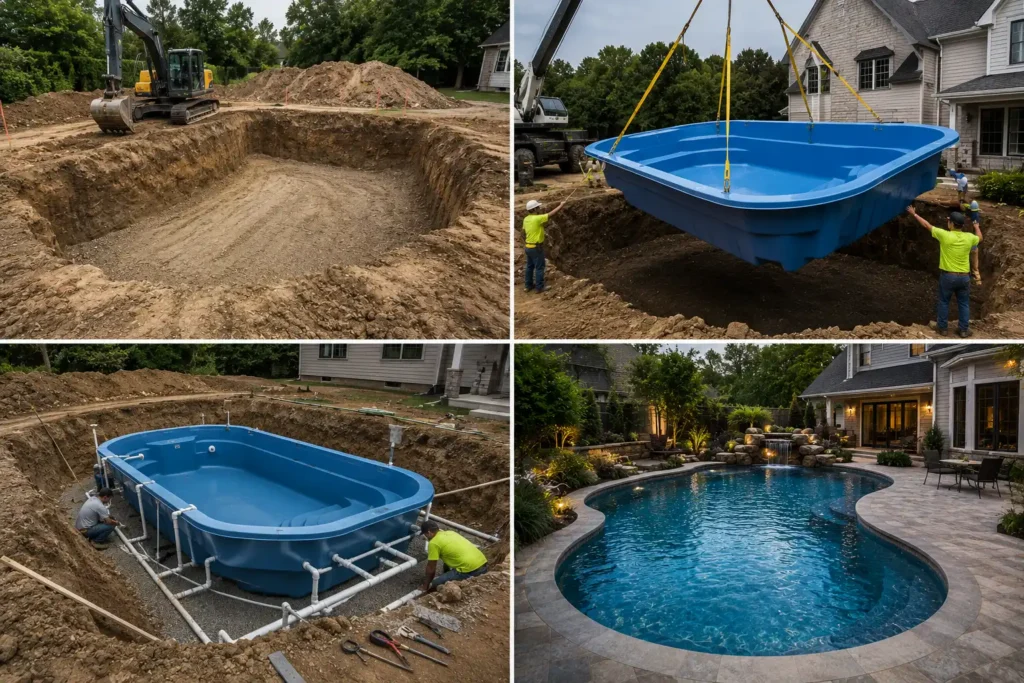
Typical Fiberglass Pool Installation Timeline
Although timelines vary, the following schedule is common.
| Phase | Estimated Time |
|---|---|
| Design and Planning | 1–2 Weeks |
| Permit Approval | 1–6 Weeks (location dependent) |
| Excavation | 1–3 Days |
| Pool Delivery | 1 Day |
| Crane Installation | 1 Day |
| Plumbing and Electrical | 2–5 Days |
| Backfilling | 1–3 Days |
| Deck Installation | 1–2 Weeks |
| Final Inspection | 1–3 Days |
In many cases, homeowners can enjoy fiberglass pool swimming within 2–4 weeks after construction begins, excluding permit processing time.
Fiberglass Pool Swimming Costs
One of the most important considerations when planning a fiberglass pool swimming project is the overall cost. While fiberglass pools are often praised for their lower lifetime maintenance expenses, it’s essential to understand every expense involved before making a purchase.
The total investment depends on several factors, including pool size, site conditions, location, optional features, and landscaping. A well-planned budget helps prevent unexpected costs and ensures your project stays on track.
Average Fiberglass Pool Cost
The cost of a fiberglass pool can vary significantly depending on where you live and the complexity of the installation.
In general, your total investment may include:
- Fiberglass pool shell
- Excavation
- Delivery
- Crane placement
- Plumbing
- Electrical work
- Filtration system
- Pool pump
- Decking
- Water filling
- Landscaping
- Safety fencing
- Lighting
- Heating system
- Optional accessories
While prices differ by region, homeowners should request detailed quotes from multiple reputable pool contractors to compare what is included in each package.
Pool Shell Cost
The fiberglass shell itself represents a significant portion of the overall budget.
Factors affecting shell pricing include:
- Pool length
- Width
- Depth
- Shape
- Built-in seating
- Integrated spa
- Tanning ledge
- Premium gel coat finish
- Manufacturer reputation
Larger pools naturally require more materials and transportation planning, increasing the purchase price.
Installation Costs
Professional installation ensures the pool performs as designed for decades.
Installation expenses generally include:
- Excavation
- Base preparation
- Crane services
- Plumbing
- Electrical installation
- Equipment setup
- Water balancing
- Final inspection
Although some homeowners consider DIY installation, fiberglass pools should always be installed by experienced professionals to avoid structural problems and warranty issues.
Decking Costs
A swimming pool is only part of your outdoor living space.
Decking creates safe walkways while improving the appearance of the backyard.
Popular decking materials include:
Concrete Decking
Concrete remains one of the most affordable options.
Advantages include:
- Durable surface
- Easy maintenance
- Slip-resistant finishes
- Wide variety of textures
Stamped Concrete
Stamped concrete imitates natural stone, brick, or wood while offering a premium appearance.
Many homeowners choose this option for luxury outdoor spaces.
Natural Stone
Natural stone creates an elegant resort-style environment.
Popular choices include:
- Travertine
- Limestone
- Slate
- Granite
- Sandstone
Although more expensive, natural stone provides outstanding beauty and durability.
Pavers
Interlocking pavers offer flexibility because damaged sections can be replaced individually without rebuilding the entire deck.
Landscaping Costs
Professional landscaping transforms a swimming pool into a complete backyard retreat.
Popular additions include:
- Palm trees
- Decorative grasses
- Flower gardens
- Privacy hedges
- Outdoor lighting
- Stone pathways
- Pergolas
- Fire pits
- Outdoor kitchens
Good landscaping not only enhances aesthetics but also increases property value.
Pool Equipment Costs
Modern fiberglass pools rely on several pieces of equipment to keep the water clean and safe.
Essential equipment includes:
- Pool pump
- Sand, cartridge, or DE filter
- Skimmer
- Main drain
- Return jets
- Plumbing lines
- Electrical controls
Premium upgrades may include:
- Variable-speed pumps
- Saltwater chlorination systems
- Heat pumps
- Gas heaters
- Solar heating
- Automatic pool covers
- Robotic cleaners
- Smart automation
Although these upgrades increase initial costs, many reduce long-term operating expenses.
Long-Term Maintenance Costs
One of the biggest advantages of fiberglass pool swimming is lower lifetime ownership costs.
Typical ongoing expenses include:
- Water testing supplies
- Pool chemicals
- Electricity
- Filter cleaning
- Equipment servicing
- Seasonal inspections
Because fiberglass surfaces resist algae growth, homeowners often spend less on chemicals and cleaning compared to concrete pools.
Factors That Affect Fiberglass Pool Swimming Costs
No two pool projects are identical. Several variables influence the final investment.
Pool Size
Larger pools require:
- More excavation
- Larger shells
- Additional plumbing
- Increased water volume
- Bigger filtration systems
As size increases, installation costs generally rise.
Pool Shape
Simple rectangular pools are usually easier to manufacture and install.
Complex shapes with curves, tanning ledges, and integrated spas may increase production and transportation costs.
Site Accessibility
Easy equipment access helps reduce installation expenses.
Properties with:
- Narrow side yards
- Steep slopes
- Limited crane access
- Dense landscaping
- Existing structures
may require additional labor and specialized equipment.
Soil Conditions
Ground conditions play an important role.
Rocky soil, unstable ground, or high groundwater levels can increase excavation complexity and preparation requirements.
Optional Features
Luxury upgrades significantly influence the final budget.
Popular additions include:
- LED lighting
- Waterfalls
- Deck jets
- Fire bowls
- Infinity edges
- Built-in spas
- Swim jets
- Automatic covers
- Smart automation
- Heating systems
Choosing features carefully allows homeowners to balance luxury with affordability.
Best Shapes and Sizes for Fiberglass Pool Swimming
Selecting the right size is one of the most important decisions you’ll make. The ideal pool should fit your available space while meeting your family’s needs.
Small Fiberglass Pools
Small pools are perfect for:
- Compact backyards
- Urban homes
- Couples
- Relaxation
- Cooling off
Benefits include:
- Lower installation costs
- Reduced maintenance
- Less water consumption
- Lower heating expenses
Many compact pools still include built-in seating and tanning ledges.
Medium-Sized Pools
Medium pools are the most popular choice for families.
They provide enough room for:
- Recreational swimming
- Pool games
- Relaxation
- Entertaining guests
At the same time, they remain relatively easy to maintain.
Large Fiberglass Pools
Large pools are ideal for homeowners who frequently entertain or have spacious backyards.
Advantages include:
- Multiple swimming zones
- Deep ends
- Large tanning shelves
- Spacious seating
- Exercise areas
- Luxury appearance
Although larger pools require higher initial investment, they create an impressive outdoor living environment.
Lap Pools
Fitness-focused homeowners often select lap pools.
These long, narrow designs maximize swimming distance while using less yard width.
Lap pools are excellent for:
- Daily exercise
- Swim training
- Rehabilitation
- Low-impact workouts
Plunge Pools
Plunge pools continue to grow in popularity.
They are ideal for:
- Small properties
- Cooling off
- Hydrotherapy
- Relaxation
Many include spa jets that transform the pool into a wellness feature.
How to Choose the Right Fiberglass Pool
Choosing the perfect fiberglass pool requires careful planning.
Consider the following factors before making your decision.
Available Backyard Space
Measure your property carefully.
Remember to leave room for:
- Decking
- Landscaping
- Outdoor furniture
- Walkways
- Safety fencing
- Equipment access
Avoid choosing a pool that overwhelms the available space.
Primary Purpose
Ask yourself why you want a swimming pool.
Common goals include:
- Family recreation
- Exercise
- Relaxation
- Entertaining guests
- Luxury outdoor living
- Hydrotherapy
Understanding your priorities helps narrow your options.
Depth Requirements
Different families require different depths.
For example:
- Young children benefit from larger shallow areas.
- Competitive swimmers may prefer deeper sections.
- Casual users often appreciate balanced shallow and deep zones.
Future Maintenance
Some features require additional upkeep.
Consider how much time you want to spend maintaining:
- Waterfalls
- Decorative fountains
- Spa systems
- Heating equipment
- Smart automation
Choosing features that match your lifestyle will increase long-term satisfaction.
Budget Planning
Establish a realistic budget before selecting upgrades.
Separate your budget into:
- Pool installation
- Decking
- Landscaping
- Accessories
- Annual maintenance
This approach helps avoid overspending during construction.
Popular Colors and Interior Finishes
Modern fiberglass pools offer far more color choices than many homeowners realize.
The interior finish dramatically affects the appearance of the water.
Crystal Blue
Crystal blue creates the classic swimming pool appearance.
It produces bright, inviting water that looks clean and refreshing.
This remains one of the most popular options worldwide.
Caribbean Blue
Caribbean blue produces vibrant tropical-looking water.
Homeowners seeking a luxury resort atmosphere frequently choose this finish.
Arctic White
White interiors create sparkling blue water while reflecting sunlight effectively.
This finish works especially well with modern minimalist homes.
Sandstone
Sand-colored finishes create a warm, natural appearance.
They pair beautifully with tropical landscaping and natural stone decking.
Slate Gray
Gray interiors have become increasingly popular in contemporary landscape design.
They create elegant, deep blue water while complementing modern architecture.
Shimmer Finishes
Premium manufacturers offer shimmering gel coats containing reflective particles.
Benefits include:
- Luxury appearance
- Enhanced sunlight reflection
- Rich water color
- Premium aesthetics
- Resort-style elegance
These finishes can make the water sparkle throughout the day.
Best Features to Add to a Fiberglass Pool Swimming Setup
Adding the right features can transform a standard swimming pool into a luxurious outdoor retreat.
LED Pool Lighting
LED lighting extends pool enjoyment into the evening.
Advantages include:
- Energy efficiency
- Long lifespan
- Multiple color options
- Enhanced safety
- Beautiful nighttime ambiance
Programmable systems allow homeowners to change lighting themes for parties or special occasions.
Waterfalls
Waterfalls add movement and sound to the pool environment.
Benefits include:
- Relaxing atmosphere
- Luxury appearance
- Improved circulation
- Backyard focal point
Natural stone waterfalls are especially popular in tropical landscapes.
Deck Jets and Fountains
Deck jets create graceful arcs of water that flow into the pool.
These features provide:
- Visual interest
- Gentle water sounds
- Entertainment for children
- Elegant nighttime effects when combined with LED lighting
Baja Shelf or Tanning Ledge
One of the most requested upgrades is a tanning ledge.
This shallow platform allows homeowners to:
- Relax in lounge chairs
- Supervise children
- Sunbathe comfortably
- Cool off without fully entering deeper water
It adds both functionality and visual appeal to the pool.
Built-in Bench Seating
Integrated benches offer comfortable seating for:
- Socializing
- Relaxing
- Supervising children
- Hydrotherapy when paired with spa jets
Because they’re molded directly into the fiberglass shell, they maintain a seamless appearance.
Integrated Spa
An attached spa enhances year-round enjoyment.
Benefits include:
- Warm-water relaxation
- Muscle recovery
- Stress relief
- Hydrotherapy
- Increased property appeal
Many homeowners appreciate having both a swimming pool and spa in a single installation.
Swim Jets
Swim jets create a powerful current that allows swimmers to exercise continuously without needing a long pool.
They are ideal for:
- Fitness training
- Resistance exercise
- Rehabilitation
- Compact backyards
Automatic Pool Covers
Automatic covers offer multiple benefits.
They help:
- Improve safety
- Reduce evaporation
- Retain heat
- Keep debris out
- Lower maintenance
- Reduce chemical consumption
They are particularly useful for homeowners seeking convenience and energy efficiency.
Heating Systems
Heating extends the swimming season and improves comfort.
Common options include:
- Electric heat pumps
- Gas heaters
- Solar heating systems
The right choice depends on climate, energy costs, and desired water temperature.
Smart Pool Automation
Modern automation systems allow homeowners to control pool functions from a smartphone or tablet.
Typical controls include:
- Pump schedules
- Lighting
- Heating
- Water features
- Spa settings
- Chemical monitoring
Automation simplifies pool ownership while improving energy efficiency and convenience.
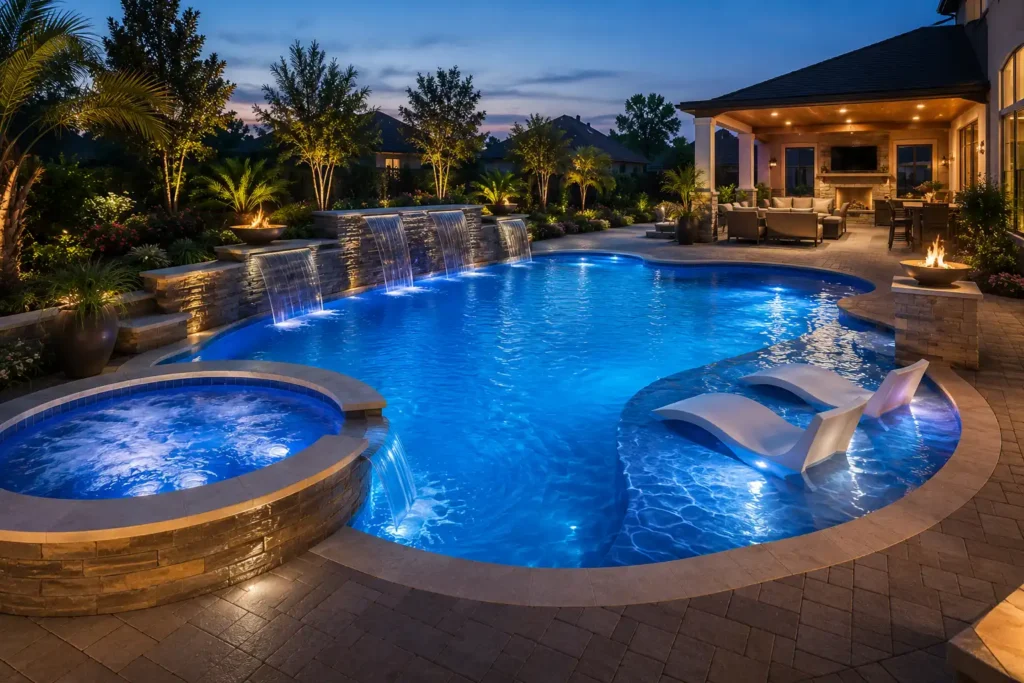
Saltwater vs. Chlorine Fiberglass Pool Swimming
One of the biggest decisions you’ll make after installing your pool is choosing a sanitization system. Both saltwater and traditional chlorine systems keep the water clean and safe, but they differ in maintenance, comfort, and operating costs.
The good news is that fiberglass pool swimming works exceptionally well with either option because the smooth, non-porous gel coat is compatible with both systems when water chemistry is properly maintained.
Saltwater Fiberglass Pools
A saltwater pool uses a salt chlorinator to convert dissolved salt into chlorine. Instead of manually adding large amounts of chlorine, the system continuously produces it as the water circulates.
Benefits of Saltwater Pools
- Softer-feeling water
- Less chlorine odor
- Reduced eye and skin irritation for many swimmers
- Lower day-to-day chemical handling
- More consistent sanitization
- Comfortable swimming experience
Considerations
- Higher initial equipment cost
- Salt cell requires periodic cleaning and replacement
- Water chemistry still needs regular testing
- Some metal components around the pool may require corrosion-resistant materials
Traditional Chlorine Pools
Traditional pools require chlorine to be added manually or through automatic feeders.
Benefits
- Lower initial equipment cost
- Simple system design
- Easy availability of pool chemicals
- Proven sanitation method
Considerations
- Requires more frequent chlorine adjustments
- Strong chlorine smell if water chemistry becomes unbalanced
- Greater variation in sanitizer levels
- More hands-on maintenance
Which Is Better?
For most homeowners, saltwater systems pair exceptionally well with fiberglass pools because they enhance swimmer comfort while reducing routine maintenance.
However, either system can provide crystal-clear water when maintained correctly.
Fiberglass Pool Swimming Maintenance Guide
One of the biggest reasons homeowners choose fiberglass pool swimming is the relatively low maintenance required throughout the year.
Although fiberglass pools require less work than concrete pools, regular care is still essential for maintaining beautiful water and protecting your investment.
Daily Maintenance
Daily care only takes a few minutes.
Tasks include:
- Remove leaves and floating debris
- Check water level
- Ensure the pump is operating properly
- Empty skimmer baskets if needed
- Visually inspect the water for clarity
These simple habits prevent larger maintenance issues later.
Weekly Maintenance
Every week you should:
- Test water chemistry
- Adjust sanitizer levels
- Check pH
- Inspect total alkalinity
- Vacuum the pool
- Brush steps and corners
- Clean skimmer baskets
- Inspect the filter pressure gauge
Maintaining consistent water balance protects both swimmers and pool equipment.
Monthly Maintenance
Monthly maintenance typically includes:
- Deep-clean the filter
- Inspect pumps and valves
- Check lighting systems
- Examine pool surfaces
- Lubricate O-rings if recommended
- Inspect automation equipment
Early detection of minor problems often prevents expensive repairs.
Seasonal Maintenance
Seasonal maintenance varies depending on climate.
Common tasks include:
- Opening the pool after winter
- Inspecting plumbing
- Balancing water chemistry
- Cleaning pool covers
- Servicing heaters
- Inspecting safety equipment
Homeowners in warmer climates may simply adjust maintenance routines throughout the year rather than closing the pool completely.
Annual Inspection
At least once a year, schedule a professional inspection.
The inspection should include:
- Pump performance
- Filter efficiency
- Heater operation
- Plumbing connections
- Electrical systems
- Pool shell condition
- Automation equipment
- Safety features
Professional servicing helps maximize the lifespan of your investment.
Water Chemistry for Fiberglass Pool Swimming
Proper water chemistry is essential for swimmer safety and preserving the pool’s gel coat finish.
pH
The pH level affects swimmer comfort and sanitizer performance.
When pH is too high:
- Scale may develop
- Water becomes cloudy
- Chlorine becomes less effective
When pH is too low:
- Water becomes corrosive
- Equipment damage may occur
- Swimmers may experience eye irritation
Regular testing keeps pH within the recommended range.
Chlorine
Chlorine eliminates bacteria, algae, and harmful microorganisms.
Proper chlorine levels ensure:
- Safe swimming
- Clear water
- Reduced algae growth
- Healthy pool environment
Total Alkalinity
Alkalinity stabilizes pH and prevents sudden fluctuations.
Balanced alkalinity helps:
- Protect equipment
- Improve swimmer comfort
- Maintain water clarity
Calcium Hardness
Although fiberglass pools require less calcium than concrete pools, balanced hardness still helps maintain water quality and protects equipment.
Cyanuric Acid
Outdoor pools benefit from stabilizer because it protects chlorine from rapid breakdown caused by sunlight.
Maintaining proper stabilizer levels improves sanitizer efficiency.
Cleaning Tips for Fiberglass Pool Swimming
Routine cleaning keeps your pool attractive and extends equipment life.
Skim the Surface
Remove:
- Leaves
- Insects
- Grass
- Flowers
- Floating debris
Daily skimming prevents debris from sinking.
Vacuum Regularly
Vacuuming removes dirt from the floor before it accumulates.
Many homeowners choose robotic cleaners because they save time while delivering excellent cleaning performance.
Brush Occasionally
Although fiberglass surfaces resist algae, brushing helps remove:
- Dirt
- Pollen
- Biofilm
- Mineral deposits
Focus on:
- Corners
- Steps
- Benches
- Waterline
Clean the Waterline
Body oils, sunscreen, and debris can accumulate around the waterline.
Use cleaners specifically designed for fiberglass finishes to maintain the glossy surface.
Maintain the Filter
The filtration system is the heart of every swimming pool.
Clean filters according to manufacturer recommendations to maintain proper circulation.
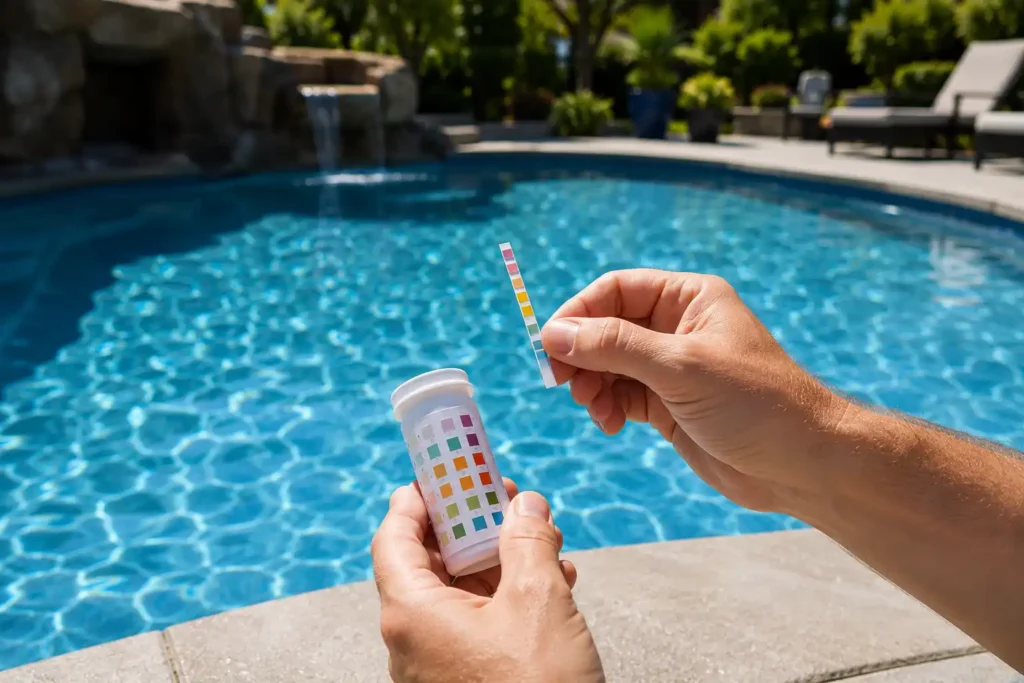
Common Fiberglass Pool Swimming Problems
Although fiberglass pools are highly durable, homeowners should understand the most common issues that may occur.
Stains
Stains usually result from:
- Metals in water
- Leaves
- Organic debris
- Poor water balance
Most stains can be removed using fiberglass-safe cleaning products.
Surface Fading
Years of UV exposure and improper chemical balance may gradually reduce the shine of the gel coat.
Routine maintenance and balanced chemistry help preserve the finish.
Minor Cracks
Surface hairline cracks sometimes occur due to impact or improper installation.
Professional repair usually restores the finish without replacing the entire shell.
Osmotic Blisters
Modern manufacturing has significantly reduced this issue.
Quality pools featuring vinyl ester barrier layers are highly resistant to osmotic blistering.
Plumbing Leaks
Leaks generally occur in plumbing connections rather than the fiberglass shell itself.
Professional leak detection quickly identifies the source.
Equipment Failure
Like any mechanical system, pumps, heaters, filters, and automation equipment eventually wear with age.
Routine servicing minimizes unexpected failures.
How to Repair a Fiberglass Swimming Pool
Most fiberglass repairs are straightforward when performed by trained professionals.
Common repair procedures include:
- Gel coat restoration
- Surface polishing
- Minor crack repair
- Chip repair
- Scratch removal
- Plumbing repairs
- Equipment replacement
Avoid attempting major structural repairs yourself, as improper techniques can affect the pool’s appearance and warranty.
Safety Tips for Fiberglass Pool Swimming
Safety should always be the highest priority.
Install Proper Pool Fencing
A secure fence helps prevent unsupervised access, especially for young children and pets.
Choose fencing that complies with local safety regulations.
Use Self-Closing Gates
Self-closing and self-latching gates provide an additional layer of protection.
Never Leave Children Unattended
Constant adult supervision is essential whenever children are near the water, regardless of their swimming ability.
Keep Rescue Equipment Nearby
Every pool area should have easy access to:
- Life ring
- Reaching pole
- First-aid kit
- Emergency contact numbers
Learn CPR
Parents and frequent pool users benefit greatly from CPR training, which can make a critical difference during emergencies.
Practice Safe Diving
Only dive where the pool is specifically designed for diving. Avoid diving into shallow water to reduce the risk of serious injury.
Best Accessories for Fiberglass Pool Swimming
The right accessories improve convenience, safety, and enjoyment.
Popular options include:
- Robotic pool cleaners
- Solar pool covers
- Automatic safety covers
- Pool alarms
- LED lighting
- Floating loungers
- Waterproof speakers
- Basketball hoops
- Volleyball nets
- Storage boxes
- Thermometers
- Poolside umbrellas
- Outdoor showers
Choose accessories that match your family’s lifestyle and maintenance preferences.
Energy-Efficient Fiberglass Pool Swimming
Fiberglass pools are already energy efficient, but several upgrades can reduce operating costs even further.
Variable-Speed Pumps
These pumps consume significantly less electricity than single-speed models by adjusting motor speed based on the pool’s needs.
Solar Heating
Solar collectors use sunlight to warm the water, reducing reliance on conventional heaters.
Pool Covers
A quality cover helps:
- Reduce evaporation
- Retain heat
- Keep debris out
- Lower chemical consumption
LED Lighting
LED fixtures use less energy while providing brighter, longer-lasting illumination.
Smart Automation
Automation systems optimize pump schedules, heating, and lighting, improving both convenience and energy efficiency.
Landscaping Ideas Around a Fiberglass Pool
Beautiful landscaping transforms a swimming pool into a private resort.
Popular ideas include:
Tropical Landscaping
Use:
- Palm trees
- Ornamental grasses
- Flowering plants
- Natural stone
- Waterfalls
Modern Design
Create a sleek appearance with:
- Large concrete pavers
- Minimalist gardens
- Clean lines
- Contemporary outdoor furniture
Outdoor Living Spaces
Complete the backyard with:
- Pergolas
- Outdoor kitchens
- Fire pits
- Dining areas
- Comfortable lounge seating
Thoughtful landscaping enhances both functionality and property value.
Seasonal Care for Fiberglass Pool Swimming
Different seasons require different maintenance routines.
Summer
- Monitor water levels
- Increase filtration during heavy use
- Test water chemistry more frequently
Rainy Season
- Remove excess debris promptly
- Check water balance after heavy rainfall
- Inspect drainage around the pool
Winter (Cold Regions)
If you live in an area with freezing temperatures:
- Lower the water level if recommended
- Winterize plumbing
- Add winter chemicals
- Install a quality winter cover
- Protect equipment from freezing
Proper seasonal care helps extend the life of your pool and equipment.
Is Fiberglass Pool Swimming Good for Families?
Absolutely. Fiberglass pools are an excellent choice for families because they offer:
- Smooth, comfortable surfaces
- Low maintenance
- Built-in seating
- Optional tanning ledges
- Long-lasting durability
- Quick installation
- Lower lifetime costs
Their versatility makes them suitable for children learning to swim, adults exercising, and seniors enjoying gentle water activities.
Environmental Benefits of Fiberglass Pool Swimming
Fiberglass pools can be an environmentally responsible option when paired with efficient equipment.
Benefits include:
- Lower chemical usage
- Reduced water loss with covers
- Energy-efficient circulation systems
- Compatibility with solar heating
- Long service life, reducing material waste over time
These features help lower the overall environmental footprint of pool ownership.
Common Myths About Fiberglass Pool Swimming
Many misconceptions surround fiberglass pools. Here are some of the most common myths—and the facts.
Myth 1: Fiberglass Pools Crack Easily
Modern fiberglass shells are engineered for strength and flexibility. When properly installed, they withstand normal ground movement very well.
Myth 2: Fiberglass Pools Have Limited Designs
Manufacturers now offer hundreds of shapes, sizes, colors, and built-in features to suit different properties and lifestyles.
Myth 3: Fiberglass Pools Require No Maintenance
While maintenance is generally lower than with concrete pools, regular cleaning, water testing, and equipment care are still essential.
Myth 4: Fiberglass Pools Don’t Last Long
A high-quality fiberglass pool can provide decades of reliable service with proper maintenance.
Mistakes to Avoid When Buying a Fiberglass Swimming Pool
Avoid these common mistakes to ensure a successful project:
- Choosing a contractor based solely on the lowest price
- Ignoring warranty details
- Underestimating landscaping and decking costs
- Selecting the wrong pool size for your yard
- Overlooking future maintenance needs
- Skipping professional site evaluation
- Not comparing equipment options
- Forgetting about local permits and safety requirements
Careful planning helps prevent unexpected expenses and ensures long-term satisfaction.
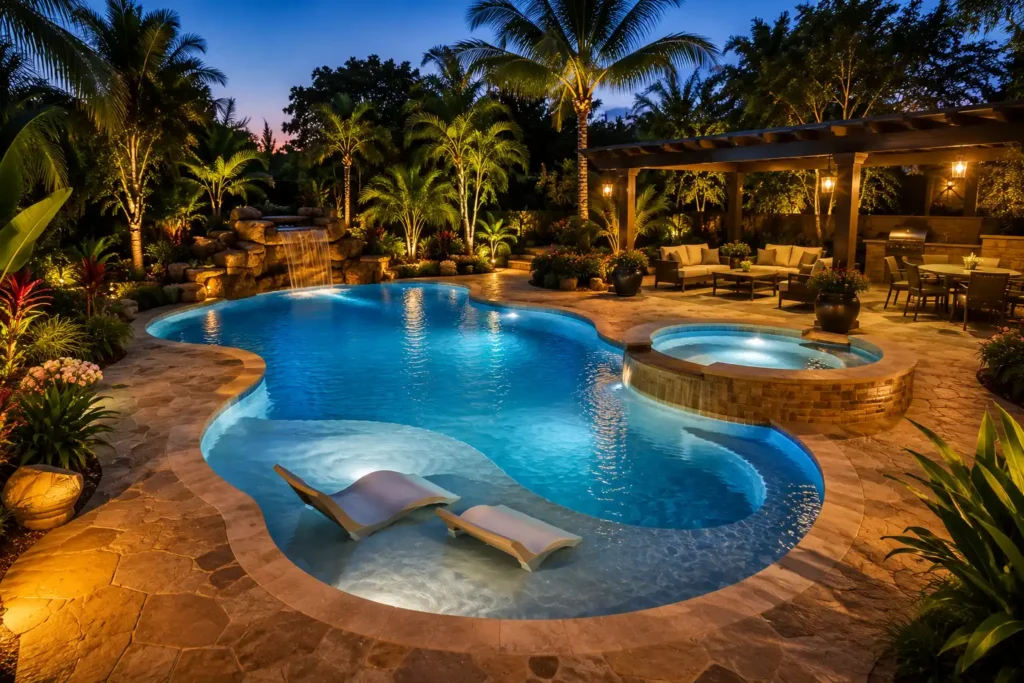
How to Choose the Best Fiberglass Pool Manufacturer
Before making a purchase, evaluate manufacturers based on:
- Years of industry experience
- Product warranties
- Manufacturing quality
- Gel coat technology
- Available designs
- Dealer network
- Customer reviews
- After-sales support
Working with a reputable manufacturer and experienced installer is one of the best ways to protect your investment.
Frequently Asked Questions About Fiberglass Pool Swimming
How long do fiberglass swimming pools last?
With proper installation and regular maintenance, fiberglass pools can last for several decades.
Are fiberglass pools worth the investment?
For many homeowners, yes. Their quick installation, low maintenance, durability, and lower long-term ownership costs make them an attractive option.
Can fiberglass pools be saltwater pools?
Yes. Fiberglass pools are well suited for saltwater systems when water chemistry is properly maintained.
Do fiberglass pools require resurfacing?
Unlike concrete pools, fiberglass pools typically do not require routine resurfacing.
Are fiberglass pools safe for children?
Yes. Their smooth surfaces help reduce scrapes, and many models include shallow entry areas and built-in safety ledges.
Can a fiberglass pool be heated?
Absolutely. Heat pumps, gas heaters, and solar heating systems are all compatible with fiberglass pools.
Do fiberglass pools increase property value?
A professionally installed pool can enhance outdoor living and may improve a home’s appeal to potential buyers, depending on the local real estate market.
How often should pool water be tested?
Testing at least once a week is recommended, with more frequent checks during periods of heavy use or extreme weather.
Can fiberglass pools be customized?
While they are made from molds, modern manufacturers offer a wide range of shapes, sizes, colors, tanning ledges, spas, and built-in features.
What is the biggest advantage of fiberglass pool swimming?
The combination of fast installation, low maintenance, comfortable surfaces, and long-term durability makes fiberglass pools a popular choice for many homeowners.
Final Thoughts
Choosing fiberglass pool swimming is more than adding a pool to your backyard—it’s an investment in your lifestyle, comfort, and property. Fiberglass pools combine elegant designs with practical benefits, including quick installation, low maintenance, energy efficiency, and impressive durability.
By selecting the right pool size, investing in quality equipment, maintaining balanced water chemistry, and following regular care routines, you can enjoy a clean, beautiful swimming environment for many years. Whether your goal is family fun, daily exercise, entertaining guests, or creating a private retreat, a well-planned fiberglass pool can become the centerpiece of your outdoor living space.
With thoughtful planning and the guidance in this comprehensive guide, you’ll be well-equipped to choose, install, and maintain a fiberglass pool that provides lasting enjoyment and excellent value.