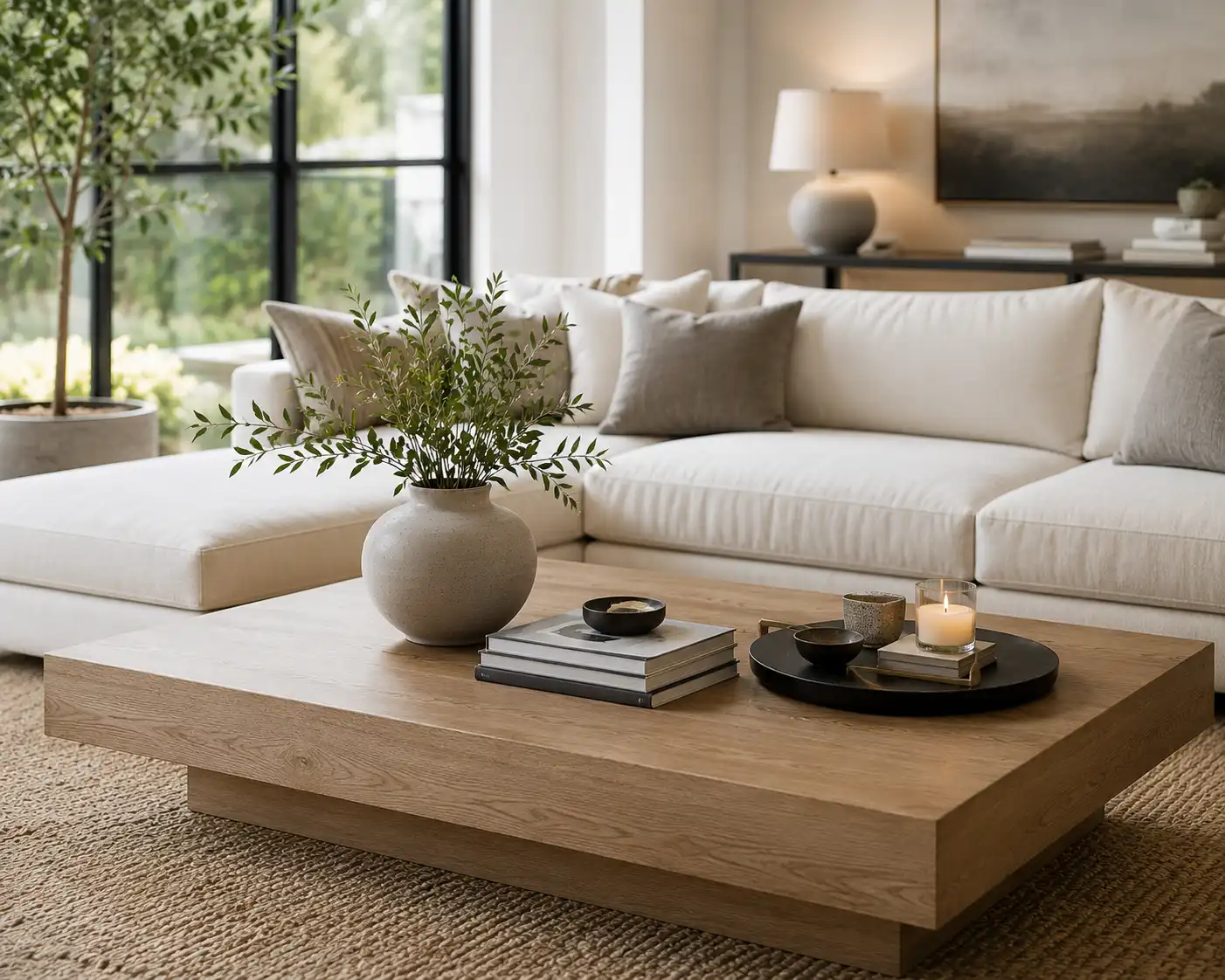
A beautifully styled coffee table can completely transform the look and feel of a living room. While elaborate decorations and layered accessories once dominated interior design trends, today’s homeowners are increasingly embracing simplicity. This shift has made Minimalist Coffee Table Styling one of the most popular decorating approaches for modern homes. Rather than filling every inch of the table with decorative objects, minimalist styling focuses on selecting a few meaningful pieces that create balance, functionality, and visual harmony.
Minimalism is much more than an aesthetic. It is a lifestyle that values intentional living, thoughtful design, and clutter-free spaces. A minimalist coffee table reflects these principles by combining beauty with purpose. Every item placed on the table has a reason for being there, whether it serves a practical function, adds texture, introduces natural elements, or becomes a subtle focal point.
The best part about minimalist styling is that it works in nearly every type of home. Whether your living room follows a modern, Scandinavian, Japandi, contemporary, luxury, or even farmhouse design, minimalist decorating techniques can enhance the overall space without overwhelming it. From compact apartments to spacious family homes, a well-styled coffee table instantly makes a room feel more organized, inviting, and sophisticated.
This comprehensive guide covers everything you need to know about Minimalist Coffee Table Styling, including design principles, styling techniques, decorating ideas, common mistakes to avoid, expert designer tips, seasonal inspiration, and practical advice for every type of coffee table and living room. By the end of this guide, you’ll have all the knowledge needed to create a coffee table arrangement that feels timeless, functional, and effortlessly elegant.
What Is Minimalist Coffee Table Styling?
Minimalist Coffee Table Styling is the practice of decorating a coffee table using a carefully selected collection of functional and decorative objects while intentionally avoiding unnecessary clutter. Instead of displaying numerous accessories, minimalist styling emphasizes quality over quantity, allowing each piece to contribute to the overall design.
The goal is not to leave the table empty. Instead, the objective is to create a balanced arrangement where every object has a purpose and complements the surrounding living room. A minimalist coffee table often includes a combination of practical and decorative items such as a tray, coffee table books, a ceramic vase, fresh greenery, candles, or sculptural decor.
Unlike heavily decorated tables that may feel crowded or distracting, minimalist arrangements create breathing room. Empty space is considered an essential design element because it allows the eye to appreciate each decorative object individually.
Minimalist styling also adapts beautifully to changing seasons. Instead of replacing every decoration throughout the year, homeowners typically swap a few carefully chosen accessories while maintaining the same clean foundation. This makes minimalist decorating both practical and cost-effective.
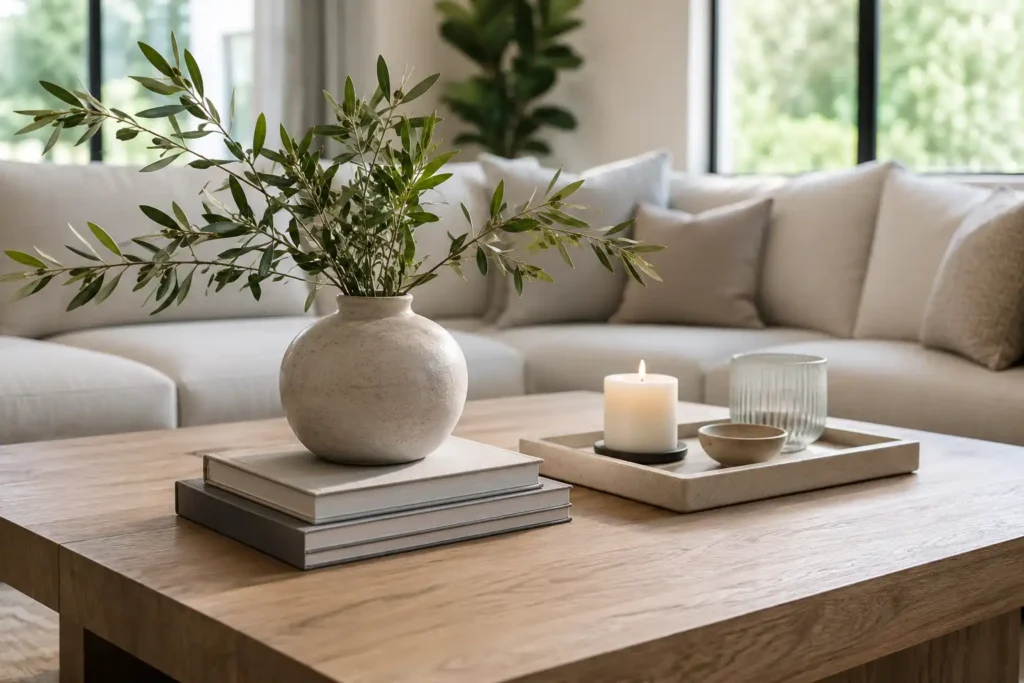
Why Has Minimalist Coffee Table Styling Become So Popular?
Minimalism has become increasingly popular because modern lifestyles often involve busy schedules and smaller living spaces. Homeowners are looking for interiors that promote relaxation rather than visual overload.
Several factors have contributed to the growing popularity of Minimalist Coffee Table Styling, including:
- Cleaner and more organized living spaces
- Reduced household clutter
- Easier cleaning and maintenance
- Greater appreciation for high-quality materials
- Timeless interior design that doesn’t quickly go out of style
- Better functionality for everyday living
- Increased focus on intentional decorating
Social media platforms, luxury interior magazines, and professional designers have also embraced minimalist aesthetics. Images of clean living rooms featuring thoughtfully styled coffee tables continue to inspire homeowners seeking elegant yet practical decorating ideas.
Minimalist Styling Is Not About Owning Less
One common misconception is that minimalism requires removing everything from a room. In reality, minimalist decorating focuses on choosing the right pieces instead of displaying as many as possible.
For example, rather than placing ten small decorative accessories across the table, a minimalist arrangement may feature:
- One ceramic vase with fresh greenery
- Two stacked coffee table books
- A scented candle
- A decorative tray that organizes smaller items
This arrangement creates greater visual impact while maintaining functionality and openness.
The Philosophy Behind Minimalist Interior Design
Minimalism encourages thoughtful choices rather than excessive consumption. Every object should contribute to the beauty or usefulness of the space.
When applied to coffee table decorating, this philosophy means asking simple questions before adding another item:
- Does this accessory serve a purpose?
- Does it complement the existing arrangement?
- Does it improve the overall balance?
- Is it visually calming?
- Would removing it actually improve the design?
Often, the answer leads to a simpler, more refined arrangement.
Benefits of Minimalist Coffee Table Styling
Minimalist decorating offers advantages that extend far beyond appearance. A thoughtfully styled coffee table contributes to better organization, easier maintenance, and a more relaxing living environment.
Creates a Clutter-Free Living Room
The coffee table naturally becomes one of the busiest surfaces in any home. Remote controls, magazines, snacks, chargers, mail, and miscellaneous objects tend to accumulate quickly.
A minimalist arrangement encourages homeowners to keep only essential items visible. Decorative trays and intentional organization make everyday clutter easier to manage while preserving a clean appearance.
As a result, the entire living room instantly feels more spacious and welcoming.
Makes Small Living Rooms Feel Larger
One of the biggest advantages of Minimalist Coffee Table Styling is its ability to visually expand a room.
When a coffee table is overcrowded with decorations, the eye perceives the space as busy and confined. Leaving strategic empty areas allows light to move more freely throughout the room, creating the illusion of greater openness.
For apartments and compact homes, minimalist styling can dramatically improve the sense of space without changing the furniture layout.
Enhances Everyday Functionality
Coffee tables are designed to be used.
A heavily decorated surface often leaves little room for practical activities such as placing drinks, serving snacks, reading books, or working on a laptop.
Minimalist styling ensures the table remains functional while still looking professionally designed. Decorative objects occupy only part of the surface, leaving enough open space for daily use.
Easier to Clean and Maintain
Dusting numerous decorative objects takes time.
Minimalist coffee tables usually feature only a handful of carefully selected accessories, making cleaning significantly faster. Rearranging, wiping surfaces, and seasonal updates also become much simpler.
This practical advantage is especially valuable for busy households with children or pets.
Promotes a Sense of Calm
Visual clutter often creates mental clutter.
Interior designers frequently recommend minimalist spaces because they encourage relaxation and reduce overstimulation. A balanced coffee table arrangement contributes to an environment that feels peaceful and organized.
Natural materials, neutral colors, and carefully selected decor further enhance this calming atmosphere.
Highlights Premium Materials
Minimalism allows the beauty of quality materials to stand out.
Instead of hiding the natural grain of a wooden coffee table beneath excessive decorations, minimalist styling celebrates the craftsmanship of the furniture itself.
Whether your table is made from oak, walnut, marble, travertine, glass, or metal, leaving portions of the surface visible enhances its elegance.
Offers Long-Term Value
Unlike trend-driven decorating styles that change every year, minimalist interiors remain timeless.
Investing in a few high-quality decorative pieces often proves more economical than regularly purchasing inexpensive accessories to keep up with changing trends.
As your taste evolves, you can refresh the arrangement by swapping one or two items rather than replacing the entire display.
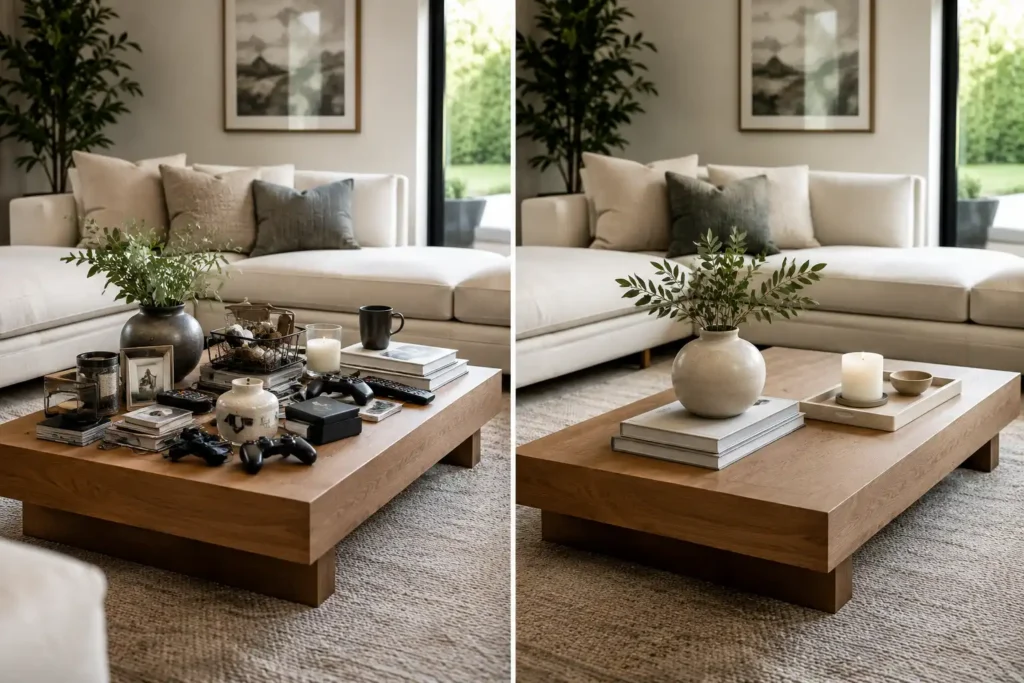
The Basic Principles of Minimalist Coffee Table Styling
Understanding the fundamental design principles behind Minimalist Coffee Table Styling makes decorating much easier. These principles help create arrangements that feel balanced, intentional, and visually pleasing.
Keep Only Essential Decor
Minimalism begins with thoughtful editing.
Instead of decorating first and removing later, choose only the accessories that genuinely improve the table. Every decorative object should either add beauty, functionality, or texture.
A simple arrangement featuring three to five carefully selected pieces often creates a stronger impression than one containing a dozen unrelated accessories.
Prioritize Function Over Decoration
A coffee table should remain useful.
While decorative objects certainly enhance its appearance, they should never prevent the table from serving its everyday purpose.
Leave enough open space for placing drinks, books, laptops, or serving trays. Functionality should always guide decorative decisions.
Embrace Negative Space
Negative space refers to the intentionally empty areas surrounding decorative objects.
Rather than viewing these spaces as unfinished, professional interior designers treat them as equally important design elements.
Empty space:
- Creates visual balance
- Reduces clutter
- Highlights decorative objects
- Improves overall elegance
- Makes the arrangement easier to appreciate
One of the easiest ways to improve a coffee table arrangement is often by removing one unnecessary accessory instead of adding another.
Focus on Quality Instead of Quantity
Minimalist decorating values craftsmanship over abundance.
Choose fewer pieces made from premium materials such as:
- Solid wood
- Marble
- Ceramic
- Natural stone
- Linen
- Glass
- Brass
- Matte metal
These materials introduce texture and sophistication without requiring numerous decorative objects.
Maintain Visual Balance
Balance doesn’t necessarily mean perfect symmetry.
Professional designers often combine objects of varying heights, shapes, and textures while maintaining an overall sense of equilibrium.
For example:
- A tall vase can be balanced by stacked books.
- A candle can complement a decorative bowl.
- A tray can organize several smaller accessories into one cohesive grouping.
The eye should naturally move across the arrangement without feeling overwhelmed.
Limit the Color Palette
Minimalist interiors typically rely on restrained color schemes.
Neutral tones help create a calm and timeless appearance while allowing textures and materials to become the primary focus.
Popular minimalist color combinations include:
- White and beige
- Cream and light oak
- Black and white
- Gray with natural wood
- Warm taupe and stone
- Soft earthy neutrals
Using too many contrasting colors often disrupts the clean aesthetic that defines minimalist decorating.
Introduce Texture Instead of Excessive Color
Rather than relying on bright colors for visual interest, minimalist styling creates depth through texture.
Combining smooth ceramics, natural wood, woven materials, polished stone, soft linen, and matte finishes results in a layered arrangement that feels warm and sophisticated without appearing busy.
This subtle variety keeps the coffee table interesting while maintaining the simplicity that makes minimalist interiors so inviting.
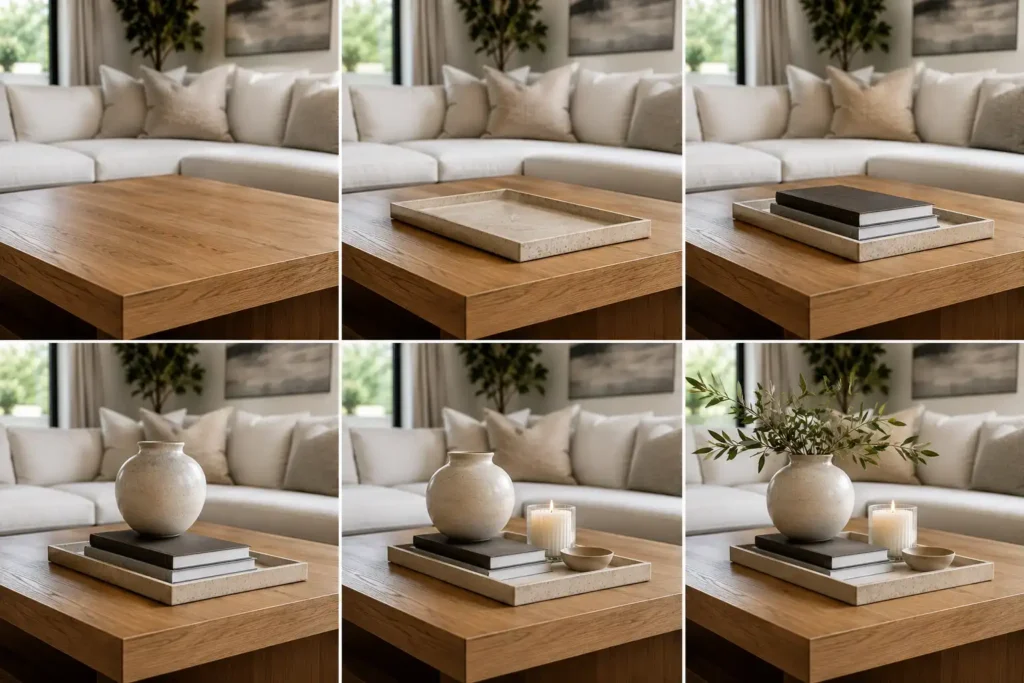
How to Style a Minimalist Coffee Table Step by Step
Creating a beautiful coffee table doesn’t require expensive accessories or professional interior design experience. The secret behind successful Minimalist Coffee Table Styling is following a structured process that focuses on balance, simplicity, and intentional decorating. By styling one layer at a time, you can create an arrangement that looks polished, functional, and timeless.
Step 1: Start with a Completely Clean Surface
Before adding any decorative pieces, remove everything from the coffee table.
This gives you the opportunity to see the table’s natural beauty and evaluate its size, shape, color, and material. It also prevents you from designing around clutter that doesn’t belong in the final arrangement.
Wipe the surface clean and inspect it from different angles. Whether your coffee table is made of wood, marble, glass, metal, or stone, allowing the material to shine is one of the defining characteristics of minimalist design.
Starting with an empty surface also helps you make intentional decorating decisions instead of simply rearranging existing clutter.
Step 2: Identify the Purpose of Your Coffee Table
Every coffee table serves a slightly different role depending on the household.
Ask yourself a few simple questions before decorating:
- Will the table be used daily for drinks and snacks?
- Do you entertain guests frequently?
- Is it primarily decorative?
- Will children use the living room often?
- Do you need space for books or remote controls?
Your answers should guide the styling process.
For example, a family living room benefits from practical accessories like a decorative tray that keeps essentials organized, while a formal sitting room may prioritize sculptural objects and elegant floral arrangements.
Minimalist Coffee Table Styling always begins with functionality before decoration.
Step 3: Choose a Focal Point
Every professionally styled coffee table has one main feature that naturally attracts attention.
Common focal points include:
- A large ceramic vase
- Fresh flowers
- A sculptural decorative object
- A statement candle
- A stack of designer coffee table books
- A beautiful bowl made of marble or wood
The focal point should be proportional to the size of the coffee table.
A large rectangular coffee table can accommodate a taller vase or oversized decor, while a compact round table often looks best with a smaller arrangement.
Choosing one strong focal point prevents the design from feeling cluttered.
Step 4: Build Around the Focal Point
Once the centerpiece is in place, add supporting accessories that complement rather than compete with it.
Think in terms of layers rather than separate decorations.
A common arrangement might include:
- A tray as the base
- Two stacked books
- A ceramic vase
- A candle
- A small decorative object
Each item should have enough breathing room to remain visible without touching every other accessory.
This creates visual harmony while preserving the clean appearance associated with Minimalist Coffee Table Styling.
Step 5: Add Height Variation
Professional interior designers rarely place objects of identical height together.
Instead, they combine tall, medium, and low accessories to create movement throughout the arrangement.
Examples include:
Tall Elements:
- Vase
- Branches
- Dried flowers
- Olive stems
Medium Elements:
- Candles
- Decorative sculptures
- Plant pots
Low Elements:
- Coffee table books
- Decorative bowls
- Small trays
Different heights naturally guide the eye across the display, making the arrangement more dynamic without adding unnecessary objects.
Step 6: Mix Different Textures
Texture adds warmth and depth to minimalist interiors.
Rather than introducing numerous colors, combine materials that contrast beautifully with one another.
Popular texture combinations include:
- Smooth ceramic with rough stone
- Natural wood with glass
- Linen with marble
- Matte pottery with polished brass
- Woven baskets with concrete
These subtle contrasts make the arrangement feel rich and layered while maintaining a neutral color palette.
Step 7: Use Decorative Trays to Create Organization
A tray is one of the most versatile accessories in Minimalist Coffee Table Styling.
Instead of allowing several small objects to appear scattered, a tray groups them into one organized composition.
Benefits of using a tray include:
- Creates visual structure
- Makes cleaning easier
- Keeps accessories together
- Prevents clutter
- Adds another layer of texture
Popular tray materials include:
- Oak wood
- Walnut
- Marble
- Travertine
- Black metal
- Woven rattan
- Leather
Choose a tray that complements your coffee table rather than matching it exactly.
Step 8: Incorporate Natural Elements
Nature softens minimalist interiors.
Adding greenery introduces life, texture, and subtle color while keeping the arrangement calm and elegant.
Popular natural elements include:
- Olive branches
- Eucalyptus
- Fresh flowers
- Orchids
- Dried pampas grass
- Moss arrangements
- Succulents
- Small indoor plants
Even a single stem placed inside a ceramic vase can dramatically elevate the overall appearance.
Step 9: Leave Empty Space
One of the biggest differences between amateur and professional styling is restraint.
Many homeowners continue adding decorations until the table feels full.
Professional designers stop much earlier.
Leaving approximately one-third to one-half of the tabletop visible creates balance and emphasizes the beauty of both the furniture and the decorative accessories.
Empty space is not wasted space—it is an intentional design element.
Step 10: Evaluate from Every Angle
Since coffee tables are viewed from multiple seating positions, walk around the room and observe the arrangement from different perspectives.
Check for:
- Balance
- Symmetry where appropriate
- Height variation
- Color consistency
- Practical usability
- Open space
Small adjustments often make a dramatic difference.
Sometimes moving a candle just a few inches improves the entire composition.
Essential Decor Items for Minimalist Coffee Table Styling
Choosing the right accessories is just as important as knowing how to arrange them. The best Minimalist Coffee Table Styling combines decorative objects that enhance the room without overwhelming the table.
Decorative Tray
A tray acts as the foundation of many minimalist coffee table arrangements.
It instantly organizes smaller objects into one cohesive display while making the entire table feel intentional.
Popular tray materials include:
- Wood
- Marble
- Stone
- Leather
- Metal
- Woven rattan
Round trays soften square tables, while rectangular trays work particularly well on longer coffee tables.
Coffee Table Books
Coffee table books are among the most iconic elements of minimalist styling.
They provide:
- Height
- Structure
- Personality
- Color consistency
Choose books with elegant neutral covers that reflect your interests, such as architecture, interior design, travel, fashion, photography, or art.
Stacking two or three books creates an ideal platform for displaying candles, bowls, or decorative sculptures.
Ceramic Vase
A simple ceramic vase remains one of the most timeless decorating pieces.
Neutral finishes work especially well:
- White
- Beige
- Sand
- Stone
- Matte black
- Soft gray
The vase can remain empty or hold fresh flowers, dried botanicals, or leafy branches depending on the season.
Fresh Flowers
Fresh flowers instantly brighten a living room.
For minimalist interiors, choose simple arrangements rather than oversized bouquets.
Excellent options include:
- White tulips
- Hydrangeas
- Roses
- Peonies
- Ranunculus
- Baby’s breath
Keeping the arrangement loose and natural enhances the minimalist aesthetic.
Greenery
If fresh flowers require too much maintenance, greenery provides an excellent alternative.
Popular choices include:
- Olive branches
- Eucalyptus
- Monstera leaves
- Ficus stems
- Ferns
- Artificial premium greenery
Green plants add freshness while maintaining a restrained color palette.
Candles
Candles contribute both decoration and atmosphere.
Minimalist interiors typically favor:
- Unscented pillar candles
- Neutral-colored candles
- Ceramic candle holders
- Glass hurricane candles
- Stone candle vessels
Grouping candles of varying heights creates a subtle focal point.
Decorative Bowl
Bowls introduce another layer of texture while remaining functional.
Materials often include:
- Marble
- Travertine
- Wood
- Glass
- Ceramic
- Cast stone
A decorative bowl can hold beads, natural stones, seasonal ornaments, or remain empty for a sculptural appearance.
Sculptural Objects
Minimalist design embraces statement pieces that double as artwork.
Examples include:
- Abstract sculptures
- Knot decor
- Stone carvings
- Wooden figures
- Metal geometric shapes
- Ceramic art pieces
Rather than displaying several small ornaments, select one meaningful sculptural object.
Natural Stone Accessories
Stone introduces organic beauty that never feels overwhelming.
Popular materials include:
- Travertine
- Marble
- Limestone
- Soapstone
- Onyx
These materials pair beautifully with wood, glass, and ceramics.
Wooden Accents
Wood adds warmth and prevents minimalist interiors from feeling cold.
Consider incorporating:
- Wooden beads
- Carved bowls
- Oak trays
- Walnut sculptures
- Handmade wooden boxes
Natural grain patterns provide visual interest without relying on bright colors.
Glass Accessories
Glass accessories help maintain an open, airy appearance.
Popular choices include:
- Glass vases
- Hurricanes
- Decorative bottles
- Clear candle holders
Because glass reflects light, it contributes to the spacious feeling often associated with minimalist homes.
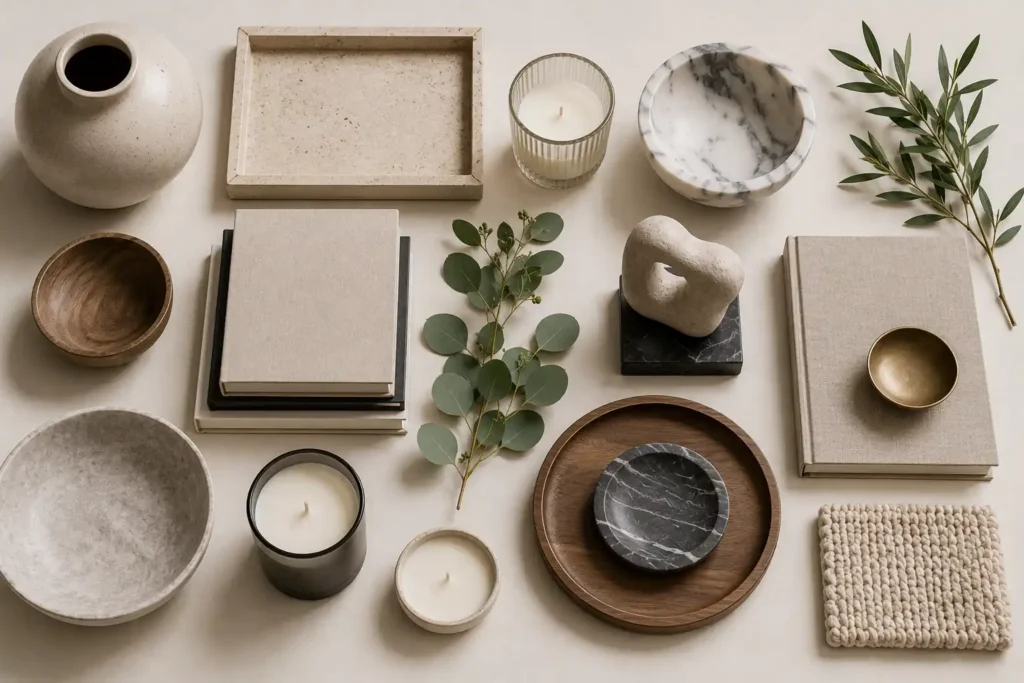
Best Color Schemes for Minimalist Coffee Table Styling
Color has a major influence on the atmosphere of a living room. Successful Minimalist Coffee Table Styling typically relies on restrained palettes that emphasize harmony rather than contrast.
White and Beige
This timeless combination creates an inviting and peaceful environment.
Pair:
- White ceramics
- Beige linen
- Light oak wood
- Cream candles
- Ivory books
The result feels bright, clean, and sophisticated.
Black and White
For modern interiors, black and white creates striking contrast while remaining minimalist.
Consider combining:
- Matte black candle holders
- White marble
- Black coffee table books
- White ceramics
- Glass accessories
A touch of natural wood softens the monochromatic palette.
Earthy Neutral Palette
Earth-inspired colors remain one of the biggest trends in interior design.
Combine shades such as:
- Sand
- Clay
- Taupe
- Warm beige
- Terracotta
- Stone gray
These colors complement natural materials beautifully.
Warm Wood Tones
Wood introduces richness without adding visual clutter.
Pair walnut or oak furniture with:
- Cream ceramics
- White books
- Olive branches
- Linen accents
The result feels warm and timeless.
Soft Gray Palette
Gray works especially well in contemporary homes.
Combine:
- Concrete accessories
- Gray ceramics
- White candles
- Silver accents
- Glass decor
This creates a refined and understated appearance.
Scandinavian Palette
Scandinavian interiors embrace brightness and simplicity.
Key colors include:
- White
- Light gray
- Pale oak
- Beige
- Soft green
Minimal decoration combined with abundant natural light defines this timeless style.
Japandi Color Palette
Japandi design blends Scandinavian simplicity with Japanese craftsmanship.
Popular colors include:
- Warm ivory
- Soft charcoal
- Natural wood
- Olive green
- Sand
- Stone
Combined with handcrafted ceramics and organic materials, these tones create one of the most elegant approaches to Minimalist Coffee Table Styling.
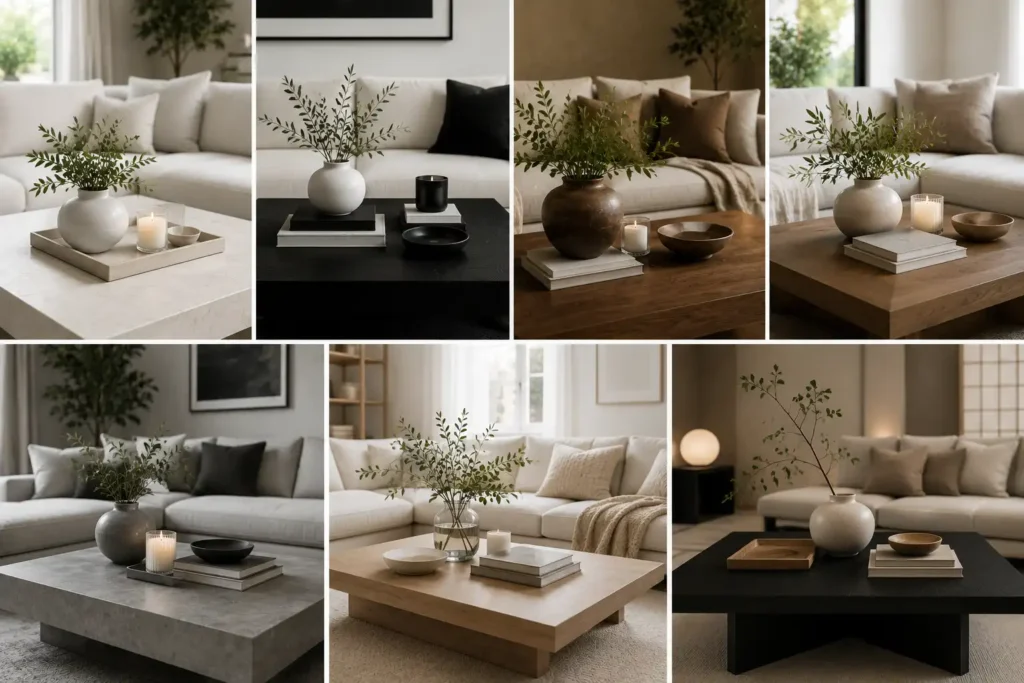
Minimalist Coffee Table Styling Ideas by Table Shape
The shape of your coffee table plays a significant role in determining how accessories should be arranged. Every shape presents unique opportunities for creating a balanced and visually appealing display. Understanding how to style different table shapes helps you maximize both aesthetics and functionality while maintaining the clean look that defines Minimalist Coffee Table Styling.
Minimalist Coffee Table Styling for Round Coffee Tables
Round coffee tables naturally encourage soft, flowing arrangements. Since there are no corners, decorations should follow the table’s circular shape instead of being placed in straight lines.
One of the easiest approaches is to use a round decorative tray as the centerpiece. Place a ceramic vase with fresh greenery on one side of the tray and balance it with a candle and a small decorative object.
This arrangement creates movement while allowing the eye to travel naturally around the table.
Round coffee tables generally look best with fewer accessories because the available surface area is smaller than rectangular designs.
A simple arrangement may include:
- One decorative tray
- Two coffee table books
- A ceramic vase
- One candle
- A decorative bowl
Avoid placing decor directly around the edge of the table. Leaving open space around the perimeter creates a lighter, more sophisticated appearance.
Minimalist Coffee Table Styling for Square Coffee Tables
Square coffee tables provide excellent opportunities for creating balanced arrangements.
One popular method is the quadrant approach, where the tabletop is mentally divided into four equal sections.
For example:
- Section One: Coffee table books
- Section Two: Decorative tray
- Section Three: Ceramic vase
- Section Four: Sculptural object
This layout creates visual balance while preventing accessories from appearing crowded.
Another effective strategy is to group all decorations into the center of the table while leaving the outer edges empty. This approach emphasizes negative space and highlights the beauty of the furniture itself.
Minimalist Coffee Table Styling for Rectangular Coffee Tables
Rectangular coffee tables offer the largest decorating surface, making them ideal for layered arrangements.
Instead of spreading accessories evenly across the entire table, divide the surface into visual zones.
For example:
Zone One:
- Decorative tray
- Candle
- Small bowl
Zone Two:
- Coffee table books
- Ceramic sculpture
Zone Three:
- Tall vase with greenery
Keeping each zone distinct creates organization without sacrificing simplicity.
Long coffee tables also benefit from height variation. Position taller objects toward one end and lower accessories toward the opposite side to encourage visual movement across the table.
Minimalist Coffee Table Styling for Oval Coffee Tables
Oval coffee tables combine the softness of round tables with the larger surface area of rectangular designs.
Their curved edges naturally create an elegant appearance, so accessories should complement those gentle lines.
Try arranging decor in a loose triangular formation rather than straight rows.
For example:
- Tall vase
- Stack of books
- Decorative candle
This simple composition maintains openness while creating a sophisticated focal point.
Minimalist Coffee Table Styling for Nested Coffee Tables
Nested coffee tables have become increasingly popular in modern homes because of their versatility.
Rather than decorating every table equally, designate one table as the primary display and leave the second table mostly functional.
For example:
Large Table:
- Decorative tray
- Vase
- Books
Small Table:
- Single candle
- Small plant
This prevents the arrangement from feeling repetitive while maintaining a cohesive design.
Minimalist Coffee Table Styling for Lift-Top Coffee Tables
Lift-top coffee tables combine storage and functionality, making them ideal for busy households.
Since these tables are frequently opened, decorations should remain easy to move.
Lightweight accessories such as trays, candles, books, and small vases work particularly well.
Avoid heavy sculptures or oversized arrangements that must be removed each time the tabletop is lifted.
A simple tray containing all decorative objects allows the entire arrangement to be moved in seconds whenever additional workspace is needed.
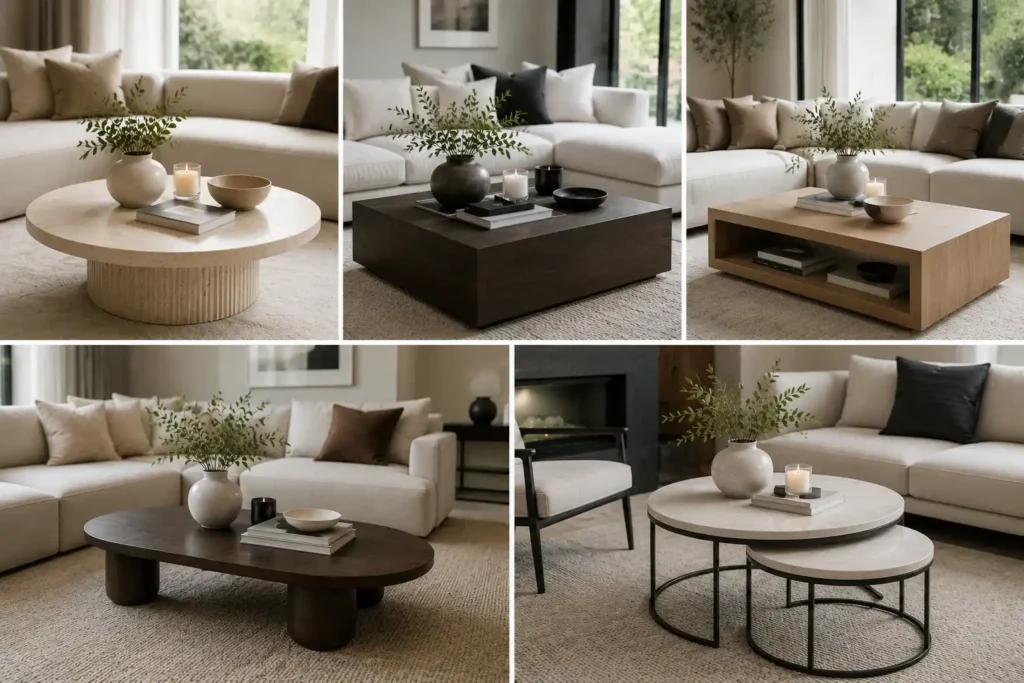
Styling Different Coffee Table Materials
The material of your coffee table significantly influences the overall styling approach. One of the key principles of Minimalist Coffee Table Styling is allowing natural materials to become part of the design rather than covering them completely.
Wooden Coffee Tables
Wood introduces warmth, texture, and timeless beauty.
Whether your table is crafted from oak, walnut, ash, teak, or reclaimed wood, allow portions of the grain to remain visible.
Recommended accessories include:
- White ceramic vase
- Linen-covered books
- Marble tray
- Olive branches
- Stone candle holders
Natural materials complement wood particularly well because they reinforce the organic feel of the furniture.
Avoid overly glossy or brightly colored accessories that compete with the wood’s natural beauty.
Marble Coffee Tables
Marble coffee tables already possess strong visual character due to their veining and polished surface.
Decor should enhance rather than overpower the stone.
Excellent pairings include:
- Matte ceramic pottery
- Glass accessories
- Brass candle holders
- White flowers
- Neutral books
Keep the number of decorative objects limited so the marble remains one of the room’s primary focal points.
Glass Coffee Tables
Glass coffee tables create openness and allow light to travel freely throughout the room.
Because every object becomes highly visible, thoughtful editing is especially important.
Choose accessories with clean silhouettes, such as:
- Transparent glass vase
- White candles
- Small marble sculpture
- Wooden tray
Avoid excessive layering, as stacked accessories can make glass tables appear visually busy.
Metal Coffee Tables
Metal coffee tables often feature sleek, contemporary designs.
Whether finished in black steel, brass, bronze, or brushed nickel, they pair beautifully with soft textures that balance their industrial appearance.
Consider combining:
- Linen books
- Ceramic vases
- Wooden bowls
- Green plants
- Natural stone accessories
The contrast between cool metal and warm organic materials creates an inviting atmosphere.
Stone Coffee Tables
Stone tables made from travertine, limestone, or concrete naturally suit minimalist interiors.
Since these materials already provide rich texture, keep decorative accessories understated.
Ideal choices include:
- Glass vase
- White flowers
- Neutral candles
- Handmade ceramics
Leaving significant portions of the tabletop exposed highlights the craftsmanship of the stone.
Concrete Coffee Tables
Concrete introduces an architectural quality that works exceptionally well in modern homes.
Balance its bold appearance with softer decorative elements.
Recommended combinations include:
- Warm wood
- Linen accents
- Green foliage
- Cream-colored ceramics
- Woven accessories
This mixture prevents the room from feeling cold while preserving its contemporary character.
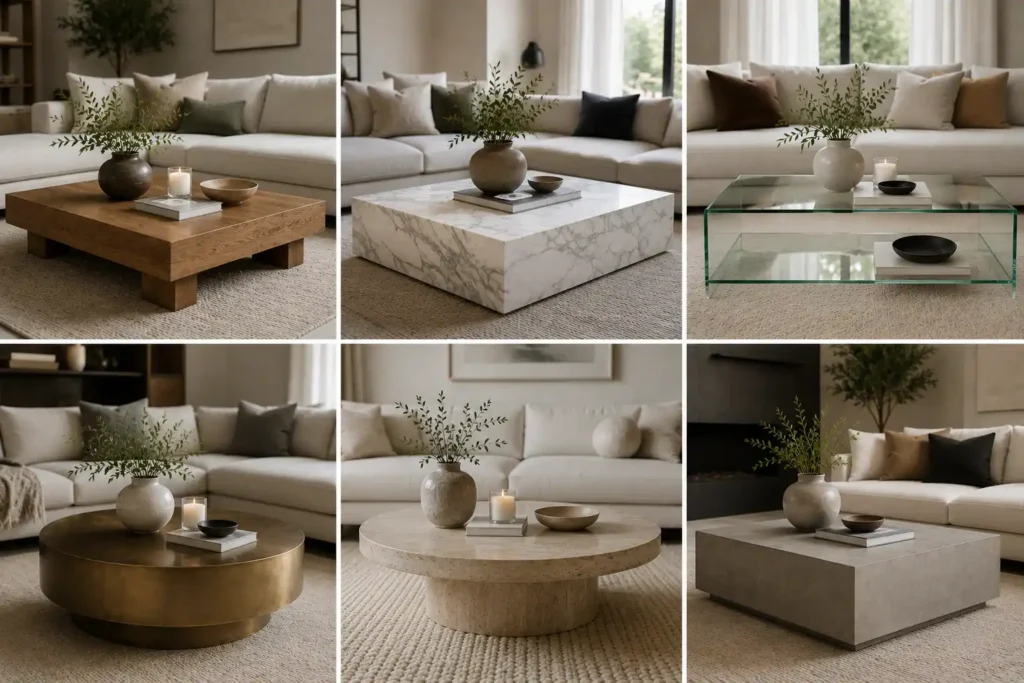
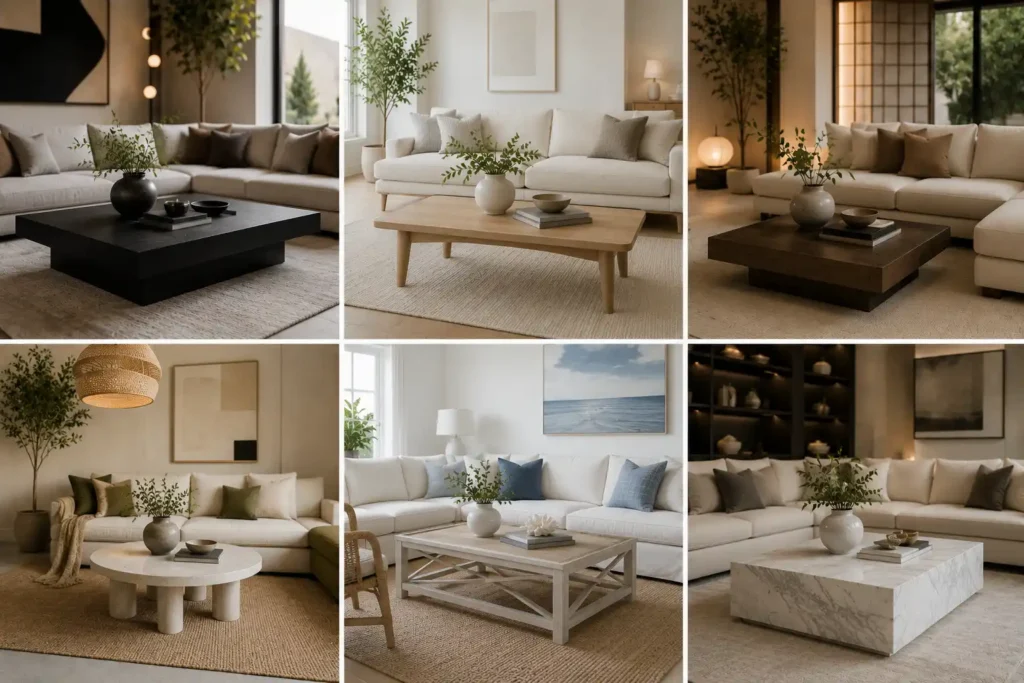
Minimalist Coffee Table Styling Ideas for Every Interior Style
One of the greatest strengths of Minimalist Coffee Table Styling is its versatility. Regardless of your decorating style, minimalist principles can be adapted to complement the existing design of your home.
Modern Minimalist Style
Modern interiors emphasize clean lines, geometric shapes, and restrained color palettes.
For a modern coffee table, consider using:
- Matte black tray
- White ceramic vase
- Two architecture books
- Sculptural decor
- Glass candle holder
Limit the color palette to black, white, gray, and natural wood for a timeless appearance.
Scandinavian Style
Scandinavian interiors prioritize comfort, natural light, and simplicity.
Choose accessories that create warmth without clutter.
Ideal elements include:
- Oak tray
- White pottery
- Soft greenery
- Linen books
- Unscented candles
The overall arrangement should feel bright, airy, and welcoming.
Japandi Style
Japandi blends Japanese craftsmanship with Scandinavian simplicity.
Every decorative object should appear intentional and handcrafted.
Recommended accessories include:
- Handmade ceramic vase
- Natural branches
- Stone bowl
- Woven tray
- Neutral books
Focus on asymmetrical balance, natural textures, and earthy colors.
Contemporary Style
Contemporary interiors evolve with current trends while maintaining sophisticated simplicity.
A contemporary minimalist coffee table may feature:
- Marble tray
- Metallic sculpture
- Designer candle
- Fashion books
- Glass vase
Keep decorative elements refined and avoid excessive ornamentation.
Organic Modern Style
Organic modern design celebrates nature through texture and material selection.
Combine:
- Travertine accessories
- Olive branches
- Linen books
- Wooden bowls
- Handmade pottery
Layering organic textures creates warmth while preserving minimalist elegance.
Coastal Minimalist Style
Coastal interiors embrace relaxed sophistication inspired by nature.
Decorative elements might include:
- White coral sculpture
- Driftwood bowl
- Soft blue glass
- White candles
- Fresh greenery
Avoid nautical-themed accessories that feel overly decorative. Instead, focus on subtle references to the coast through natural materials and soft colors.
Luxury Minimalist Style
Luxury minimalism emphasizes premium materials and impeccable craftsmanship rather than excessive decoration.
A luxury coffee table arrangement often includes:
- Large marble tray
- Designer coffee table books
- Crystal candle holder
- Sculptural art piece
- Premium floral arrangement
Every item should feel carefully selected and beautifully made.
Industrial Minimalist Style
Industrial interiors combine raw materials with clean design.
Excellent accessories include:
- Black metal tray
- Concrete candle holder
- Wooden bowl
- Vintage-inspired books
- Matte ceramic vase
Mixing industrial finishes with natural textures keeps the room comfortable and visually balanced.
Farmhouse Minimalist Style
Minimalist farmhouse design removes unnecessary rustic decorations while preserving warmth and charm.
A simple farmhouse arrangement may feature:
- Wooden tray
- White pitcher vase
- Fresh eucalyptus
- Neutral books
- Stone candle holder
Avoid overcrowding the table with signs or seasonal decorations. Instead, rely on natural materials and subtle styling.
Mid-Century Modern Style
Mid-century modern furniture pairs beautifully with minimalist styling.
Decorate with:
- Walnut accessories
- Geometric sculpture
- Glass vase
- Abstract art books
- Brass candle holder
The combination of clean lines and warm wood tones creates an elegant, timeless display.
No matter which interior design style you prefer, the key to successful Minimalist Coffee Table Styling is consistency. Select accessories that complement the room’s existing colors, materials, and furniture while resisting the temptation to overdecorate. A few thoughtfully chosen pieces will always create a more refined and enduring impression than an overcrowded tabletop.
Seasonal Minimalist Coffee Table Styling
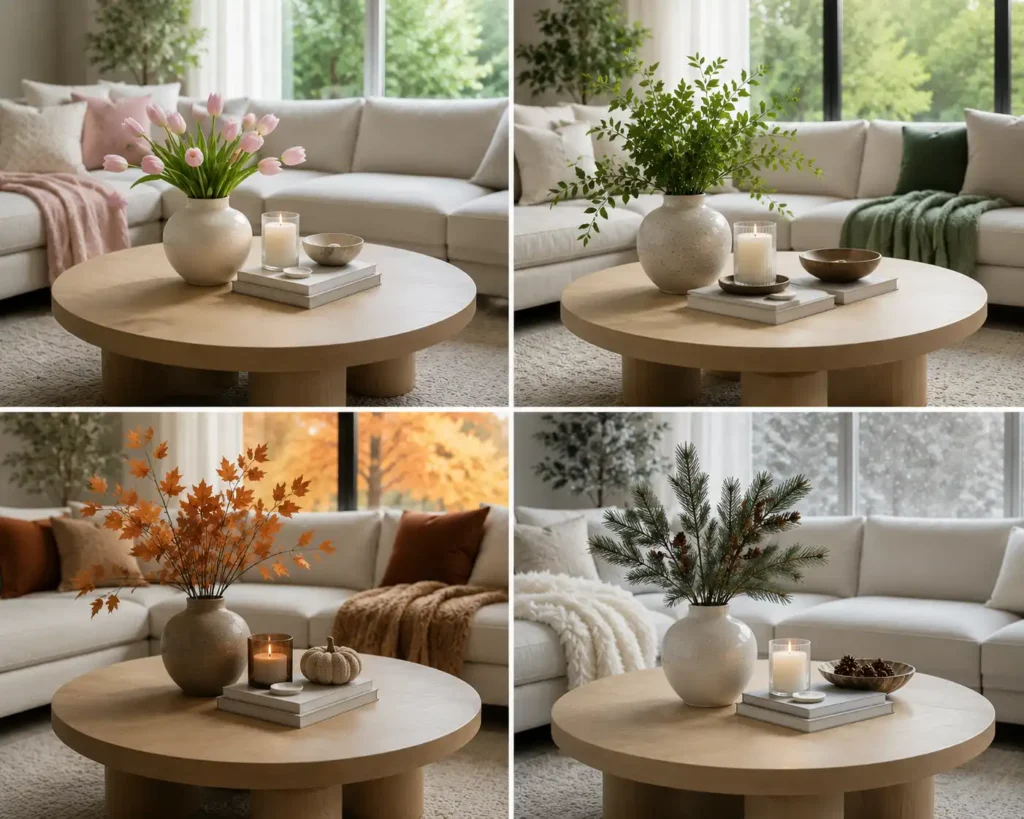
One of the greatest advantages of Minimalist Coffee Table Styling is how easily it adapts to different seasons. Instead of completely redecorating your living room several times a year, you only need to replace a few carefully selected accessories while keeping the overall arrangement clean and consistent.
This approach saves money, reduces unnecessary clutter, and keeps your home feeling fresh throughout the year.
Spring Minimalist Coffee Table Styling
Spring is all about renewal, fresh colors, and natural beauty. During this season, your coffee table should feel light, airy, and inviting.
Replace heavy winter accessories with fresh botanical elements and lighter textures.
Spring styling ideas include:
- White ceramic vase with tulips
- Fresh eucalyptus branches
- Soft green foliage
- Light-colored coffee table books
- Cream candles
- Woven tray
- Glass decorative bowl
Choose colors such as:
- White
- Soft green
- Beige
- Pale blush
- Light gray
- Natural wood
Avoid filling the table with colorful Easter decorations. Instead, let fresh flowers become the seasonal focal point.
Summer Minimalist Coffee Table Styling
Summer interiors should feel bright, open, and effortless.
Keep decorations simple while introducing natural textures inspired by the outdoors.
Excellent summer accessories include:
- White orchids
- Driftwood bowl
- Rattan tray
- Clear glass vase
- Lemon branches
- Neutral candles
- Linen coasters
Color palette:
- White
- Sand
- Light blue
- Soft beige
- Warm oak
- Sage green
Natural sunlight becomes part of the styling, so avoid overly reflective or dark accessories that make the table appear heavy.
Autumn Minimalist Coffee Table Styling
Autumn introduces warmth and texture without sacrificing simplicity.
Rather than covering the table with pumpkins and seasonal decorations, incorporate subtle references to fall through natural materials.
Beautiful autumn additions include:
- Dried wheat stems
- Brown ceramic vase
- Wooden bowl
- Amber glass candle
- Neutral knit accents
- Pinecones in a decorative bowl
Recommended colors:
- Warm beige
- Caramel
- Terracotta
- Deep olive
- Walnut
- Soft brown
The objective is to create a cozy atmosphere while maintaining clean lines and open space.
Winter Minimalist Coffee Table Styling
Winter styling emphasizes warmth and comfort.
Layer rich textures while keeping the arrangement restrained.
Popular winter decor includes:
- White candles
- Marble tray
- Pine branches
- Stone accessories
- Soft linen books
- Neutral ceramic vase
A few evergreen stems or white berries provide seasonal interest without overwhelming the minimalist design.
Holiday Styling Without Clutter
Many homeowners struggle to decorate for the holidays without sacrificing their minimalist aesthetic.
Instead of displaying numerous festive ornaments, choose just one or two elegant seasonal accents.
Examples include:
- Evergreen branches
- Brass candle holders
- Wooden bead garland
- White pillar candles
- Pinecones
- Natural wreath displayed nearby
This subtle approach keeps the living room festive while preserving the clean appearance of Minimalist Coffee Table Styling.
Coffee Table Styling Based on Living Room Size
The size of your living room should influence how you decorate your coffee table. Proportional styling creates better balance and prevents the room from feeling either overcrowded or empty.
Minimalist Coffee Table Styling for Small Living Rooms
Small spaces benefit the most from minimalist decorating.
Every decorative object should contribute to the room without making it feel crowded.
Best practices include:
- Use only three to five accessories.
- Choose one focal point.
- Leave plenty of empty tabletop visible.
- Select light-colored decor.
- Use glass or ceramic accessories to reflect light.
- Avoid oversized arrangements.
A simple combination of books, a vase, and a candle often provides everything needed.
Keeping decorations compact allows the coffee table to remain functional for daily activities.
Minimalist Coffee Table Styling for Medium Living Rooms
Medium-sized living rooms provide greater flexibility.
You can create layered arrangements while still maintaining simplicity.
Consider including:
- Decorative tray
- Coffee table books
- Vase
- Candle
- Decorative bowl
- Small sculpture
Balance remains more important than quantity.
Instead of filling every corner, concentrate decorations toward the center of the table.
Minimalist Coffee Table Styling for Large Living Rooms
Larger rooms require accessories with greater visual presence.
Small decorative objects may appear insignificant on oversized coffee tables.
Choose larger statement pieces such as:
- Oversized vase
- Large decorative tray
- Premium coffee table books
- Sculptural centerpiece
- Large floral arrangement
Grouping several objects together creates stronger visual impact than scattering them across the table.
Negative space should still remain an important part of the design.
Coffee Table Styling According to Lifestyle
Beautiful styling should also support the way you live. The most successful Minimalist Coffee Table Styling combines elegant design with everyday practicality.
Homes with Children
Families with young children need durable, safe, and functional decorating solutions.
Choose accessories that are:
- Stable
- Rounded
- Lightweight
- Easy to clean
- Non-breakable when possible
Instead of delicate sculptures, consider:
- Wooden bowls
- Fabric-covered books
- Artificial greenery
- Soft woven trays
Leave enough space for children to play or place drinks without constantly moving decorations.
Pet-Friendly Coffee Table Styling
Pets naturally explore their surroundings, making stability especially important.
Recommendations include:
- Avoid fragile glass objects near edges.
- Use heavier vases.
- Choose flameless candles if necessary.
- Secure decorative trays.
- Avoid toxic plants.
Keeping accessories grouped together reduces the likelihood of items being knocked over.
Coffee Tables for Frequent Entertaining
If you regularly host family or friends, flexibility becomes essential.
A decorative tray makes entertaining much easier because the entire arrangement can be moved quickly when serving drinks or snacks.
Excellent entertaining accessories include:
- Decorative coasters
- Stylish serving tray
- Candle
- Neutral centerpiece
Keep enough open surface available for practical use during gatherings.
Work-from-Home Living Rooms
Many people occasionally use their coffee table as a temporary workspace.
Minimalist styling makes this transition easy.
Limit permanent decorations to one side of the table so the remaining surface can accommodate:
- Laptop
- Notebook
- Coffee mug
- Tablet
A movable tray provides maximum flexibility throughout the day.
Common Minimalist Coffee Table Styling Mistakes to Avoid
Even beautiful accessories can create an unbalanced arrangement when used incorrectly. Avoiding these common mistakes will help your Minimalist Coffee Table Styling look more polished and professionally designed.
Using Too Many Decorative Objects
The most common mistake is assuming that more accessories create a better design.
In reality, excessive decoration overwhelms the table and distracts from individual pieces.
Instead of displaying ten small accessories, choose three or four larger statement pieces.
Less almost always creates greater impact.
Ignoring Scale and Proportion
Accessories should match the size of the coffee table.
Tiny objects disappear on oversized tables, while large sculptures overwhelm compact furniture.
Always consider:
- Table dimensions
- Ceiling height
- Sofa size
- Room proportions
Balanced scale creates visual harmony throughout the living room.
Decorating Every Inch of the Table
Minimalist design depends on breathing room.
When every available surface is occupied, the arrangement loses elegance.
Leave significant portions of the tabletop visible.
The furniture itself is part of the design.
Using Accessories That Don’t Match
Decorative objects should feel connected through color, material, or style.
Mixing unrelated accessories often creates visual confusion.
For example, combining rustic farmhouse decor with ultra-modern sculptures usually feels inconsistent unless carefully balanced.
Choose a cohesive design direction and remain consistent.
Forgetting Height Variation
Objects placed at identical heights create flat, uninteresting arrangements.
Always combine:
- Tall objects
- Medium objects
- Low objects
Height variation naturally guides the eye through the display.
Ignoring Texture
Minimalist decorating does not mean everything should have the same finish.
Without texture, neutral interiors may feel cold.
Mix materials such as:
- Wood
- Linen
- Ceramic
- Marble
- Glass
- Stone
- Woven fibers
These subtle contrasts create depth while preserving simplicity.
Choosing Trendy Decor Over Timeless Pieces
Social media trends change rapidly.
Rather than purchasing accessories that may feel outdated next year, invest in timeless materials and classic shapes.
Examples include:
- Handmade ceramics
- Neutral books
- Marble bowls
- Wooden trays
- Stone sculptures
These pieces remain stylish for many years.
Forgetting Functionality
A coffee table is meant to be used.
If every decorative object must be removed before placing a cup of coffee, the arrangement has become impractical.
Always leave enough space for everyday activities.
Using Too Many Bright Colors
Minimalist interiors rely on restrained palettes.
Introducing numerous bold colors often distracts from the simplicity of the arrangement.
Instead, create interest through:
- Texture
- Shape
- Material
- Natural greenery
This approach results in a more sophisticated appearance.
Neglecting Regular Maintenance
Even the most beautiful coffee table loses its appeal when covered in dust or clutter.
Spend a few minutes each week to:
- Dust accessories
- Replace wilted flowers
- Wipe trays
- Organize books
- Remove unnecessary items
Consistent maintenance keeps your minimalist styling looking intentional rather than neglected.
Copying Designs Without Personalizing Them
Online inspiration is valuable, but your coffee table should reflect your own lifestyle and personality.
Include meaningful accessories that complement your home, such as:
- A favorite design book
- Handmade pottery
- Travel souvenirs with minimalist appeal
- Family heirlooms
- Artisan-crafted decor
Personal touches make the arrangement feel authentic while maintaining the principles of Minimalist Coffee Table Styling.
By avoiding these common mistakes, you’ll create a coffee table that looks professionally styled, functions beautifully in everyday life, and remains timeless regardless of changing interior design trends.
Professional Designer Tips for Minimalist Coffee Table Styling
Professional interior designers understand that successful Minimalist Coffee Table Styling is less about buying expensive accessories and more about creating balance, proportion, and intention. These expert techniques can instantly elevate your coffee table while maintaining a clean, uncluttered aesthetic.
Follow the Rule of Three
The Rule of Three is one of the most widely used principles in interior design.
Grouping three decorative items together creates a balanced composition that feels natural and visually appealing.
For example, you might combine:
- A ceramic vase
- A scented candle
- A stack of coffee table books
Each item should vary in height, texture, and shape to add depth without creating clutter.
Create a Visual Triangle
A triangle arrangement naturally guides the eye around the coffee table.
Place your tallest object toward one side, a medium-height object nearby, and the smallest item opposite them. This creates movement and balance while preventing the display from looking flat.
This technique works particularly well on both round and rectangular coffee tables.
Decorate with Odd Numbers
Odd-numbered groupings generally appear more relaxed and organic than even-numbered arrangements.
Instead of displaying four candles, try using three.
Instead of six decorative objects, choose five carefully selected pieces.
Odd numbers create visual interest while maintaining harmony.
Layer Accessories Thoughtfully
Layering adds dimension without increasing clutter.
Some simple layering combinations include:
- Decorative tray underneath candles
- Coffee table books supporting a small sculpture
- Linen runner beneath a ceramic bowl
- Marble tray holding a vase and candle
Layering should feel intentional rather than excessive.
Mix Different Shapes
Combining different shapes keeps the arrangement visually engaging.
For example:
- Round bowl
- Square books
- Cylindrical candle
- Curved vase
The contrast between shapes creates interest while preserving a cohesive design.
Repeat Materials Throughout the Room
Professional designers often repeat materials across the living room to create visual continuity.
If your coffee table includes oak wood, consider incorporating oak into nearby shelving or picture frames.
Likewise, marble, ceramic, brass, or linen accents can appear throughout the room to create a unified interior.
Use Decorative Trays as Anchors
A tray acts like a frame for your accessories.
Instead of scattering individual objects across the tabletop, group them inside a tray.
This instantly creates organization and makes the arrangement appear professionally styled.
Introduce One Organic Element
Every minimalist coffee table benefits from a touch of nature.
Fresh flowers, leafy branches, or a small indoor plant soften hard materials such as glass, marble, and metal.
Even a single stem placed inside a handmade vase can transform the entire arrangement.
Edit Your Styling Regularly
One habit shared by professional stylists is constant editing.
Every few weeks, remove all accessories and evaluate each piece individually.
Ask yourself:
- Does this item still add value?
- Is it necessary?
- Does it complement the room?
- Can the arrangement be simplified?
Removing one unnecessary object often improves the entire composition.
Let Your Furniture Stand Out
Remember that your coffee table is itself part of the design.
Whether it’s crafted from walnut, travertine, marble, or glass, avoid covering every inch with decorations.
Allow the furniture’s craftsmanship, texture, and material to remain visible.
Budget-Friendly Minimalist Coffee Table Styling Ideas
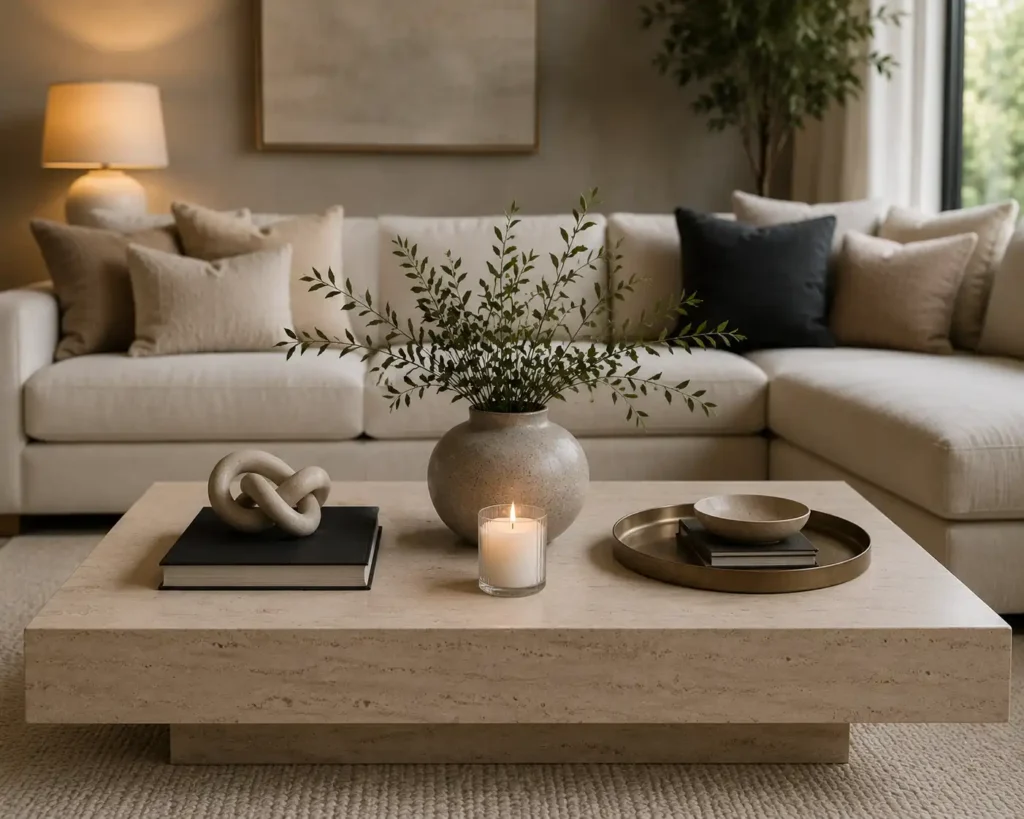
Creating a stylish coffee table doesn’t require a large decorating budget. In fact, Minimalist Coffee Table Styling often costs less than traditional decorating because it emphasizes fewer, higher-quality pieces rather than numerous accessories.
Shop Your Own Home First
Before purchasing new decor, look around your home.
Items that can be repurposed include:
- Books
- Ceramic bowls
- Candles
- Small plants
- Wooden trays
- Glass vases
Rearranging existing accessories often creates an entirely new look without spending any money.
Invest in Versatile Pieces
Choose accessories that work throughout the year rather than seasonal items that are only used occasionally.
Examples include:
- White ceramic vase
- Marble tray
- Neutral candles
- Wooden bowl
- Linen-covered books
These timeless pieces can easily adapt to every season.
Buy Fewer, Better Items
Instead of purchasing many inexpensive decorations, save for one high-quality accessory.
A beautifully crafted handmade vase or natural stone bowl will usually have a greater visual impact than several smaller decorative objects.
Incorporate Nature
Natural elements remain one of the most affordable decorating options.
Consider using:
- Garden flowers
- Tree branches
- Green leaves
- Pinecones
- Dried grasses
Nature provides texture, color, and seasonal variation at little to no cost.
Visit Local Artisan Markets
Handcrafted pottery, woven baskets, wooden trays, and ceramic accessories often add more character than mass-produced decor.
Supporting local artisans also gives your living room a unique and personal touch.
Rearrange Instead of Replacing
Minimalist styling doesn’t require frequent shopping.
Simply moving accessories to different locations within your home can refresh your coffee table while maintaining the overall aesthetic.
Minimalist Coffee Table Styling Checklist
Use this checklist whenever you’re styling or refreshing your coffee table.
Preparation Checklist
- Coffee table surface is clean.
- Unnecessary clutter has been removed.
- Table remains functional.
- Furniture material is visible.
Styling Checklist
- One clear focal point.
- Decorative tray included if needed.
- Height variation is present.
- Accessories grouped thoughtfully.
- Empty space remains visible.
- Shapes are balanced.
- Colors complement the room.
- Materials add texture.
- Greenery or natural elements included.
Functionality Checklist
- Enough space for drinks.
- Easy access to remote controls if required.
- Decor can be moved easily.
- Suitable for children or pets if applicable.
- Arrangement works from multiple viewing angles.
Maintenance Checklist
- Dust accessories weekly.
- Replace fresh flowers regularly.
- Remove unnecessary items immediately.
- Refresh greenery when needed.
- Adjust styling with changing seasons.
Following this checklist helps ensure your Minimalist Coffee Table Styling remains beautiful, practical, and timeless.
Frequently Asked Questions
What should I put on a minimalist coffee table?
A minimalist coffee table typically includes a small collection of carefully chosen accessories such as a decorative tray, coffee table books, a ceramic vase, candles, fresh greenery, or a sculptural object. Every item should contribute to the overall design while maintaining open space.
How many items should be on a minimalist coffee table?
There is no strict rule, but most professionally styled coffee tables include three to five decorative elements. The exact number depends on the size of the table, but avoiding overcrowding is essential.
What is the Rule of Three in coffee table styling?
The Rule of Three is a design principle that groups three decorative objects together to create a balanced and visually appealing arrangement. Using items of different heights, shapes, and textures makes the display feel more dynamic.
Should every coffee table have a tray?
A tray is not required, but it is highly recommended. It helps organize smaller accessories, creates structure, and makes it easier to move decorations when using the table for everyday activities.
How do I style a round coffee table?
Round coffee tables look best with a central arrangement or a loose triangular composition. A round tray, a ceramic vase, stacked books, and a candle create a balanced display while leaving enough empty space around the edges.
Which colors work best for minimalist coffee table styling?
Neutral colors such as white, cream, beige, taupe, gray, black, and natural wood tones work exceptionally well. These shades create a calm atmosphere and highlight the textures of your accessories.
Can minimalist coffee table styling work in small apartments?
Absolutely. Minimalist styling is ideal for compact spaces because it reduces visual clutter and makes the room feel larger. Using fewer accessories and leaving open space helps create an airy and organized environment.
How often should I update my coffee table decor?
Minor updates every season are usually enough. You can replace fresh flowers, switch greenery, or introduce seasonal textures while keeping your core accessories the same.
What type of coffee table books should I choose?
Select books that reflect your interests while complementing your home’s color palette. Interior design, architecture, travel, fashion, photography, and art books are all excellent choices.
Is minimalist styling suitable for family homes?
Yes. Minimalist Coffee Table Styling works well for families because it encourages organization, reduces clutter, and leaves plenty of functional surface space for everyday use.
Can I mix different materials in a minimalist arrangement?
Yes. In fact, combining materials such as wood, marble, ceramic, glass, linen, and metal adds depth and warmth while maintaining a clean and cohesive appearance.
How do I make my coffee table look more expensive?
Invest in a few high-quality accessories, use natural materials, maintain a neutral color palette, keep the arrangement uncluttered, and allow the beauty of the coffee table itself to remain visible.
Should I decorate my coffee table differently for each season?
You don’t need to replace everything. Simply update one or two elements, such as fresh flowers, greenery, or candles, to reflect the season while maintaining your overall minimalist arrangement.
What’s the biggest mistake to avoid?
The most common mistake is overdecorating. Too many accessories make the table appear cluttered and reduce both functionality and visual impact.
Can I personalize minimalist coffee table styling?
Absolutely. Include a favorite design book, handmade pottery, a meaningful sculpture, or a travel keepsake that complements your overall aesthetic. Personal touches make the arrangement feel authentic without compromising simplicity.
Final Thoughts
Minimalist Coffee Table Styling is more than a decorating trend—it’s a thoughtful approach to creating a living room that feels calm, functional, and effortlessly elegant. By focusing on intentional design, balanced arrangements, quality materials, and everyday usability, you can transform an ordinary coffee table into a refined focal point that enhances your entire space.
Whether your coffee table is round, square, rectangular, marble, wood, glass, or concrete, the same core principles apply: choose fewer but better accessories, embrace negative space, introduce natural textures, and maintain a cohesive color palette. Small details, such as layering books, adding fresh greenery, or using a decorative tray, can make a remarkable difference without overwhelming the surface.
Remember that minimalist styling is not about removing personality from your home. Instead, it encourages you to display items that have meaning, purpose, and lasting appeal. A carefully curated arrangement not only looks sophisticated but also supports a more organized and enjoyable daily life.
As your lifestyle and the seasons change, your coffee table can evolve with simple updates rather than complete makeovers. Refresh fresh flowers, rotate decorative books, experiment with different textures, and continue refining your arrangement over time. With patience and intentional choices, your Minimalist Coffee Table Styling will remain timeless, practical, and welcoming for years to come.