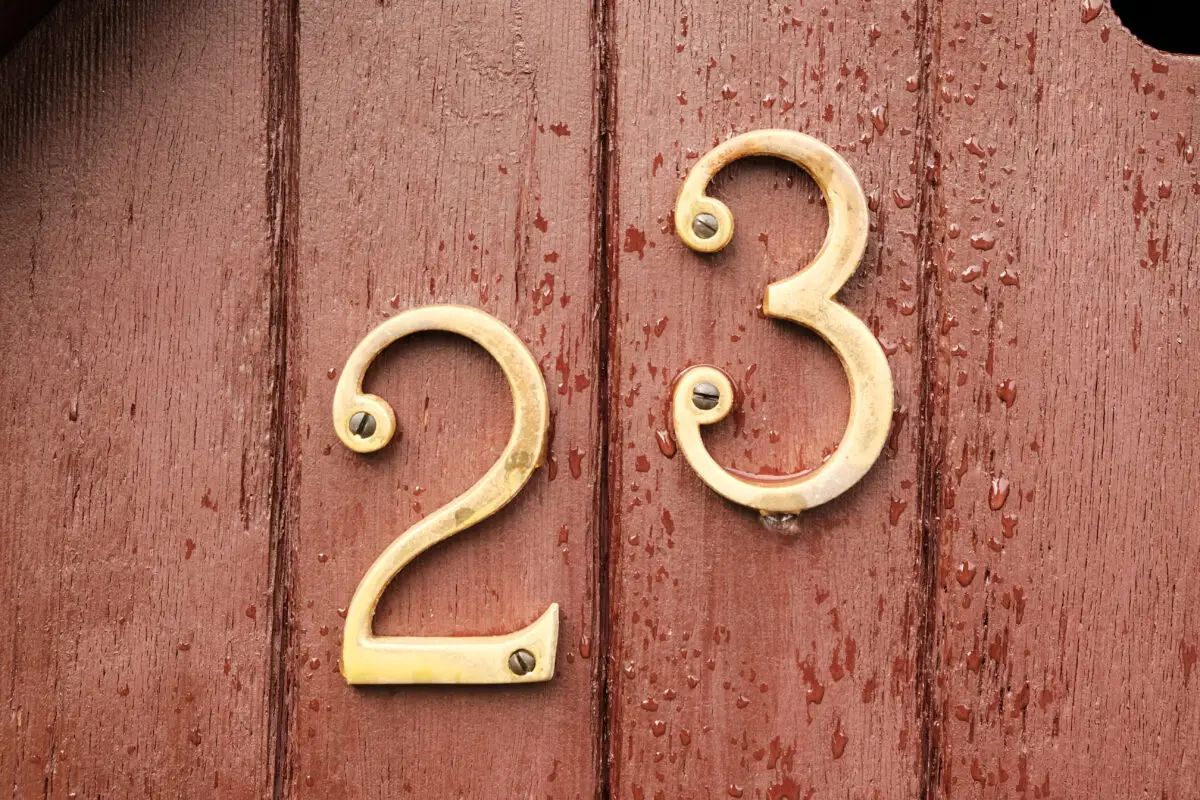
House numbers may be one of the smallest details on a facade, but they have a practical job. Visitors, delivery drivers and emergency services need to recognise the address quickly, often from farther away than the homeowner expects.
Material matters, but not in the simple sense that ceramic always lasts, metal always corrodes and vinyl always peels. Each category includes products made to very different standards. A better comparison looks at the specific finish, the mounting surface and the weather the numbers will actually face.
What you will learn
- How vinyl, metal and ceramic house numbers respond to outdoor conditions
- What to check before buying ceramic numbers
- How size, contrast and placement affect visibility
- What installation involves on different wall surfaces
- When ceramic is not the most practical option
How vinyl, metal and ceramic house numbers age
Vinyl has the widest quality range of the three materials. An inexpensive craft sticker and an exterior-grade architectural film may look similar online, yet perform very differently outside. The adhesive, film type, UV exposure and condition of the mounting surface all affect how long the number remains legible.
This is why “vinyl lasts three years” is not a useful rule. Some products are designed for temporary displays; others are rated by their manufacturers for several years of outdoor use. Vinyl remains vulnerable to poor surface preparation and can be difficult to remove cleanly, but quality matters more than the category name.
Metal is equally difficult to generalise. Stainless steel, aluminium, brass and powder-coated steel do not weather in the same way. Some finishes are intended to develop a patina, while others may show scratches, coating damage or corrosion around unsuitable fasteners. Coastal air and exposed locations make the choice of both metal and mounting hardware more important.
Glazed ceramic provides a different appearance. Its colour is created during firing rather than added as a conventional surface sticker, and there are no cut vinyl edges to lift. However, ceramic can still chip, crack or suffer in freeze-thaw conditions if the clay body, firing method or glaze is not suitable for the intended exposure.
The practical conclusion is simple: compare specifications, not broad material stereotypes.
What quality looks like in ceramic house numbers
The word “ceramic” alone says little about outdoor suitability. Before ordering, ask whether the numbers are intended for a fully exposed facade, a covered entrance or indoor use only.
The maker should be able to explain how the pieces are formed, fired and finished. A common process involves an initial firing, followed by glazing and a second firing that fuses the finish to the ceramic body. Slight changes in glaze depth or edges can be expected in handmade work.
Variation should not be confused with damage. Hairline cracks, sharp edges, blocked mounting holes or an unstable back surface deserve closer attention. A handmade number still needs to sit securely and perform its practical function.
The ceramic house numbers from Letters of Clay provide a useful example of the details worth checking. ceramic house numbers from Letters of Clay
The maker describes them as individually handcrafted from clay, glazed and fired twice. Each number is 12 cm high and includes pre-drilled mounting holes, an adhesive option and a positioning stencil.
There is an important qualification in the care information: for outdoor use, the maker recommends a covered location protected from extreme weather. That does not make the numbers unsuitable for an entrance, but it does show why “indoor and outdoor” should never be the final question. A sheltered porch and a north-facing wall exposed to frost, driving rain and summer sun are very different environments.
Installation depends on the wall
Vinyl is usually the simplest to install, provided the surface is smooth, clean and compatible with the adhesive. Textured render, dusty brick and recently painted walls can all reduce adhesion. Once applied, repositioning may not be possible without stretching the number or weakening the bond.
Metal and ceramic numbers commonly use screws, bolts or concealed studs. Pre-drilled holes make the position predictable, but they do not remove the need to choose suitable fixings.
Brick, timber, render, external insulation and cladding require different approaches. Drilling into the wrong part of an insulated facade can create more than a cosmetic problem, so consult an installer when the wall construction is unclear.
Use exterior-grade, corrosion-resistant fixings where appropriate. A ceramic number may remain clean while an unsuitable screw begins to rust and leaves a stain below it.
Before drilling, arrange full-size paper templates on the wall. Check the alignment with a level, then step back and view the complete address from the pavement or driveway. This short test is far easier than correcting several accurately drilled holes in the wrong position.
Visibility comes before style
The most beautiful house numbers are unsuccessful if a driver cannot read them from the point where they need to make a decision.
Test the proposed size from the street, gate or entrance to a shared driveway—not from directly in front of the wall. Print the numbers at their actual dimensions, tape them in place and view them in realistic conditions.
Contrast usually matters more than colour preference. Dark numbers are easier to read against a light wall, while pale or strongly coloured glaze can work on dark brick. Mid-tone colours placed on similar backgrounds tend to disappear, particularly in poor weather.
Also check the address after sunset. A porch light may illuminate the doorway without reaching the numbers beside it. In that situation, moving the address closer to the light or choosing reflective or illuminated numbers may solve the problem better than changing the material.
Long addresses need additional planning. Four separate ceramic digits require enough space between them to remain distinct without looking disconnected. Measure the full sequence rather than checking the width of a single number.
Local requirements for address size and placement vary, so confirm any applicable rules before ordering.
When ceramic is not the right choice
Ceramic numbers work best when their size suits the viewing distance and the intended position matches the maker’s care instructions. There are situations where another material is more practical.
For a property beside a fast road, larger reflective or illuminated numbers may offer better visibility. On a fully exposed coastal or freeze-prone facade, use a product specifically rated for those conditions rather than assuming every glazed ceramic piece will cope.
Renters may prefer removable vinyl, a freestanding plaque or numbers attached to an existing sign. Adhesive-backed ceramic can offer a no-drill option, but compatibility still depends on the wall surface, product weight and degree of exposure.
Metal may be the better choice when an architect wants very large characters, concealed standoffs or an exact finish repeated across several buildings. Vinyl remains useful for temporary premises and restricted budgets.
The purpose of the address should decide the material—not the desire to prove that one option is universally superior.
A practical buying checklist
- What are the exact dimensions of each digit?
- Can the complete address be read from the street or gate?
- Is there enough contrast with the wall in daylight and at night?
- Is the product suitable for a covered or fully exposed position?
- Has it been assessed for frost, strong sunlight or coastal conditions?
- Which mounting options are supplied?
- Are screws, plugs or other fixings included?
- Will the proposed fixing method work with the facade?
- Can an individual number be replaced if it is damaged?
- What variations should be expected in handmade pieces?
One further question is worth asking: what does the maker mean by “outdoor use”? The answer should describe real conditions rather than repeat the phrase from the product title.
Choose for the address, not the trend
Ceramic house numbers can bring colour, texture and evidence of handwork to an entrance. Vinyl can provide an affordable and effective solution, while metal offers sizes, finishes and mounting styles that ceramic may not.
Longevity depends on choosing a product for its actual environment. A well-specified vinyl number can outperform unsuitable ceramic, just as a carefully made glazed number in a sheltered entrance may age more gracefully than a poorly coated metal digit.
Start with visibility, confirm the exposure and understand the installation. Once those three questions are settled, style becomes a much easier decision.