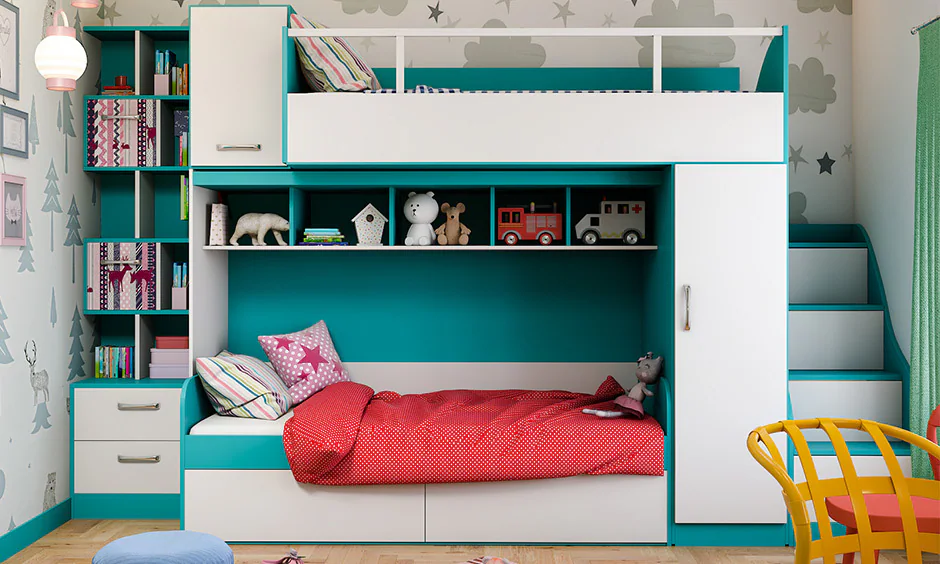
Kids’ rooms are small. That’s just the deal. One bed, one wardrobe, and the floor has already vanished under the toys. Bring in a second kid and two ordinary beds eat half of what’s left, and the box of Lego isn’t even open yet. A bunk bed uses the one spot nobody was using: the air above the floor. Two kids get their own beds, and the rest of the room is free for playing. Nobody ever complained about having too much floor. A few things need checking first, mostly what holds up the top bunk and who is old enough to sleep there. That takes only a few minutes. Below you’ll see when a bunk bed makes sense, and how to set up the room around it.
When Does a Montessori Bunk Bed Make Sense?
The clearest case is two kids in one room. Say they’re six and eight: the older child takes the top bunk, while the younger one sleeps below, giving both kids a bed of their own. Nobody argues over who gets the good bed, because the top one is automatically the cool one. It also works when a baby is on the way and the older child will soon have to share. Cousins who sleep over every other weekend are another good reason, since nobody has to drag out a mattress at ten at night. And if the room is just small, even one child can use the space under the top bunk for a desk. Where the room is big and bright, two regular beds are fine. Where every square meter is fought over, go up.
Main Benefits of Bunk Beds
Floor space is the big one. Two stacked beds take up roughly the same floor space as one, leaving more room for toys, storage, and everyday activities. Then comes the part parents like. Under the top bunk there’s room for a small desk or a reading corner with a beanbag, and suddenly the bed does the job of a second room. Some frames come with drawers or a ladder wall built in, so you skip buying those separately. Design matters too. Some families prefer the simple look of natural wood, while others go for house-shaped frames that give kids a cozy little hideout. Parents often find the frame matters more than the wall color. Kids don’t wait for assembly, either. The top bunk is claimed before the last screw goes in.
What to Check Before Choosing
Check the frame for stability before buying. It should feel sturdy, with securely connected parts and no noticeable wobbling. A well-built frame is essential for everyday use, especially when two children share the bed. Look at the top rails next. They should rise well above the mattress, and there must be no gap a small body could slip through. The ladder is used morning and night, so wide steps that stay put under a foot matter a lot. Then age. Top bunks are generally not recommended for kids under six, so the younger child sleeps below, and the age line on the product page is worth reading before you pay. Ask about the weight limit too. Solid wood with smooth edges is worth a bit extra here. Small hands touch every part of it, all day.
How to Arrange a Room With a Bunk Bed
A corner suits a bunk bed best. Pushed into one, it has two sides boxed in by walls, which feels cozy and steady. Skip the spot under the window, though, and stay clear of the ceiling fan. The top sleeper sits closer to both than you’d think. Leave the ladder side open, with enough room for an adult to stand and do the tucking in. Down below it gets dark fast, so the lower bunk needs a small lamp of its own. For storage, go low. Bins roll under the bed, and one shelf at child height takes care of books. A non-slip rug beside the ladder can make getting in and out of bed a little safer. Hooks by the door catch the jackets that would otherwise land on the floor.
Bunk Beds by BusyWood
BusyWood bunk beds come in natural wood with water-based paint on top, and the finish stays smooth in the places kids grab hardest. The collection includes two main designs. A simple frame suits minimalist interiors, while the house-shaped version adds a playful touch and creates a cozy sleeping space. Both options combine practical functionality with a child-friendly design. Every model has its own age guidance on its page, and that line deserves a read before the cart. If the floor in your kid’s room is running out, this is a good place to start looking.
Conclusion
A bunk bed pays off when floor space is the thing you’re short of. Two kids get a bed each, and the room under the top bunk can turn into a desk or a reading corner. That’s the whole appeal, really. Success depends mostly on fitting the bed to the kids who will use it. The older one sleeps up top, and the ladder steps should be right for little feet. Leave some bare floor around the bed too. Before buying, check the manufacturer’s age recommendations and make sure the frame feels stable and secure. After that, a small room with a decent bunk bed ends up feeling roomier than its square meters suggest.