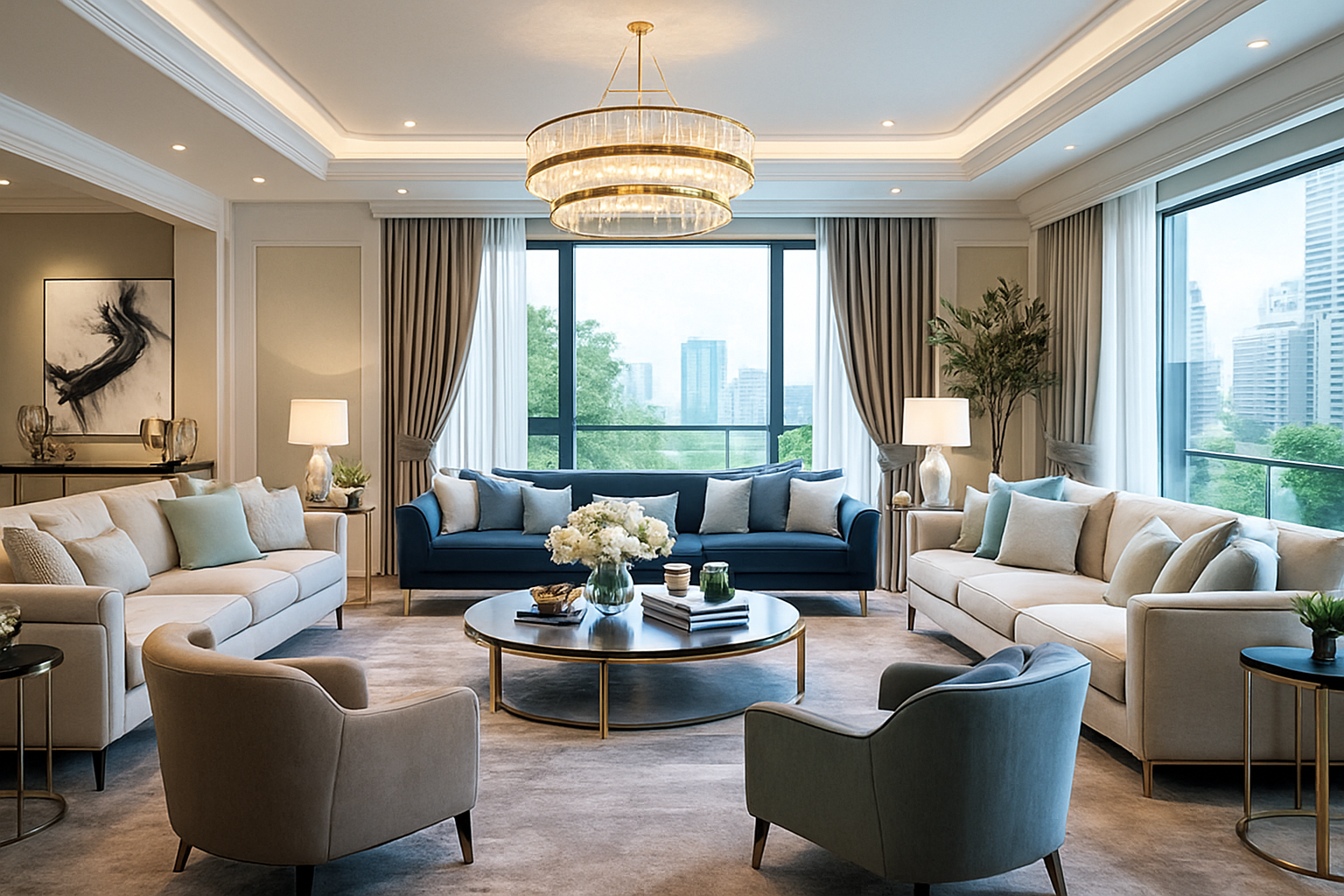
Choosing the right middle class simple indian hall colour combination can completely transform the appearance, mood, and elegance of your living room, especially when you’re designing within a middle-class budget. Colours have the power to make a hall look spacious, luxurious, cozy, or vibrant depending on how you use them. In most Indian homes, the hall is not just a living room—it is a place where guests are welcomed, families gather in the evenings, festivals are celebrated, and memories are created. Because of this emotional connection, selecting the perfect colour combination becomes even more meaningful.
Unlike lavish homes with huge spaces and expensive décor, middle-class Indian homes usually focus on simplicity, practicality, and warmth. This is where colour plays a major role. With smart pairing, even an ordinary space can look premium without spending too much. Whether the goal is to create a modern minimal look, a traditional and cultural atmosphere, or a cheerful and colourful vibe, the right colour palette can help you achieve it effortlessly.
In this article, we will explore the best colour ideas for modern Indian halls, practical tips based on room size, lighting, and furniture, and ways to create harmony in the space. The aim is not just to guide you toward beautiful combinations but to help you understand why certain colours work in specific types of homes. From serene neutrals to bold accents, we will cover everything you need to know.
UNDERSTANDING INDIAN HALL SPACES — SHAPES, SIZES & LIGHTING
Before choosing the best colour themes, it’s essential to understand how Indian hall spaces typically function. Middle-class homes vary in layouts, and different combinations work best for different settings.
1. Role of Natural Light
Natural sunlight hugely affects how a colour appears in a room. A bright shade like lemon yellow may look cheerful in a well-lit hall but dull in a darker one. Similarly, dark colours such as navy blue or maroon look richer in rooms that receive plenty of sunlight.
- Bright halls: Light greys, whites, soft blues, pastels, and peach work well.
- Dim halls: Off-white, beige, warm creams, soft yellows, almond tones, and light browns are more suitable.
- North-facing rooms: These get cooler light, so warmer tones like peach, butter yellow, or warm beige balance the atmosphere.
- South-facing rooms: These receive warm light, so cool tones like mint, sky blue, and light lavender feel refreshing.
2. Room Size and Colour Selection
Understanding how colours influence space is crucial in middle-class Indian homes where the hall may not be very large.
Small Living Rooms
If your hall is compact, go for:
- Light neutrals
- Pastels
- Cool blues
- Off-whites
- Light greys
These create the illusion of space and avoid visual heaviness.
Medium-Sized Living Rooms
You can experiment with:
- Two-tone walls
- Accent walls
- Slightly bold colours like olive, mustard, teal, and terracotta
Large Living Rooms
Here, darker colours can be used creatively:
- Charcoal grey
- Deep blue
- Rich brown tones
- Dark greens
However, balance them with lighter furniture or décor.
3. Understanding Wall Textures, Wallpaper & Furnishings
Colours in Indian halls almost always depend on the following:
Wall Texture
Textures like matte, satin, or emulsion can change the final look of a colour. Matte looks subtle and premium, while satin gives a soft glow suitable for halls.
Wallpaper
A wallpaper on a TV wall or the main seating wall can enhance the look, allowing you to pair it with softer paint colours around.
Furniture Colour
Common middle-class Indian furniture includes:
- Teak wood
- Dark walnut
- Light oak
- Laminates in different shades
The wall colour must complement these shades for harmony.
Décor Items
Curtains, cushions, rugs, and wall art significantly impact the visual feel. Even a simple hall can look luxurious if paired with the right accessories.
BEST COLOUR COMBINATIONS FOR BEAUTIFUL INDIAN HALLS
This section brings you the most beautiful and practical colour combinations that suit middle-class Indian living rooms. Each combination is explained in detail so you understand how to pair it with lighting, furniture, and décor.
1. Soft Neutrals — Timeless and Elegant
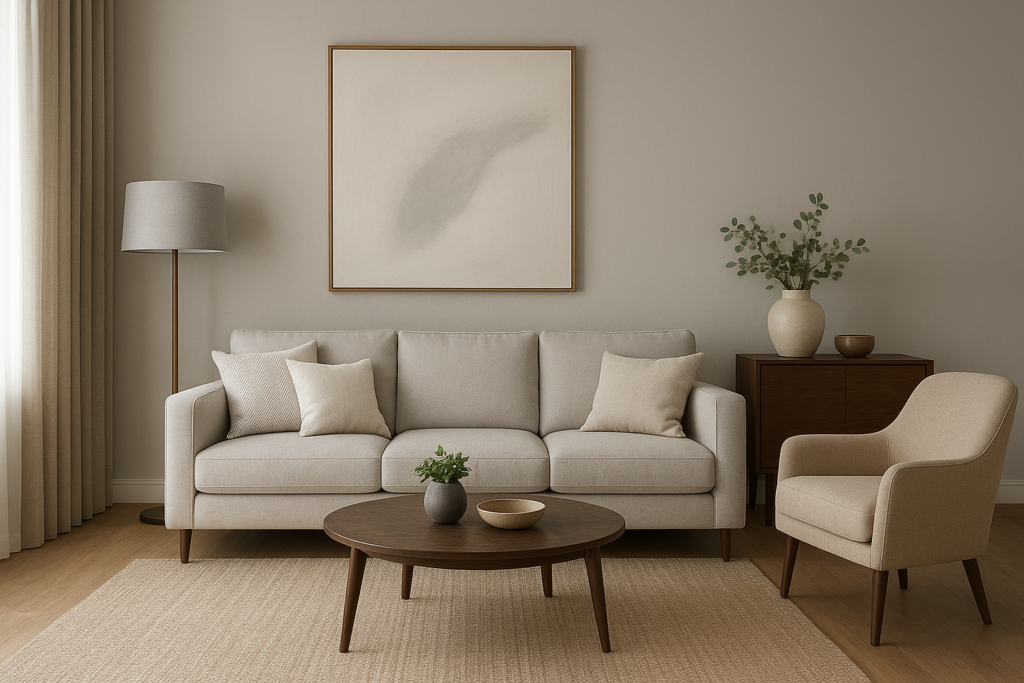
One of the most recommended middle class simple indian hall colour combination options is soft neutrals. These shades are subtle, calming, and effortlessly classy.
Top Neutral Colours for Indian Halls
- Cream
- Off-white
- Ivory
- Light beige
- Dove grey
- Stone grey
Why Neutrals Work
- They make the hall look spacious.
- They match all types of furniture—traditional and modern.
- They look clean, rich, and sophisticated.
- Easy to pair with colourful cushions, rugs, or curtains.
Accent pairing:
- Grey with white
- Beige with dark brown
- Cream with metallic gold décor
- White with pastel blue accessories
Neutrals are perfect for middle-class homes because they offer versatility. You can keep changing décor items without repainting the wall every year. One of the most preferred middle class simple indian hall colour combination options is soft neutrals.
2. Warm & Cozy Combinations
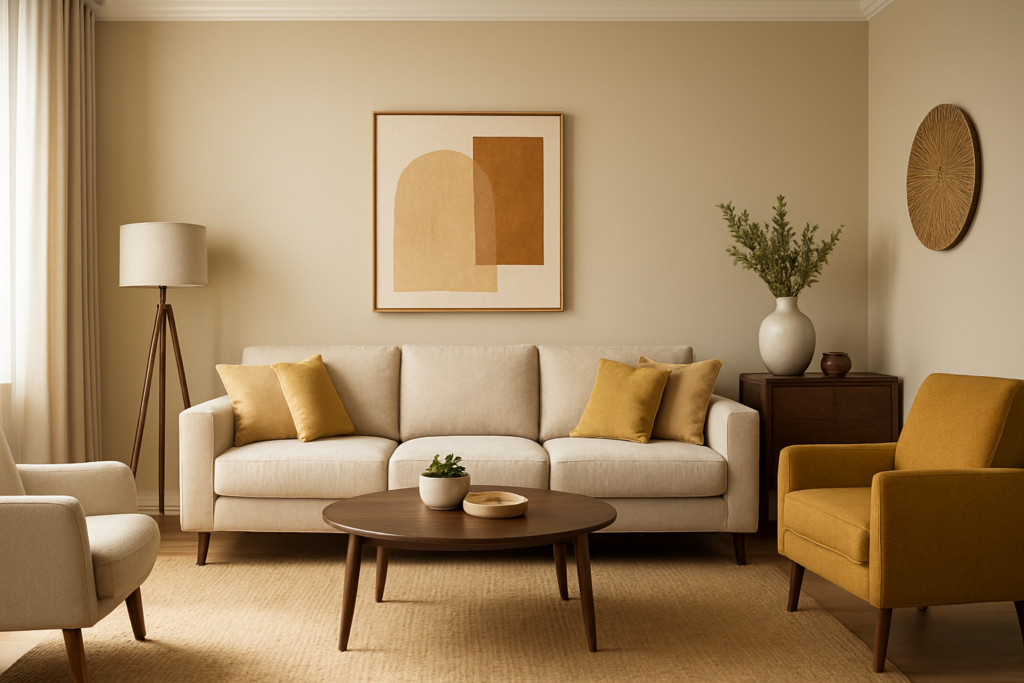
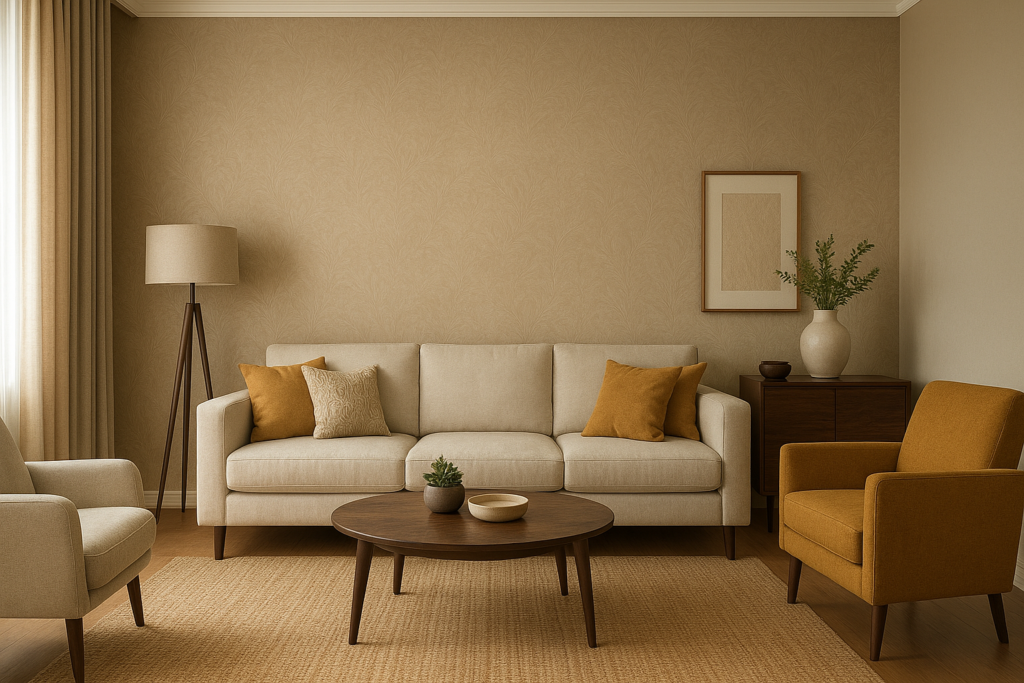
Warm tones bring comfort and Indian cultural richness into the hall.
Popular Warm Shades
- Peach
- Soft maroon
- Warm yellow
- Almond
- Terracotta
- Muted orange
Why Warm Shades Are Loved in India
- They look inviting.
- Suitable for Indian festivals.
- Pair beautifully with traditional wooden furniture.
- Complement Indian décor items like brass pots, diyas, and paintings.
Suggested Pairings
- Peach + Ivory
- Warm yellow + White trims
- Almond + Deep walnut furniture
- Terracotta + Gold décor
If you want your living room to reflect family warmth, this palette works beautifully.
3. Two-Tone Modern Combinations
A trendy middle class simple indian hall colour combination style is using two-tone walls. It breaks monotony and adds character without making the space feel heavy.
Popular Two-Tone Options
- White + Pastel blue
- Beige + Olive green
- Cream + Charcoal grey
- Ivory + Mustard
- Taupe + Coffee brown
Benefits
- Makes walls look stylish.
- You can highlight TV or sofa walls.
- Adds depth to the room.
- Works in both small and medium-sized halls.
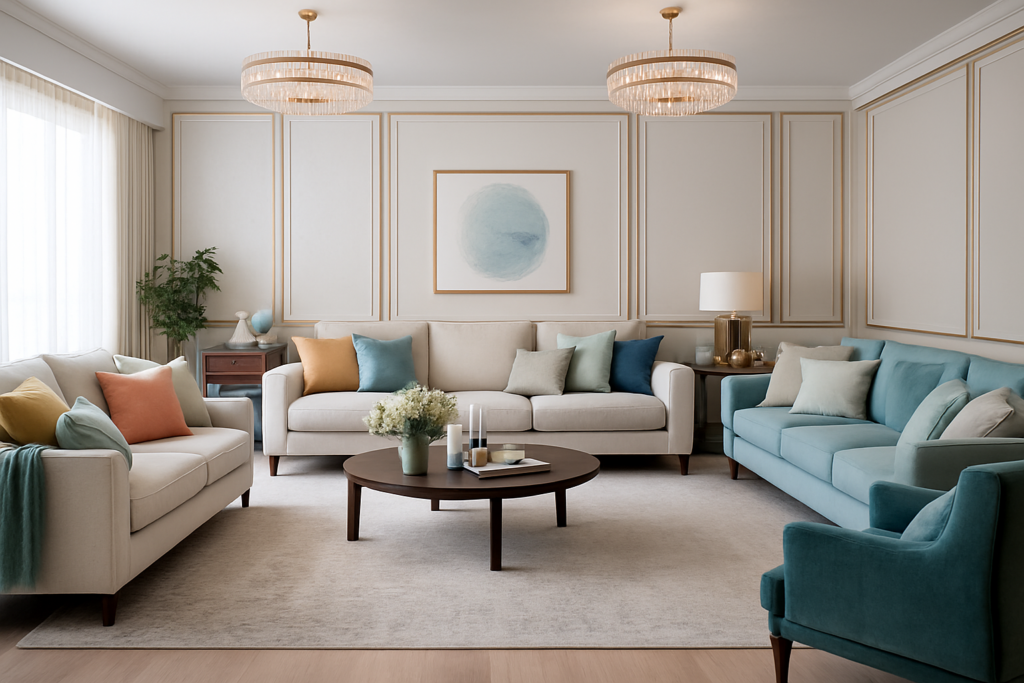
4. Cool & Refreshing Shades
Cool tones bring a sense of calmness, perfect for people who like a peaceful vibe.
Best Cool Shades for Indian Living Rooms
- Sky blue
- Mint green
- Light lavender
- Seafoam green
- Cool grey
Why Choose Cool Tones?
- They reduce visual heat in sunny regions.
- They create a soft, soothing environment.
- Beautiful for halls with good sunlight.
These shades look modern and minimalistic, ideal for people who prefer subtle décor.
5. Bold & Vibrant Accents
Many middle-class families enjoy adding a touch of boldness to their halls, especially through accent walls.
Bold Colour Choices
- Royal blue
- Emerald green
- Deep maroon
- Mustard yellow
- Charcoal grey
- Burnt orange
Rules for Using Bold Colours
- Use only on one wall.
- Pair with lighter surrounding shades.
- Keep décor minimal.
- Make sure lighting highlights the accent wall.
A bold colour wall paired with sophisticated décor instantly elevates the space.
HOW TO SELECT THE PERFECT COLOUR COMBINATION FOR YOUR HOME
This section focuses on practical strategies to finalise the best hall colour, especially if you’re working toward a middle class simple indian hall colour combination that is stylish yet affordable.
1. Consider the Size of Your Hall
- Small hall: Choose light colours like cream, white, light grey, pastel shades.
- Medium hall: Combine neutrals with accent walls like blue, olive, mustard.
- Large hall: Experiment with deep colours like charcoal, teal, wine shades.
2. Match Colours with Furniture
Dark wooden furniture suits:
- Warm colours
- Beige and cream
- Mustard
- Olive green
Light wooden or modern laminate furniture suits:
- Greys
- Blues
- Whites
- Soft pastels
3. Think About Daily Lighting Conditions
- Rooms with low sunlight: Go for yellows, peach, beige, warm white.
- Bright rooms: Use cool tones like blue, lavender, or mint.
4. Balance Colours With Décor
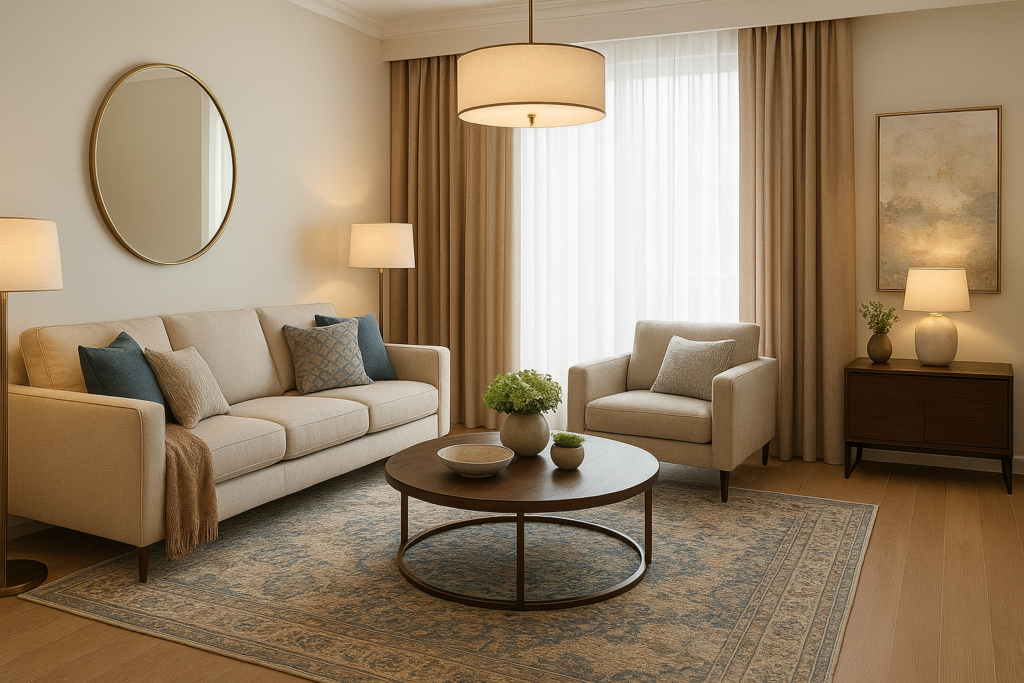
Décor plays a major role in completing the look:
Curtains
- Sheer whites for airy feel
- Brown or beige for warm tones
- Blue or grey for modern looks
Cushions
You can mix patterns, textures, and colours to uplift even the simplest hall.
Rugs
- Persian-style rugs for traditional feel
- Geometric rugs for modern theme
Lights
Warm LED lights enhance earthy colours, while cool lights complement greys and blues.
5. Creating the Perfect Harmony
Everything—walls, curtains, furniture, and décor—should work together like a unified theme. This is the beauty of a well-planned middle class simple indian hall colour combination, allowing the space to feel rich and cohesive without spending too much.
Conclusion
A beautiful hall is not about expensive materials; it’s about thoughtful colour selection and balance. Whether you prefer warm tones, modern palettes, soft neutrals, or bold accents, the right colours can turn your living room into an elegant, inviting, and charming space. With the right middle class simple indian hall colour combination, your hall can look luxurious, spacious, and perfectly suited for everyday Indian living. With the right middle class simple indian hall colour combination, any Indian living room can look beautiful and balanced.