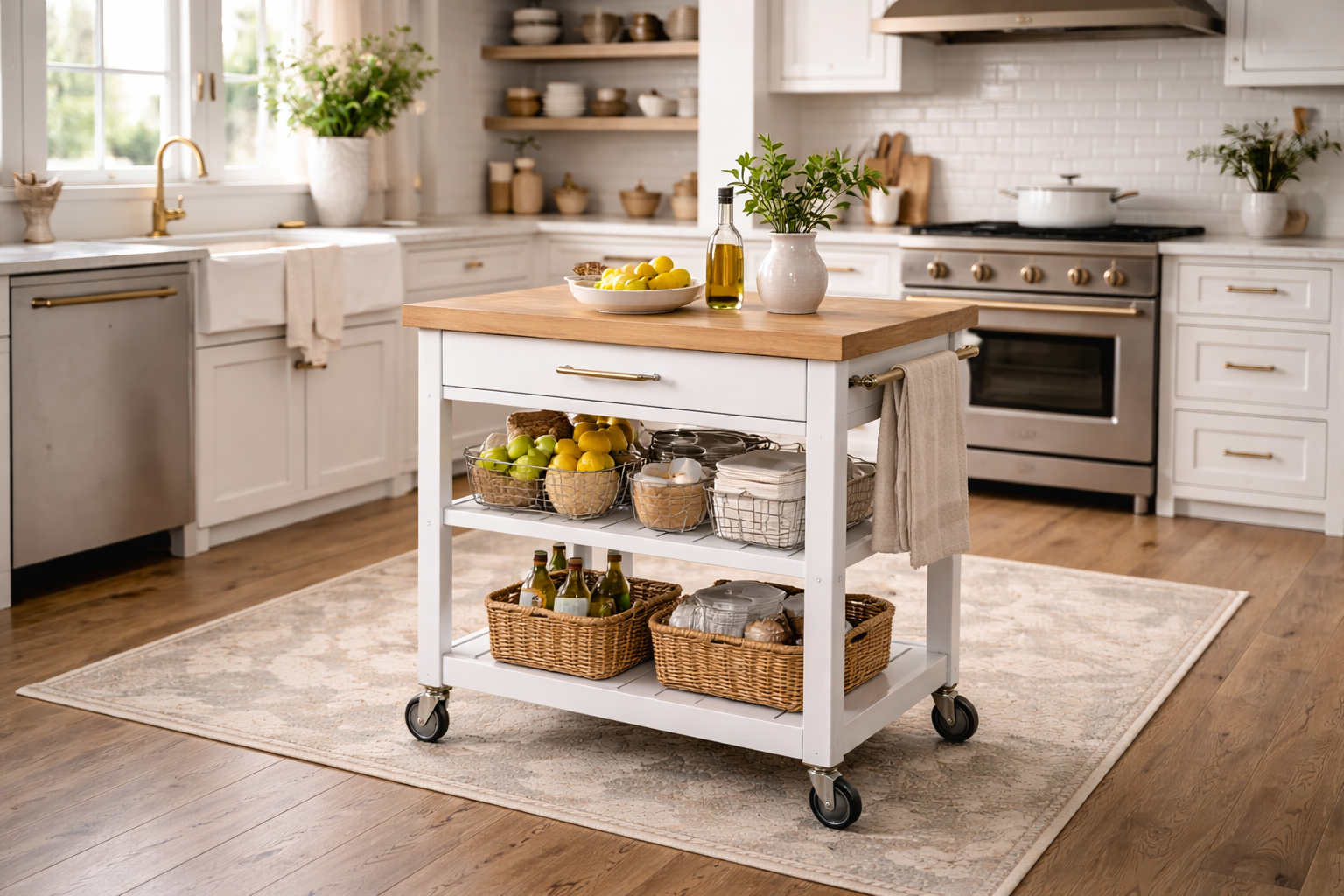
A wooden kitchen trolley is no longer just a movable storage unit—it has evolved into a design statement that blends functionality, warmth, and style into the heart of the home. Modern kitchens demand flexibility, especially as cooking spaces become more compact and multifunctional. Whether you live in a city apartment or a spacious villa, smart furniture choices can completely redefine how your kitchen looks and works.
Interior designers today increasingly recommend trolleys made of wood because they add character while solving everyday storage and workflow challenges. From prep stations to coffee corners, these versatile pieces adapt effortlessly to changing needs. In this article, we explore ten stylish and practical ways a thoughtfully chosen trolley can transform your cooking space, enhance efficiency, and elevate overall kitchen aesthetics.
1. Creating a Flexible Prep Station
One of the most impactful uses of a wooden kitchen trolley is turning it into a mobile prep station. Instead of crowding your countertops, the trolley provides extra workspace exactly where you need it. You can roll it next to the stove while chopping vegetables, then move it aside when not in use.
Wooden surfaces feel warmer and more natural than metal or stone, making food preparation more enjoyable. Many homeowners opt for trolleys with butcher-block tops, which are both durable and visually appealing. This flexibility is especially useful in smaller kitchens where permanent islands are not an option.
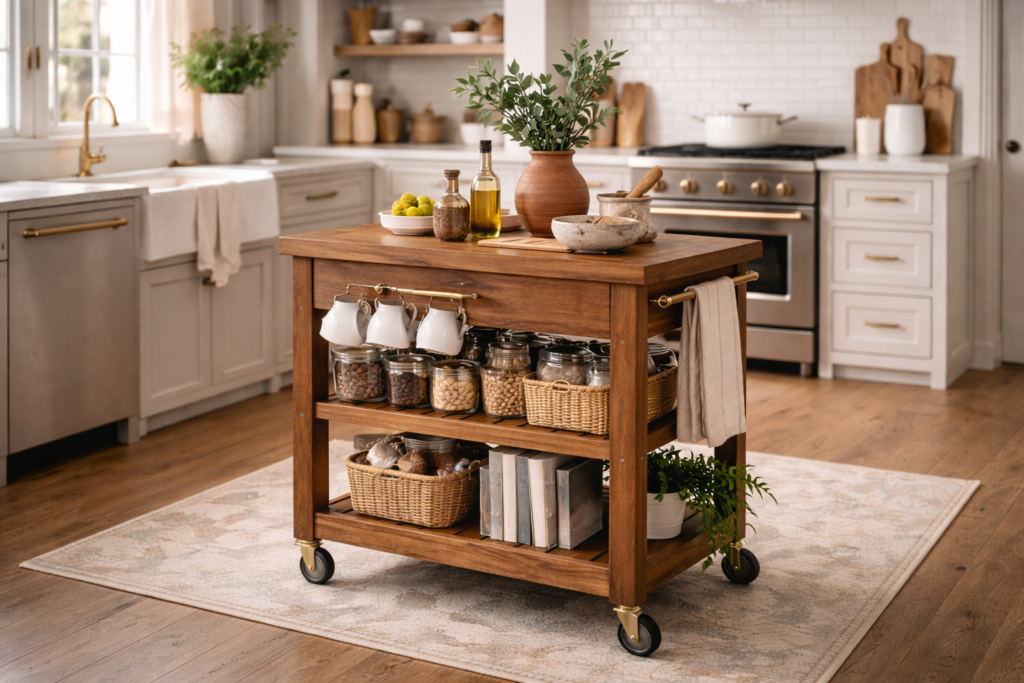
2. Adding Smart Storage Without Permanent Construction
Built-in cabinets can be expensive and restrictive. A well-designed trolley offers additional storage without the commitment of renovation. Drawers, shelves, and baskets help organize spices, utensils, cookware, and even small appliances.
What makes this solution stylish is the material itself. Wood softens the look of a kitchen filled with hard surfaces like tiles and granite. A wooden kitchen trolley integrates seamlessly into both modern and traditional interiors, acting as functional furniture rather than a purely utilitarian unit.
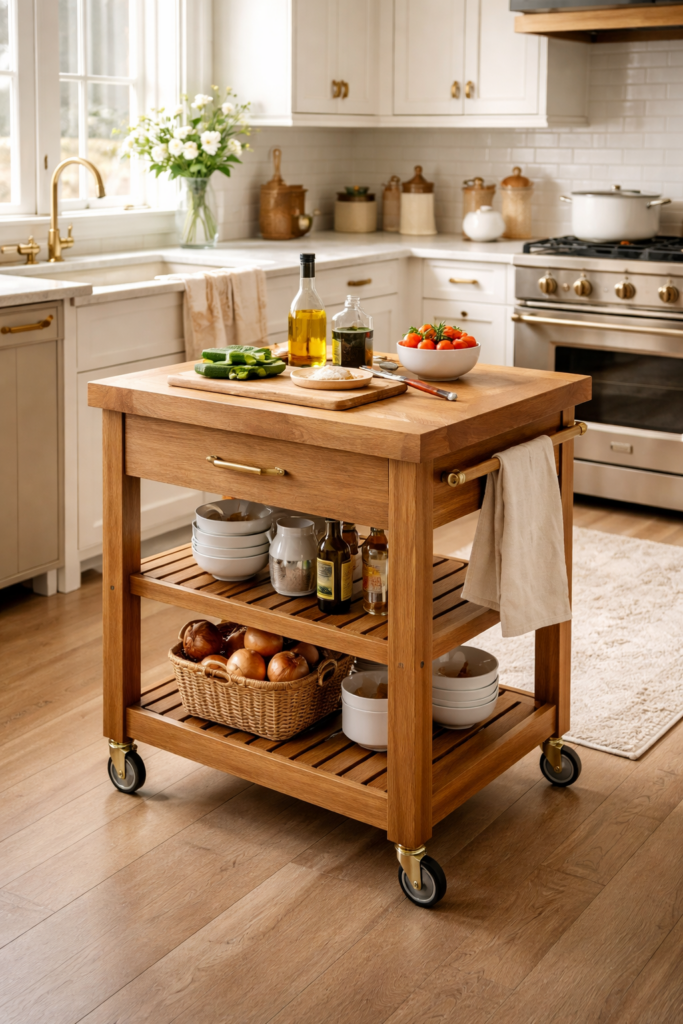
3. Enhancing Workflow in Compact Kitchens
In compact kitchens, movement and flow matter more than square footage. A mobile trolley allows you to reconfigure your space based on your cooking routine. You can position it near the sink during washing, then roll it to the dining area for serving.
Designers often use trolleys to create “temporary zones” within a kitchen. This approach reduces clutter and improves efficiency while maintaining a clean, stylish look. The warmth of wood prevents the kitchen from feeling overly mechanical or crowded.
4. Turning Storage into a Style Feature
Storage does not have to be hidden. Open shelves on a trolley allow you to display beautiful cookware, ceramic jars, or woven baskets. This creates visual interest and makes everyday items easily accessible.
A thoughtfully styled wooden kitchen trolley becomes a focal point rather than an afterthought. Choosing finishes like teak, oak, or walnut adds richness and depth, especially when paired with neutral kitchen palettes. It’s a perfect example of how design and practicality can coexist.
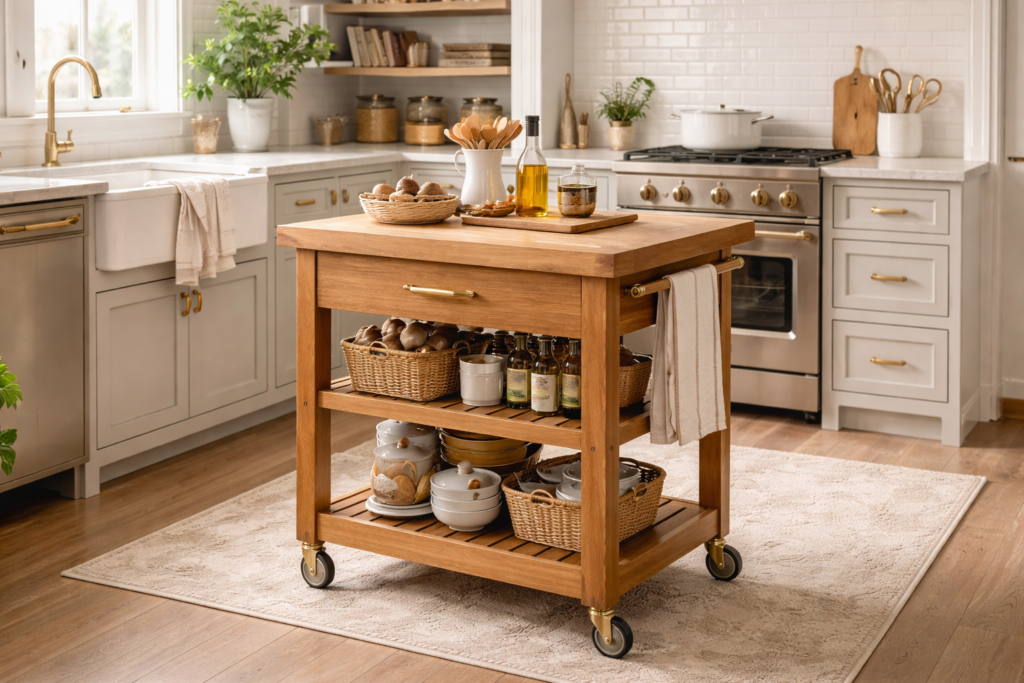
STYLE STATEMENTS — AESTHETIC UPGRADES
5. Introducing Warmth to Modern Kitchens
Modern kitchens often lean toward sleek finishes—glossy cabinets, stainless steel appliances, and polished stone. While elegant, these materials can feel cold. Wood introduces warmth and balance, making the space feel more inviting.
A wooden kitchen trolley acts as a visual bridge between contemporary elements and natural textures. Even in ultra-modern homes, designers use wooden accents to soften the overall look and create a welcoming atmosphere.
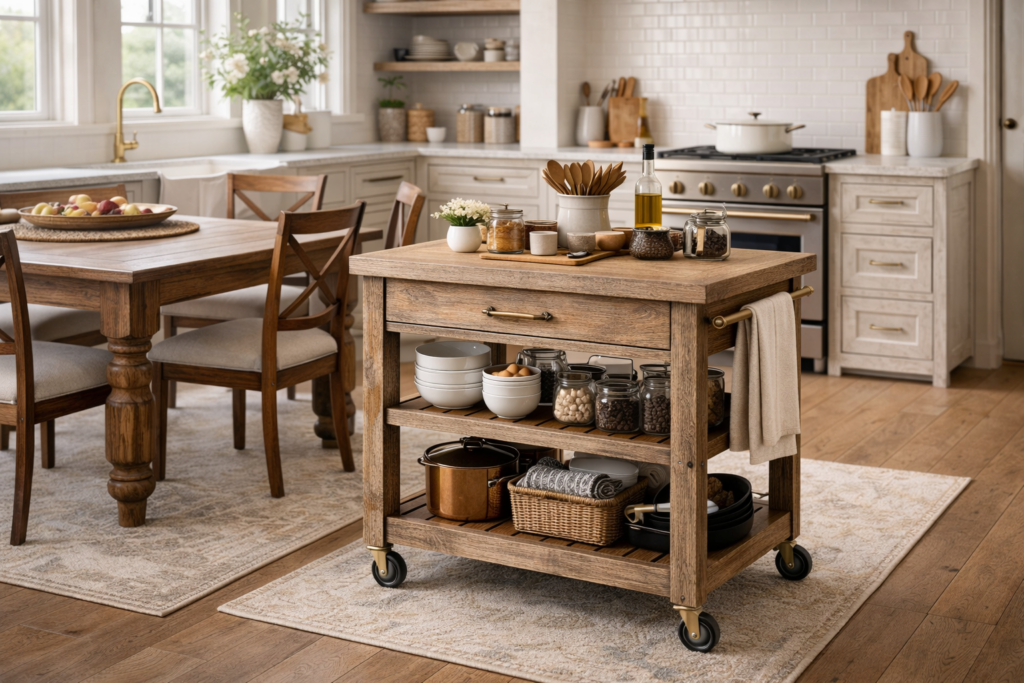
6. Creating a Rustic or Farmhouse Accent
For those who love rustic or farmhouse-style interiors, a wooden trolley is a natural fit. Distressed finishes, visible grain, and handcrafted details bring charm and authenticity into the kitchen.
Placed against neutral walls or tiled backsplashes, the trolley adds character without overwhelming the space. It works beautifully in Indian homes as well, complementing traditional cooking styles while offering modern convenience.
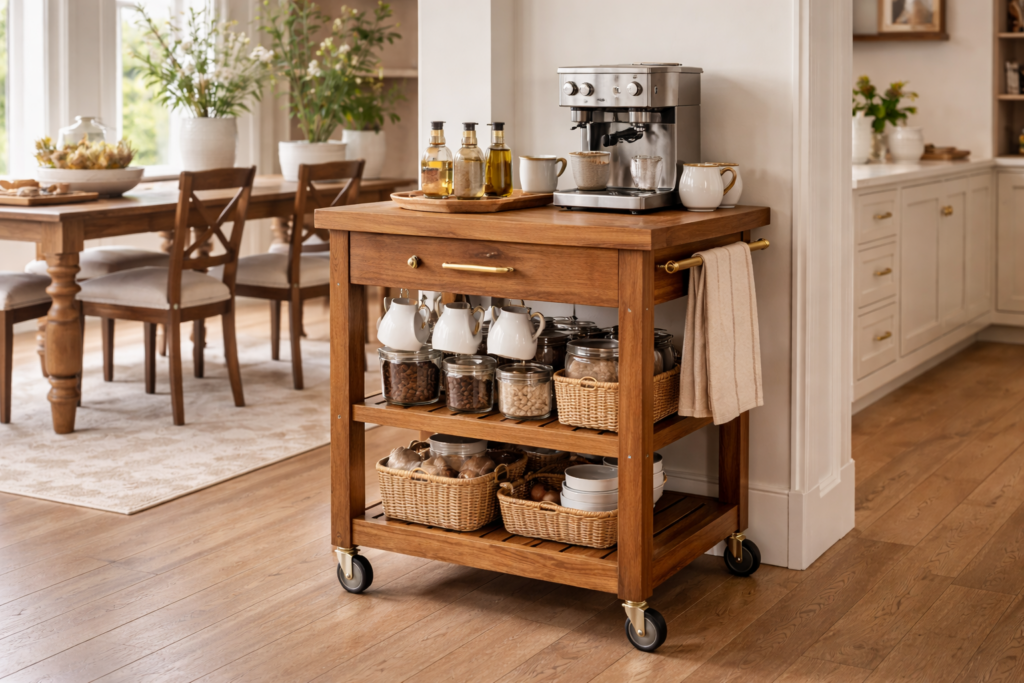
7. Styling a Coffee or Beverage Corner
One of the most stylish uses of a wooden kitchen trolley is transforming it into a coffee or beverage station. With mugs on hooks, jars of coffee beans, and a small machine on top, the trolley becomes a lifestyle feature rather than just furniture.
Because it’s movable, you can position it near the dining area when entertaining guests, then roll it back into the kitchen later. This flexibility makes it ideal for homes that love hosting without permanent clutter.
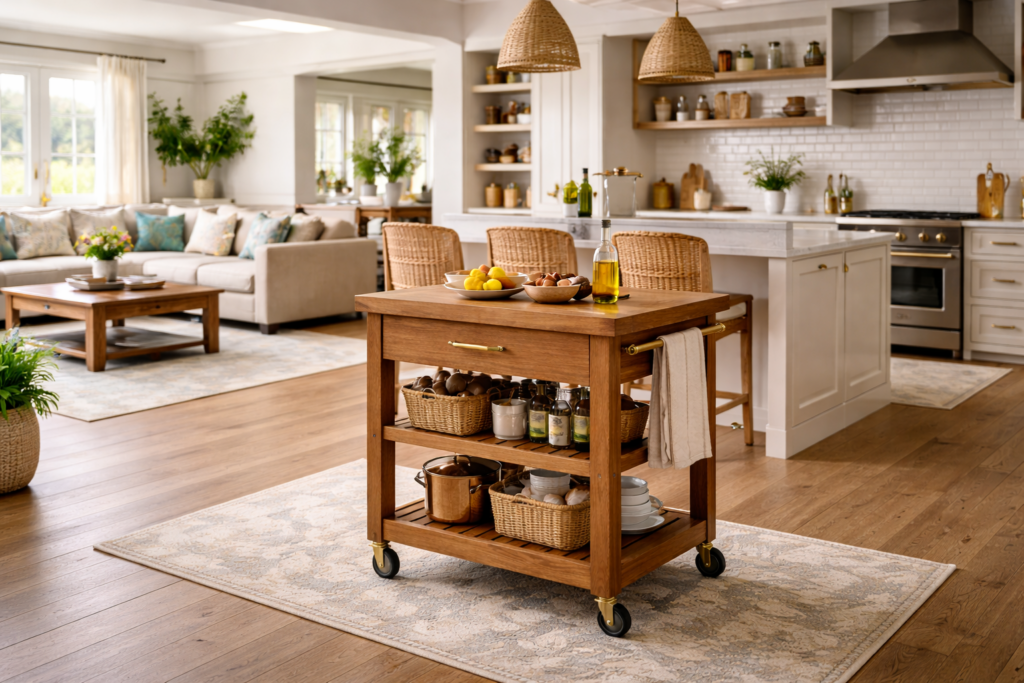
8. Elevating Open-Plan Kitchen Spaces
In open-plan layouts, kitchens are visible from living or dining areas. Every element must contribute to the overall design story. A wooden trolley helps define the kitchen zone while maintaining visual continuity.
Interior designers often use a wooden kitchen trolley as a soft divider—functional enough for cooking, yet stylish enough to blend with living spaces. The natural texture of wood ensures the kitchen feels like part of the home rather than a separate utility area.
LIFESTYLE & LONG-TERM VALUE
9. Supporting Sustainable and Timeless Design
Sustainability is becoming a priority in interior design, and wood remains one of the most eco-friendly materials when sourced responsibly. A solid wood trolley lasts for years, ages gracefully, and can be refinished rather than replaced.
Choosing a wooden kitchen trolley aligns with the philosophy of buying fewer, better pieces. Its timeless appeal ensures it won’t feel outdated as trends change, making it a smart long-term investment for homeowners.
10. Adapting to Changing Needs Over Time
Perhaps the most underrated advantage of a wooden trolley is its adaptability. Today it might be a prep station; tomorrow it could serve as a serving cart, pantry extension, or even a decorative console outside the kitchen.
As lifestyles evolve, furniture that adapts becomes invaluable. A wooden kitchen trolley grows with your needs, offering consistent functionality while maintaining aesthetic appeal across different phases of life.
11. Making Everyday Cooking More Comfortable and Ergonomic
Kitchen design is not just about beauty—it’s also about how the space supports your body during daily tasks. One of the understated benefits of using a wooden kitchen trolley is improved ergonomics. Instead of constantly bending, reaching, or crowding one countertop, the trolley allows you to position essential items at a comfortable height and distance.
For example, heavy cookware can be stored on lower shelves of the trolley, reducing strain on overhead cabinets. Frequently used ingredients can be placed within arm’s reach, making cooking smoother and less tiring. The ability to move the trolley closer while working and farther away when finished creates a kitchen that adapts to you, not the other way around.
Interior designers often recommend such mobile solutions for households where cooking is a daily, time-intensive activity. Comfort, after all, is a key element of good design.
12. Enhancing Visual Balance in Large Kitchens
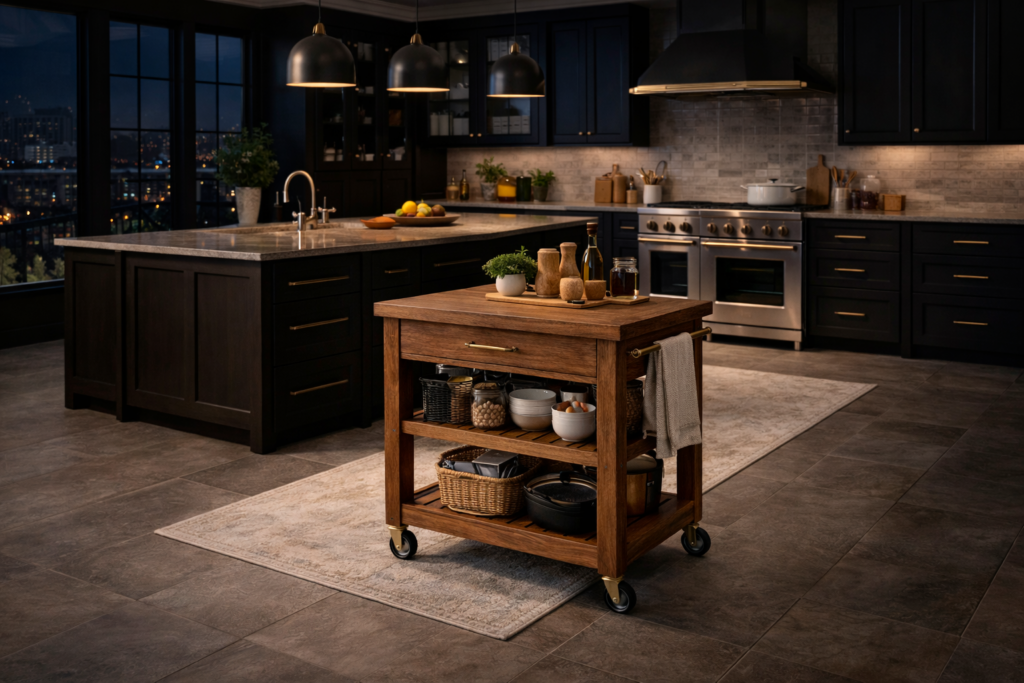
While trolleys are commonly associated with small kitchens, they play an equally important role in larger spaces. Big kitchens can sometimes feel empty or visually unbalanced, especially if cabinetry is concentrated on one side.
Placing a wooden kitchen trolley strategically helps break up vast floor areas and adds a layer of depth to the design. The warmth of wood contrasts beautifully with expansive stone countertops or tiled floors, preventing the kitchen from feeling overly rigid or commercial.
Designers often style large kitchens with freestanding elements like trolleys to introduce a furniture-like feel. This approach makes the space feel more lived-in, welcoming, and thoughtfully curated rather than purely functional.
13. Supporting Entertaining and Social Cooking
Modern kitchens are social spaces. Friends gather, conversations happen, and cooking often becomes a shared experience. A movable trolley supports this lifestyle effortlessly.
During gatherings, a wooden kitchen trolley can function as a serving station for snacks, drinks, or desserts, keeping the main cooking area uncluttered. Its mobility allows you to move food closer to guests, encouraging interaction without disrupting the workflow in the kitchen.
The visual appeal of wood also plays a role here. Unlike metal carts that feel industrial, wooden trolleys feel warm and welcoming, making guests comfortable lingering around the kitchen—a hallmark of a well-designed home.
14. Adding a Personal Design Signature to the Kitchen
Every well-designed kitchen has at least one element that reflects the homeowner’s personality. A trolley offers an excellent opportunity to do just that. From the type of wood and finish to styling choices like baskets, plants, or ceramic containers, it becomes a canvas for personal expression.
A wooden kitchen trolley can reflect minimalism, rustic charm, luxury, or even eclectic design depending on how it’s styled. This level of customization is harder to achieve with fixed cabinetry, making the trolley a valuable design feature rather than just an accessory.
Over time, as tastes change, the trolley can be restyled or repositioned—allowing the kitchen to evolve without major expense or effort.
Conclusion
A well-designed kitchen is not just about cabinets and appliances—it’s about how the space supports your daily routines while reflecting your personal style. From improving workflow and storage to enhancing warmth and visual appeal, the humble trolley proves to be a powerful design tool.
When chosen thoughtfully, a wooden kitchen trolley can completely transform your cooking space, making it more efficient, inviting, and stylish. It embodies the perfect balance of beauty and practicality—something every modern home deserves.