The Rise of Minimalism in Modern Homes
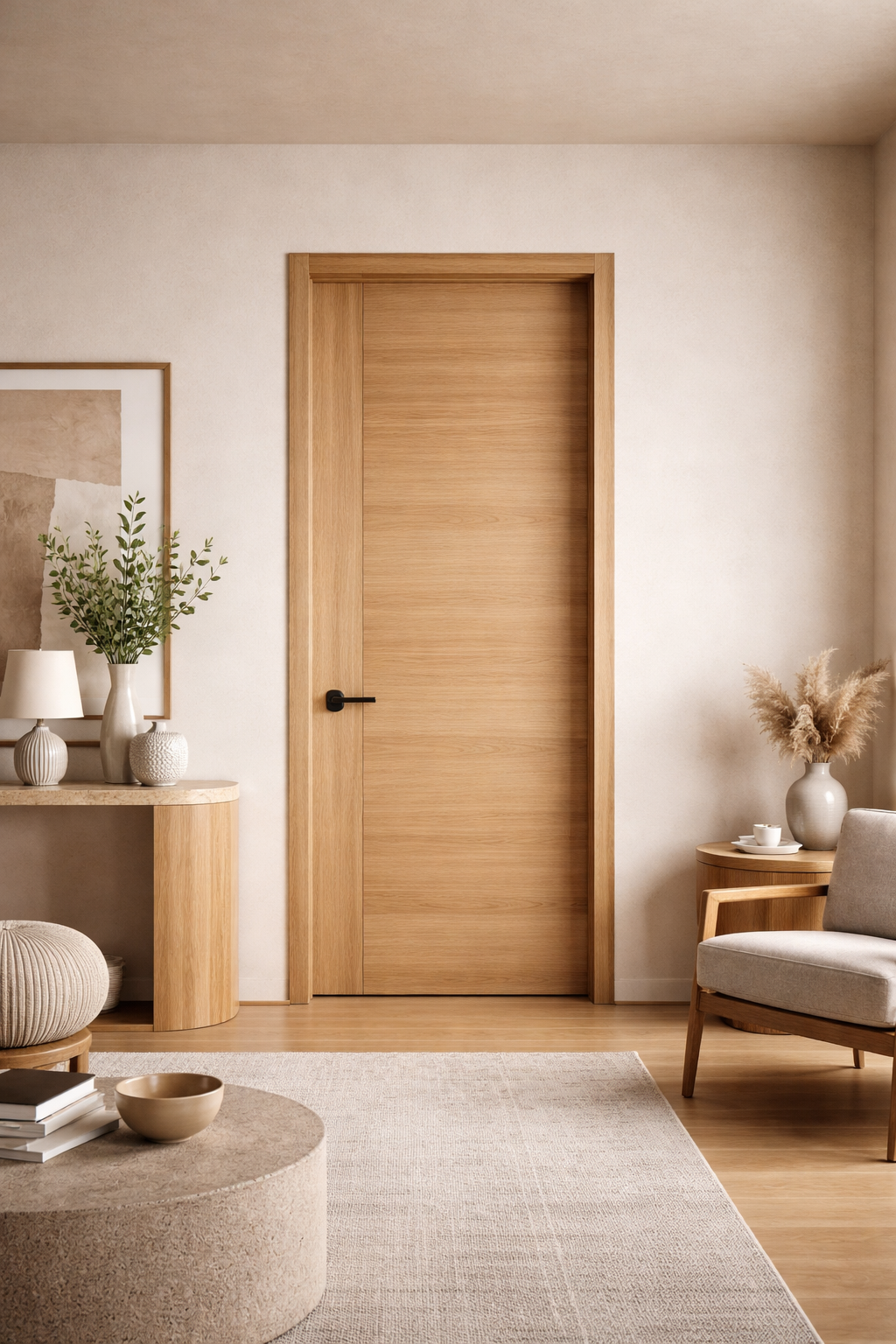
Minimalism in interior design is not about emptiness; it is about intentional choices. Clean lines, subtle textures, and thoughtfully selected materials create spaces that feel calm and refined. In this context, a well-planned wooden door design plays a crucial role. Doors are no longer just functional barriers—they are visual anchors that set the tone for the entire home.
Modern interiors demand doors that blend seamlessly with walls, flooring, and furniture. Minimalist wooden doors do exactly that by offering warmth without visual clutter. Their natural grains, neutral finishes, and precise detailing make them ideal for contemporary living spaces.
Core Principles of Minimalist Wooden Door Design
1. Clean Lines and Simple Geometry
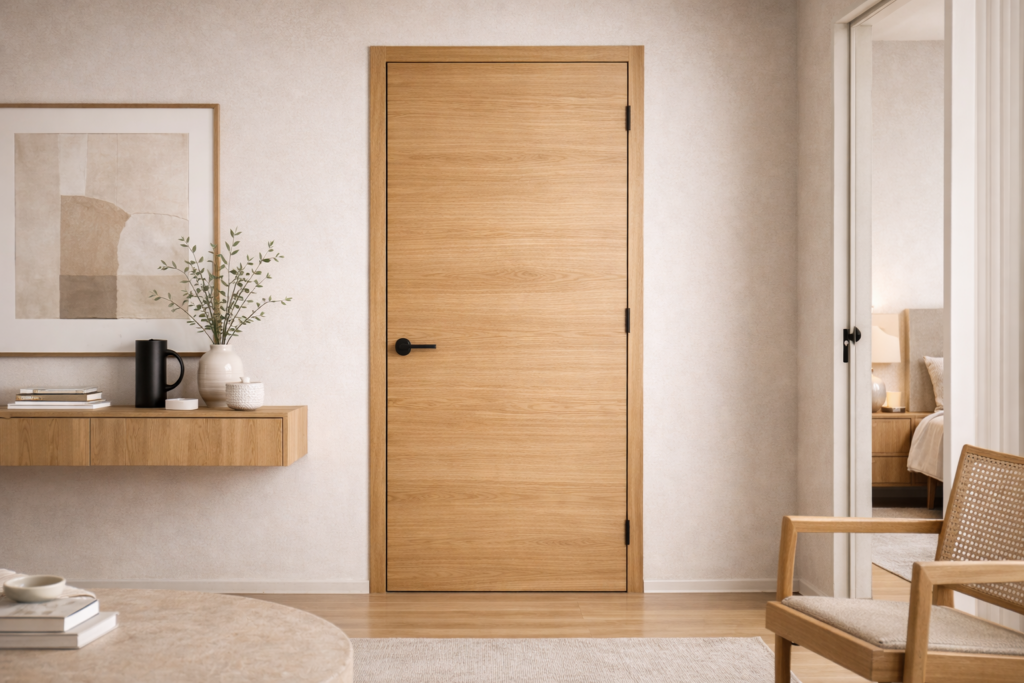
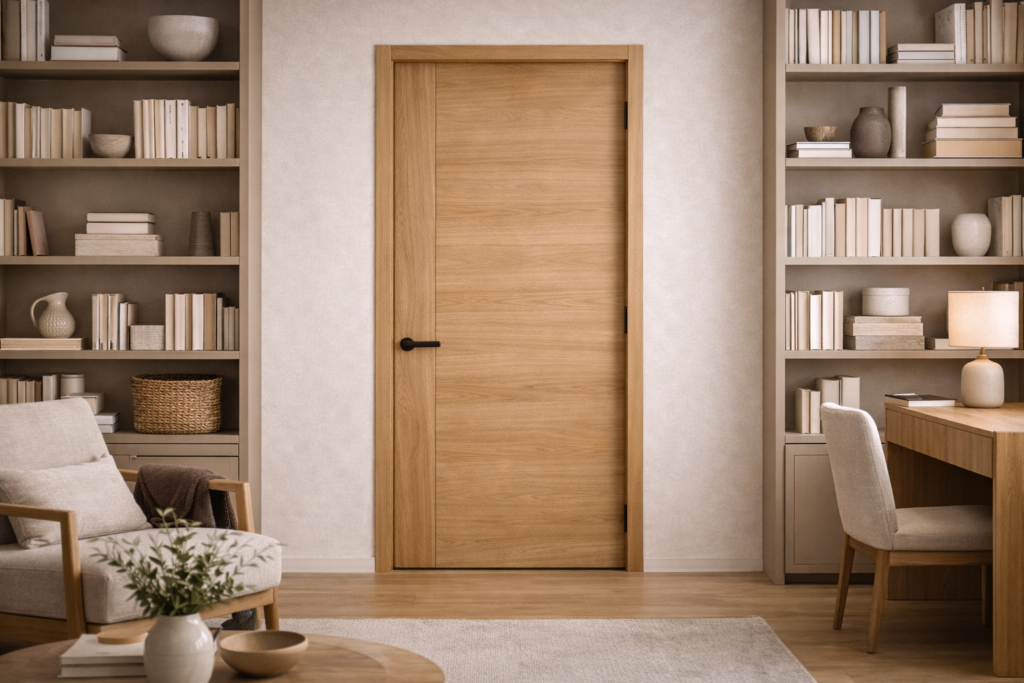
At the heart of minimalist aesthetics lies clarity of form. A minimalist wooden door design typically avoids heavy carvings, dramatic panels, or decorative moldings. Instead, it relies on straight edges, flush surfaces, and perfectly proportioned panels. This simplicity allows the door to complement modern interiors rather than dominate them.
Rectangular panel layouts, seamless shutters, and concealed frames are especially popular. These features create a sense of continuity, making spaces appear larger and more cohesive.
2. Natural Wood Finishes
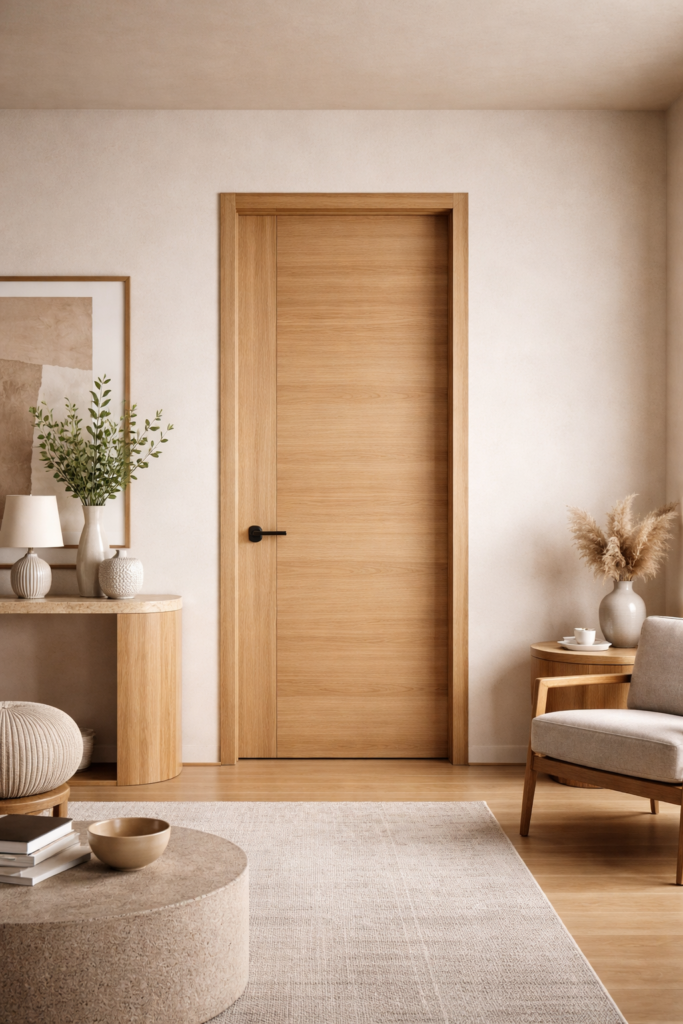
Minimalism celebrates authenticity, and natural wood finishes align perfectly with this philosophy. Rather than glossy or overly polished surfaces, matte and satin finishes are preferred. Oak, teak, walnut, and ash are commonly used because their grains add subtle visual interest without overwhelming the design.
A thoughtfully selected wooden door design with a natural finish enhances warmth while maintaining a modern, understated look. Lighter wood tones suit Scandinavian and contemporary interiors, while darker shades work beautifully in urban luxury homes.
3. Flush Doors for Seamless Interiors
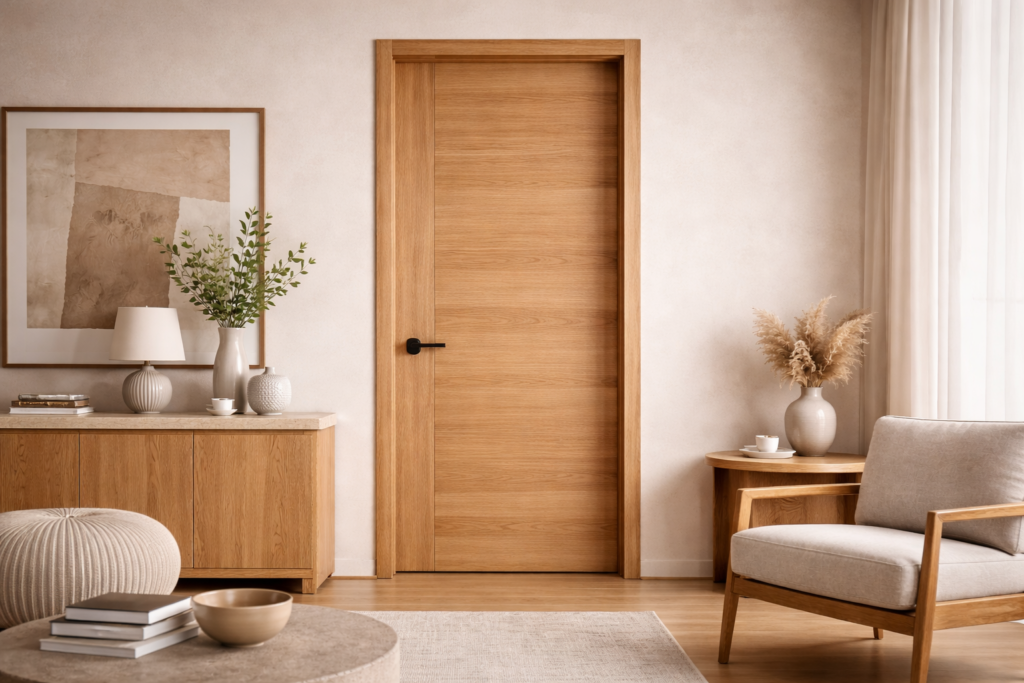
Flush doors are a hallmark of minimalist homes. These doors sit perfectly level with the wall, creating a sleek, uninterrupted surface. When paired with neutral wall colors, a flush wooden door design almost disappears into the background, reinforcing the minimalist ethos.
This approach is especially effective in apartments and compact homes, where visual continuity helps spaces feel more open and uncluttered.
4. Subtle Hardware Choices
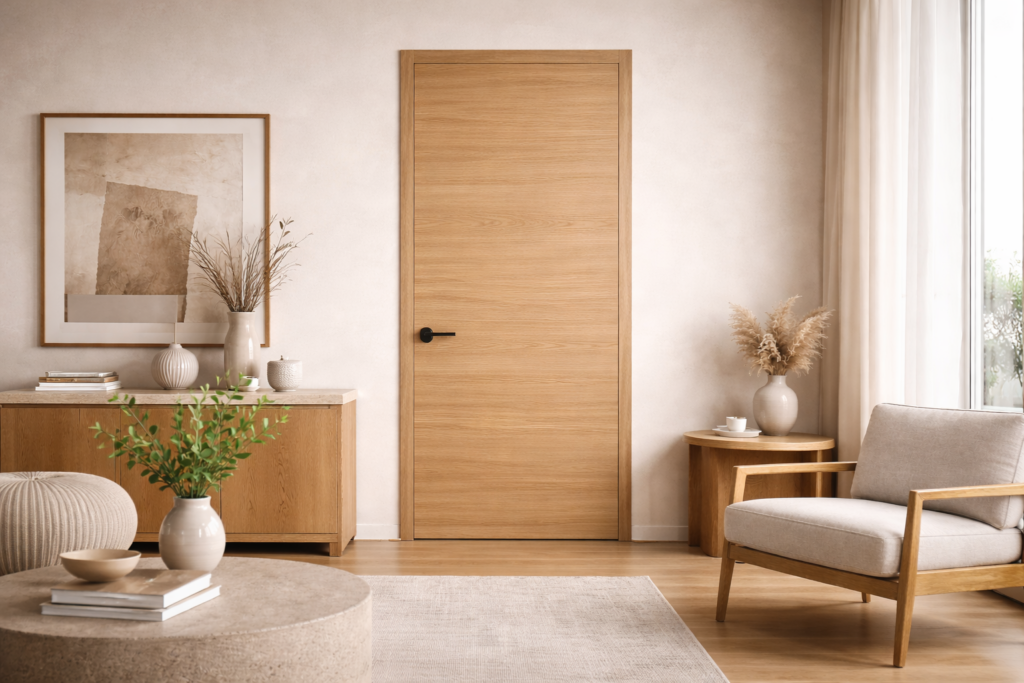
Hardware should support the design, not distract from it. Minimalist wooden doors often feature concealed hinges, slim handles, or push-to-open mechanisms. Black, brushed steel, or matte bronze finishes are popular for their understated elegance.
The right hardware enhances the overall wooden door design while maintaining a clean and modern appearance.
Styles and Applications in Modern Interiors
5. Minimalist Main Doors
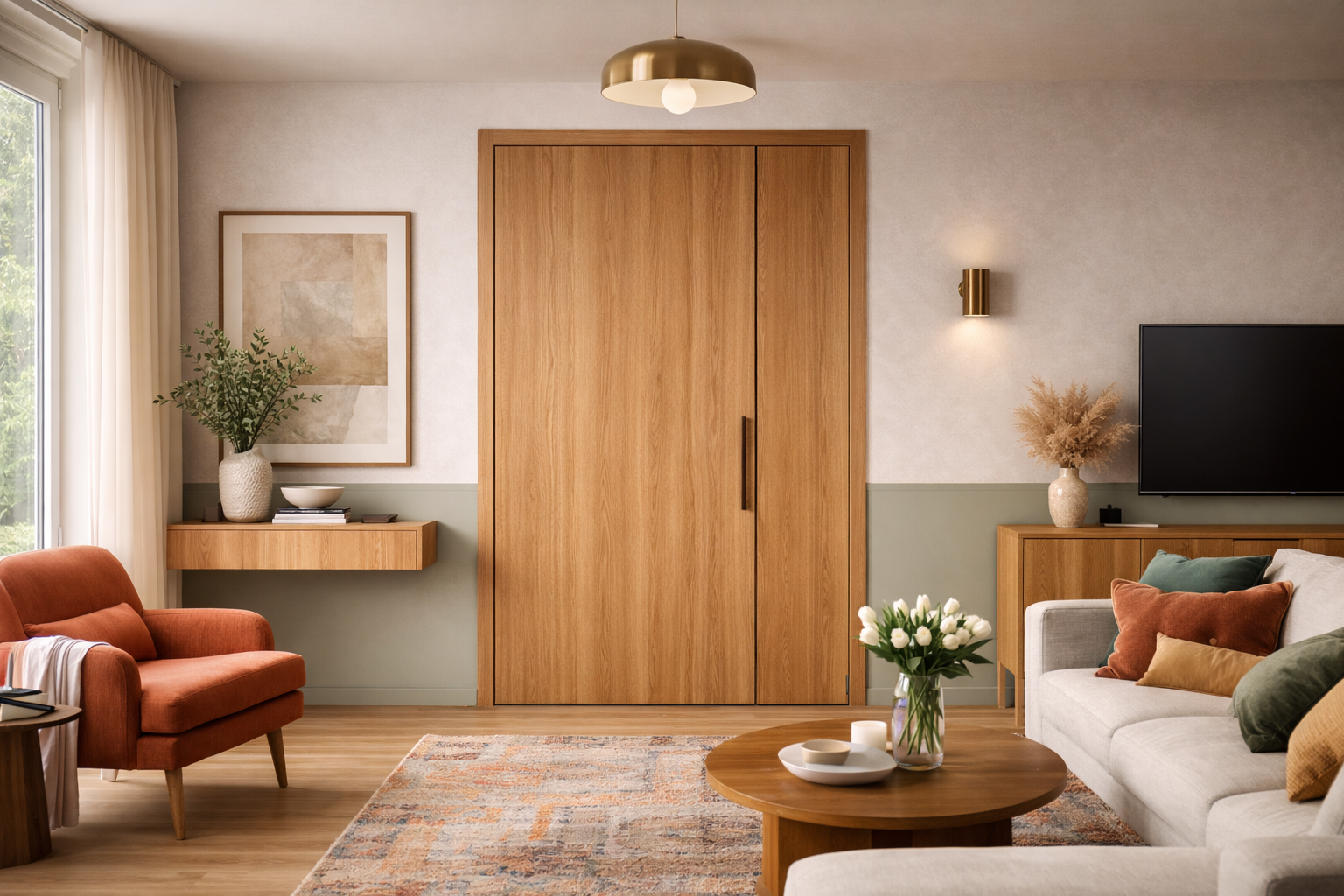
Main doors set the first impression of a home. A minimalist approach focuses on solid construction, simple detailing, and premium finishes. Large wooden panels, vertical grain patterns, and integrated handles are common features.
A strong yet refined wooden door design for the entrance balances security with style, making the home feel welcoming without appearing ornate.
6. Bedroom Doors with Calm Aesthetics
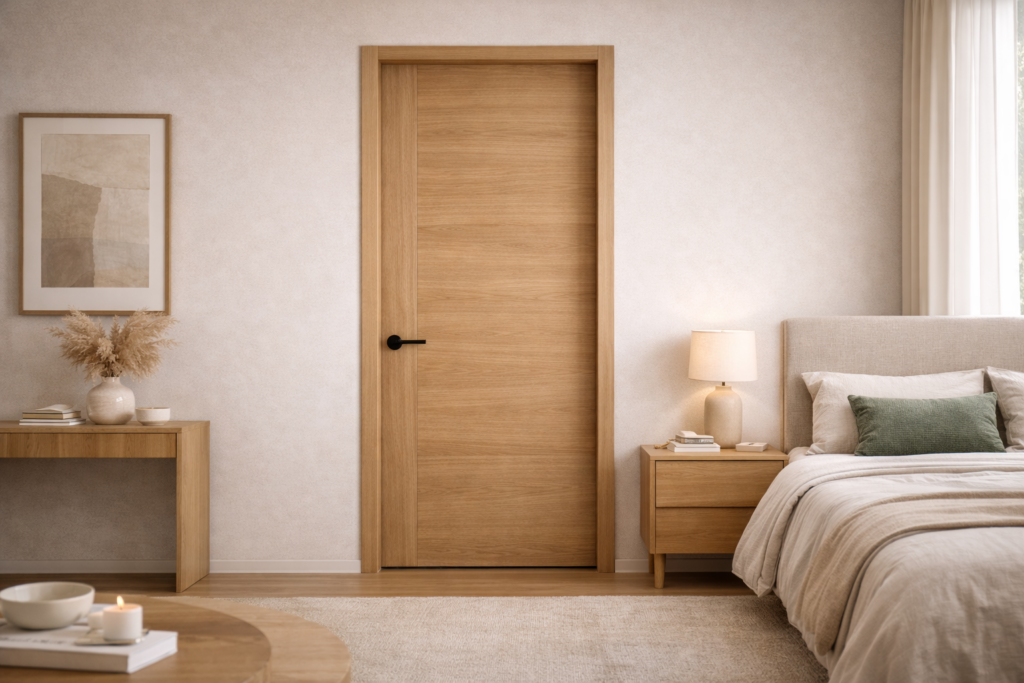
Bedrooms are personal sanctuaries, and minimalist wooden doors contribute to a sense of tranquility. Soft wood tones, smooth textures, and noise-reducing solid cores are preferred. Sliding or pocket doors are also popular choices in modern bedrooms.
In such spaces, a carefully chosen wooden door design enhances privacy while maintaining visual harmony with minimalist furniture and décor.
7. Sliding and Pocket Wooden Doors
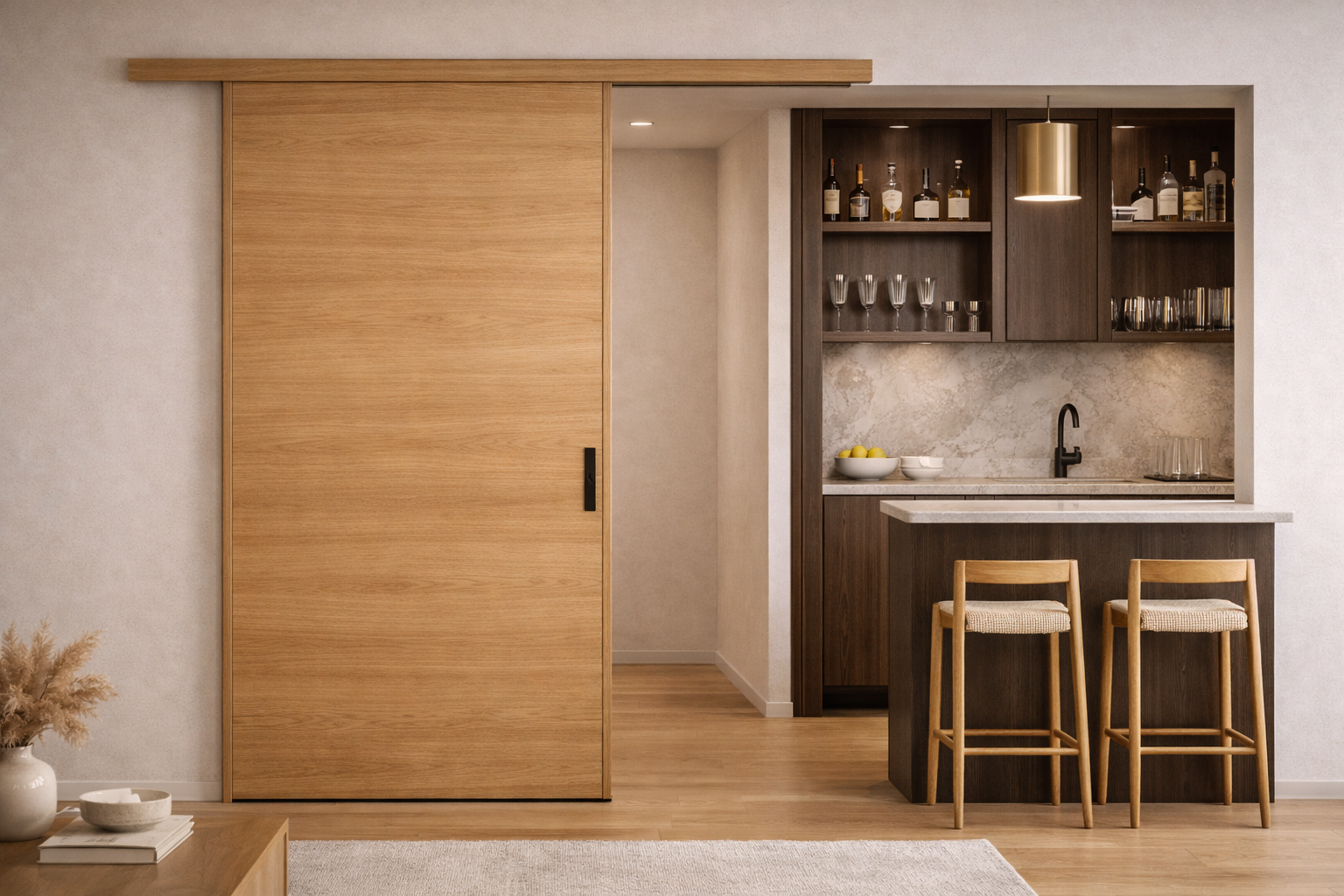
Sliding doors are ideal for modern interiors that prioritize space efficiency. When crafted in wood with minimal detailing, they bring warmth without compromising the sleek look of the room.
A minimalist wooden door design in sliding or pocket form works especially well for wardrobes, bathrooms, and open-plan living areas.
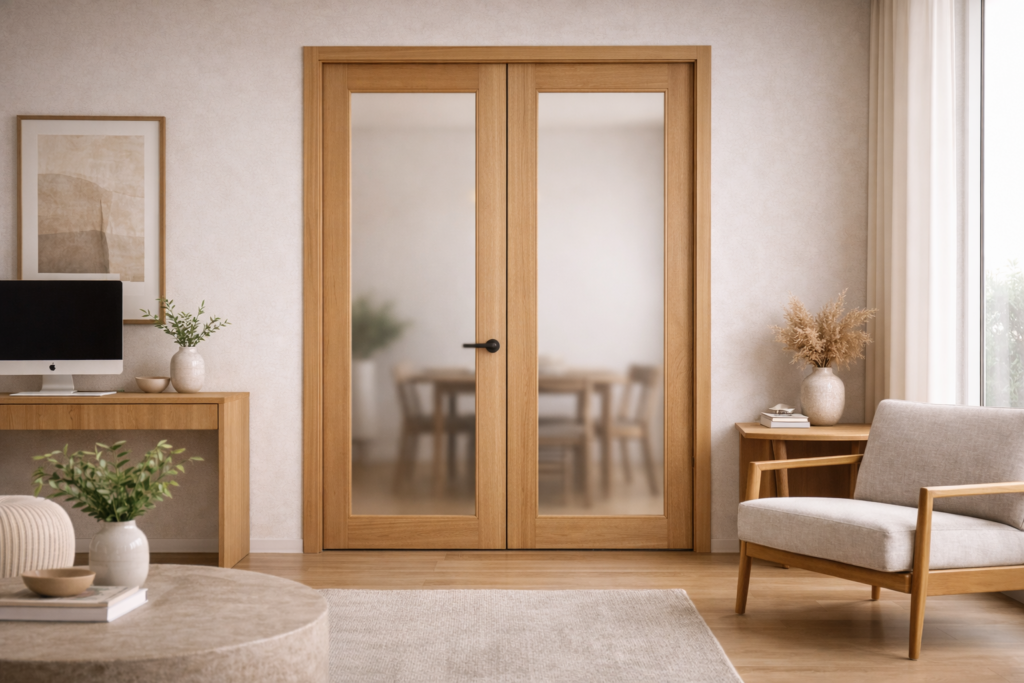
8. Glass and Wood Combinations
Combining wood with frosted or clear glass is another popular minimalist approach. Glass panels allow light to flow between spaces, while wooden frames maintain warmth and structure.
This hybrid wooden door design is commonly used in home offices, dining areas, and living rooms where openness is desired.
Materials, Finishes, and Long-Term Value
9. Engineered Wood vs Solid Wood
Both solid wood and engineered wood have their place in minimalist interiors. Solid wood offers durability and a rich natural feel, while engineered wood provides stability and resistance to moisture.
Choosing the right wooden door design depends on the location, climate, and usage requirements of the space.
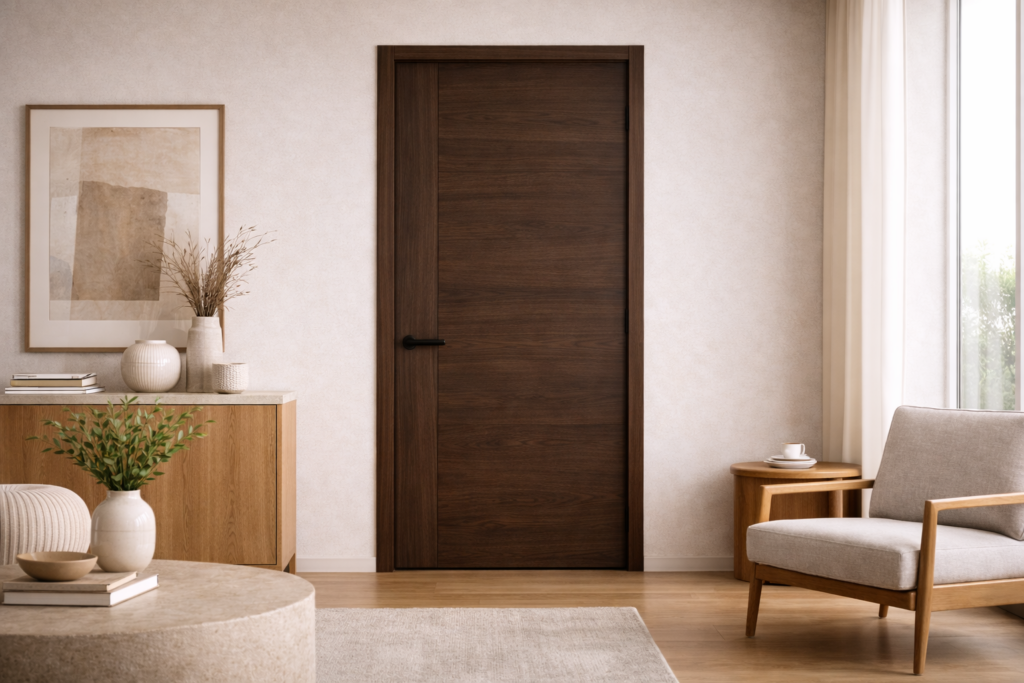
10. Neutral Color Palettes
Minimalist wooden doors often stay within a neutral color range—beige, light brown, grey-toned wood, or deep espresso shades. These colors complement modern interiors and allow other design elements to stand out.
A neutral wooden door design ensures longevity, as it adapts easily to changing interior trends.
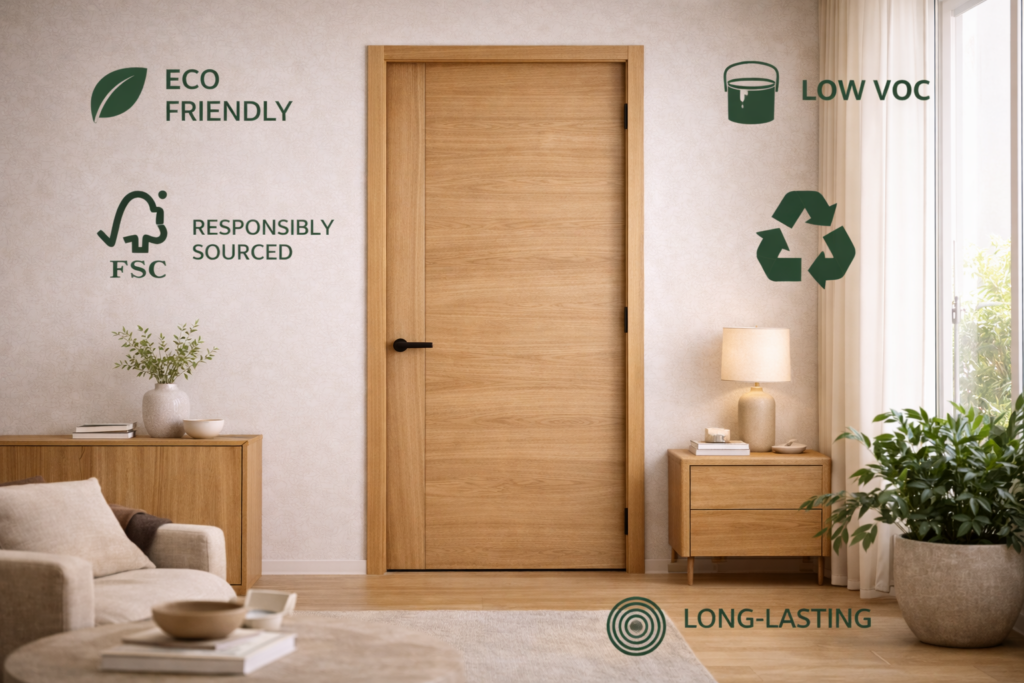
11. Sustainability and Eco-Friendly Choices
Modern homeowners are increasingly conscious of sustainability. Responsibly sourced wood, low-VOC finishes, and long-lasting construction methods are now integral to minimalist design.
An eco-conscious wooden door design not only looks good but also aligns with responsible living values.
12. Maintenance and Durability
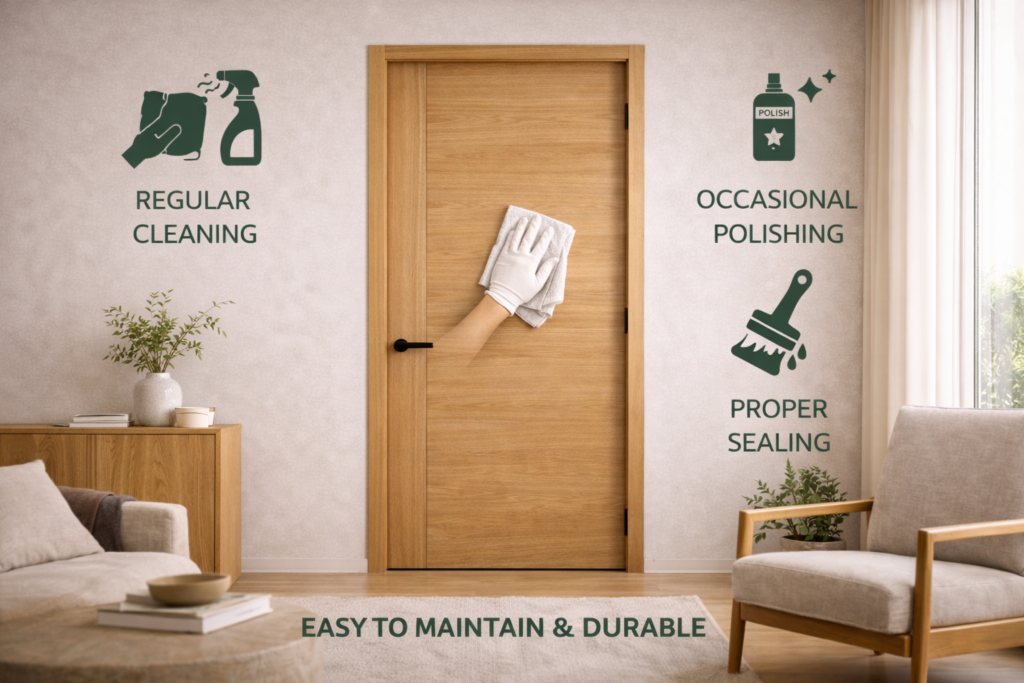
Minimalist doors are relatively easy to maintain due to their simple surfaces. Regular cleaning, occasional polishing, and proper sealing help preserve their appearance over time.
A durable wooden door design ensures that minimalism remains practical as well as beautiful.
Common Mistakes to Avoid in Minimalist Wooden Door Selection
Overusing dark wood in small spaces
Ignoring hardware finishes
Poor alignment and installation issues
Choosing trends over timeless design
Conclusion: Why Minimalist Wooden Doors Are a Timeless Choice
Minimalist wooden doors represent a perfect balance between aesthetics and functionality. Their simplicity enhances modern interiors, while their natural material adds warmth and character. By focusing on clean lines, subtle finishes, and thoughtful detailing, homeowners can achieve spaces that feel calm, elegant, and enduring.
Ultimately, investing in the right wooden door design is about creating harmony—where every element has a purpose, and beauty lies in restraint.