Where Faith Meets Function
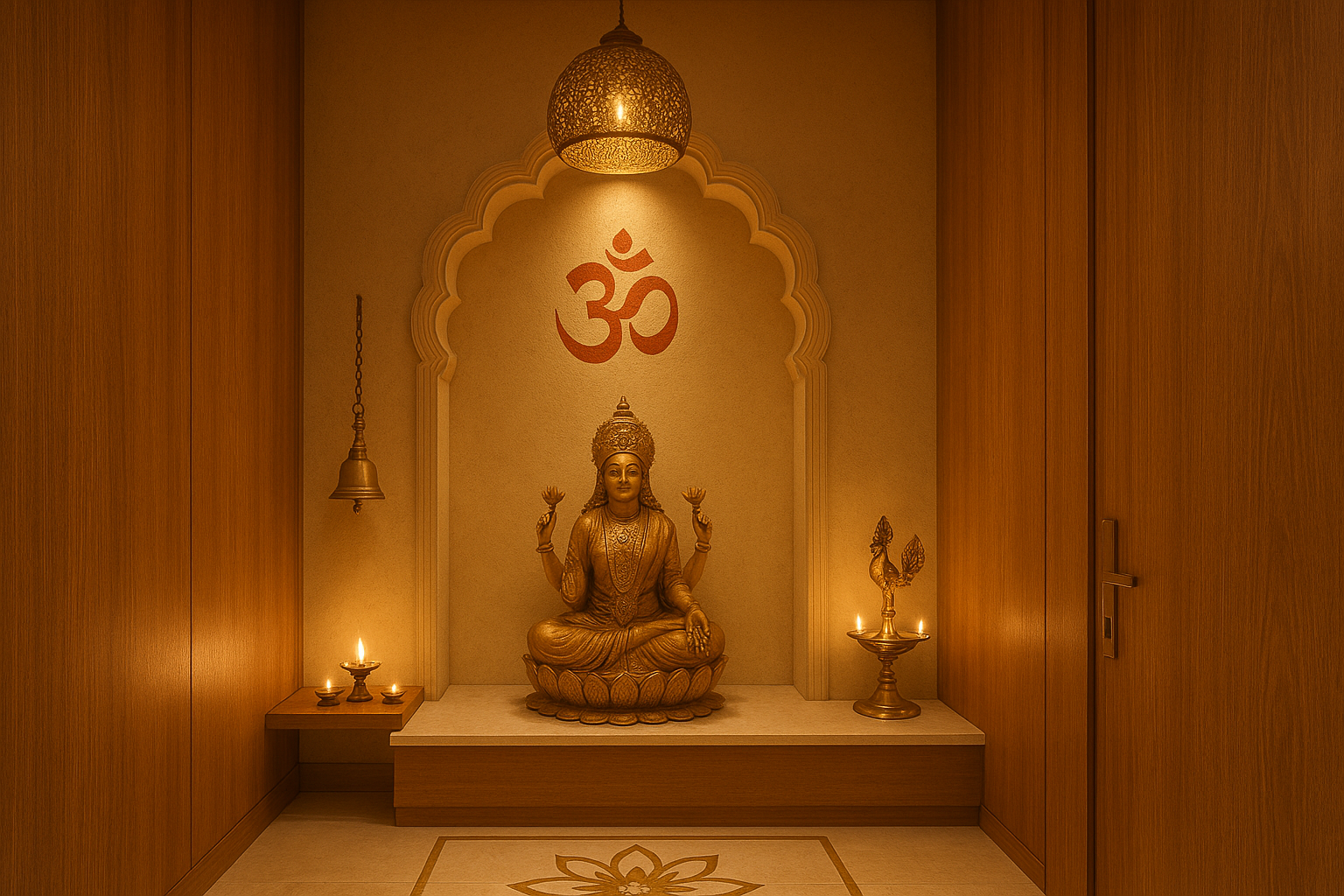
In today’s modern Indian homes, spirituality continues to hold a sacred corner — both emotionally and spatially. Despite compact living, the essence of a dedicated mandir remains irreplaceable. Small pooja room designs for home have evolved beautifully, blending traditional aesthetics with contemporary design principles. The result? A peaceful, sacred corner that honors heritage while complementing the modern lifestyle.
Architecturally, the challenge lies in creating a serene environment within limited space — one that maintains divine energy, follows Vastu, and aesthetically fits modern interiors. From marble temples to wooden wall-mounted mandirs, each design narrates a story of devotion and design finesse.
Why Modern Interiors Need a Traditional Pooja Space
Even in sleek, minimal apartments, homeowners crave a connection to tradition. The concept of small pooja room designs for home bridges this gap by offering compact yet visually rich spaces for worship. These designs integrate age-old materials like teak, brass, and marble with contemporary finishes such as glass and recessed lighting.
Modern interiors often focus on simplicity, clean lines, and neutral tones. A well-designed pooja room introduces warmth, color, and emotion — it anchors the home spiritually. When thoughtfully designed, it becomes a visual and emotional centerpiece, harmonizing technology, art, and divinity.
1. Wall-Mounted Mandir Units – Compact and Chic
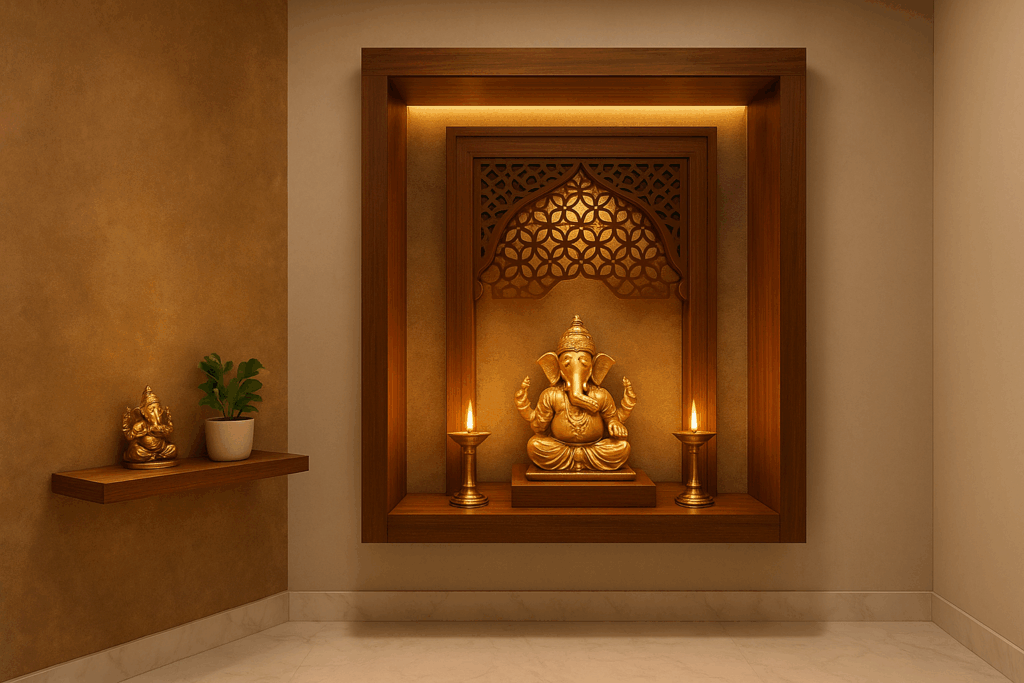
In urban homes, wall-mounted mandirs are among the most functional small pooja room designs for home. Mounted on accent walls or niches, these units save floor space while offering full decorative potential.
Architects prefer using carved wooden panels, backlit jaalis, or brass bells to add a spiritual aura. Pairing this setup with floating shelves and concealed lighting enhances both accessibility and ambiance. You can further elevate the look with marble flooring beneath the altar, maintaining traditional sanctity within a modern form.
2. Wooden Pooja Cabinets – A Blend of Warmth and Heritage
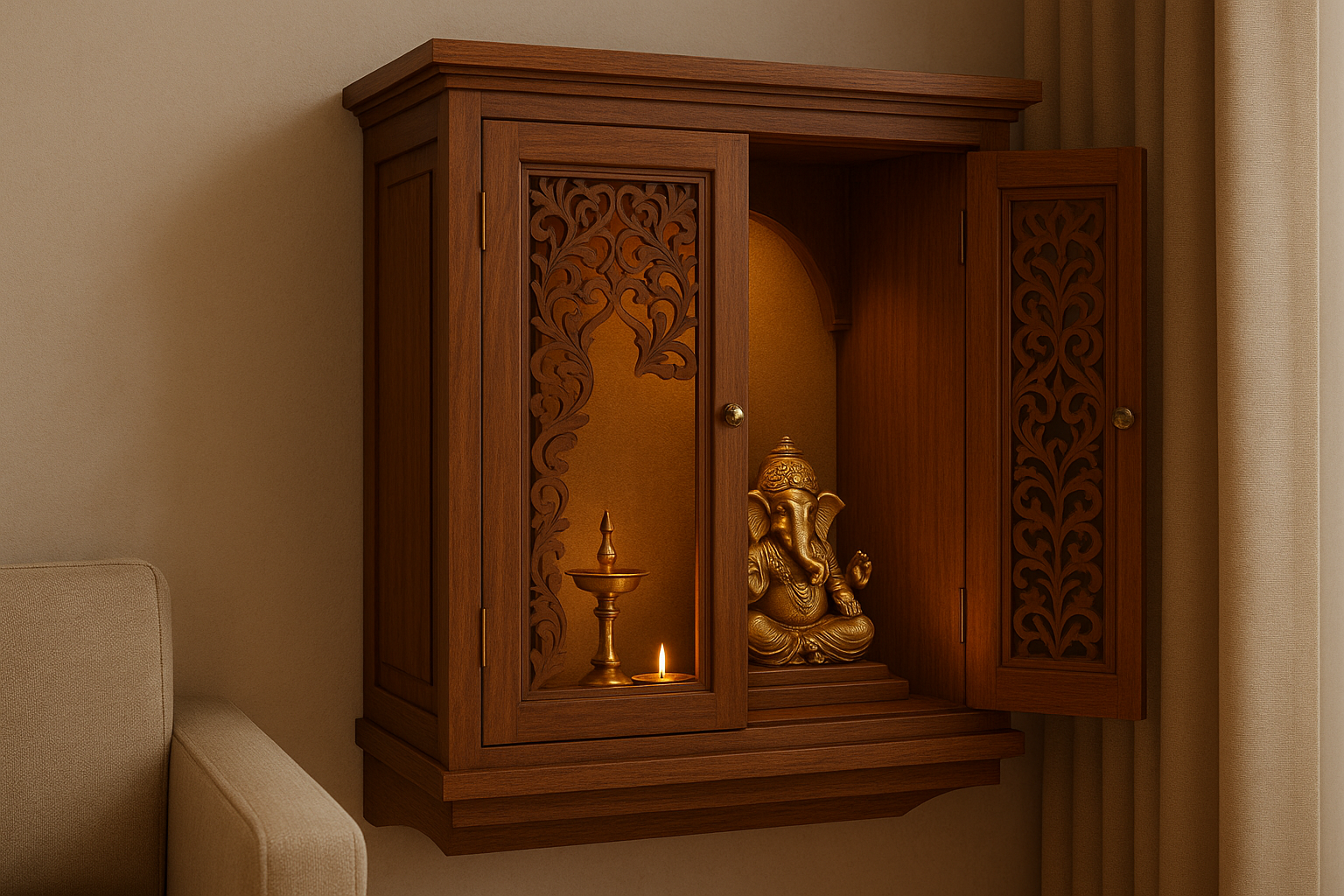
Wood continues to symbolize warmth and stability, making it a popular choice for small pooja room designs for home. Compact wooden cabinets crafted in teak or rosewood often feature engraved doors and brass handles — blending traditional craftsmanship with modern finishes.
These units can be designed as standalone pieces or built into living room walls. For apartments, sliding doors with laser-cut floral motifs keep the area private yet ventilated. Adding soft LED lights or diyas further enhances the visual serenity.
3. Marble Mandir Corners – Timeless and Elegant
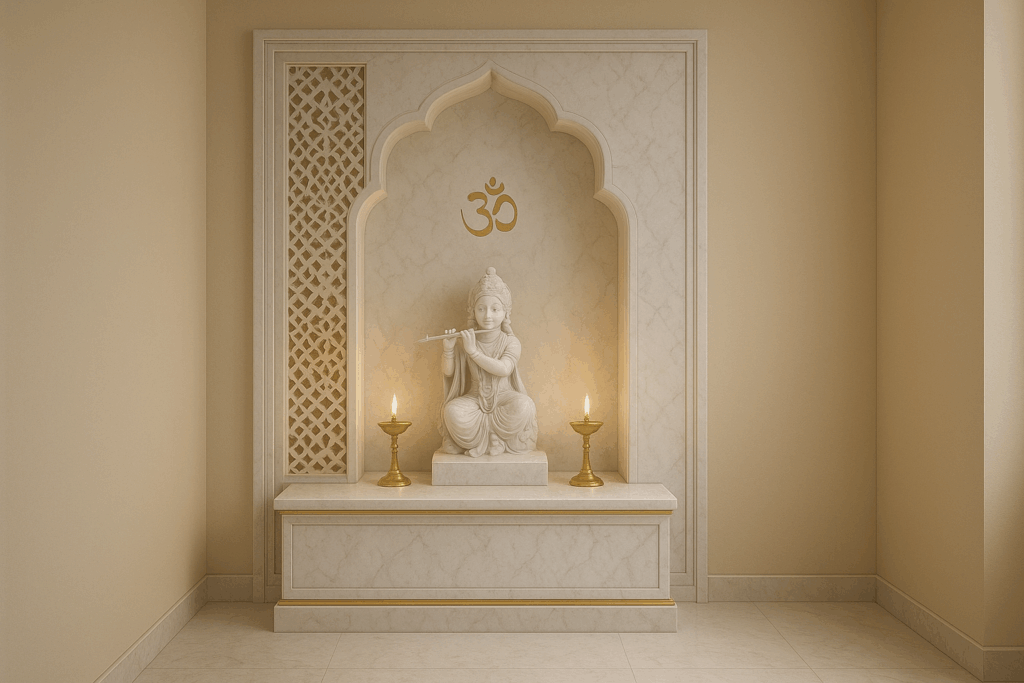
Marble never loses its charm when it comes to sacred spaces. Among small pooja room designs for home, a marble mandir adds instant purity and sophistication. White or Makrana marble reflects light beautifully, making even a small space appear larger and serene.
Add golden trims, etched symbols, or jaali panels for detail. Pair the setup with pastel or cream-toned walls for contrast. Marble backdrops with subtle veins introduce calmness while retaining luxury — perfect for both villas and city apartments.
4. Pooja Room with Glass Partitions
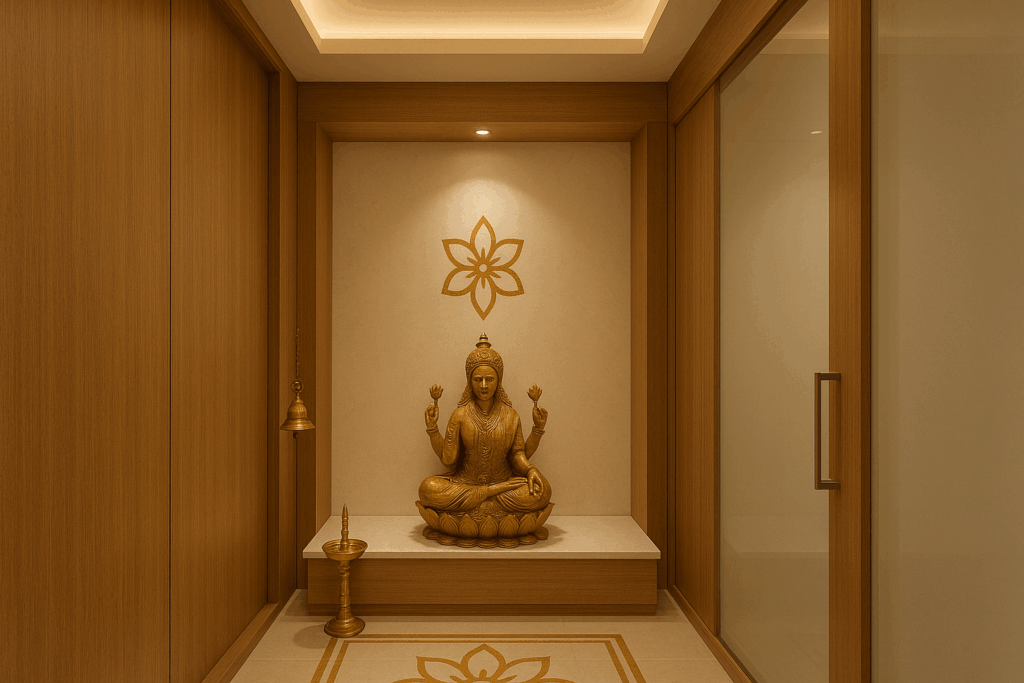
For open-plan layouts, glass partitions help define the sacred zone without isolating it completely. Frosted or etched glass can be used to separate the area while maintaining light flow.
This approach to small pooja room designs for home is especially popular in studio apartments or compact living rooms. Designers often add a suspended wooden ceiling above the altar, creating a visual cue that sets the mandir apart while keeping it cohesive with modern interiors.
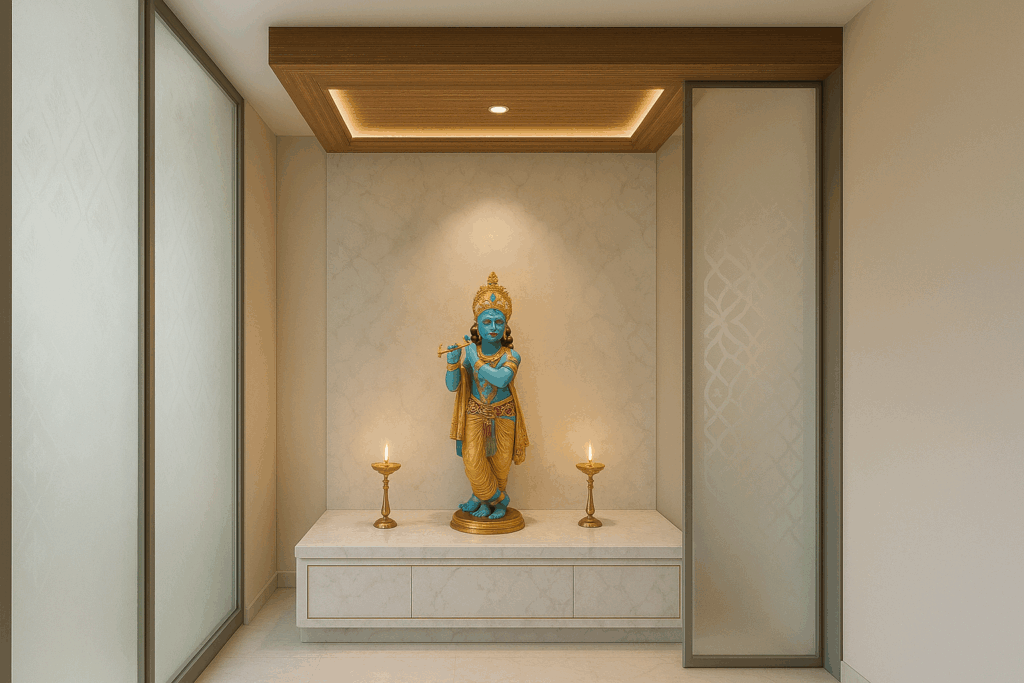
5. Niche Mandir Design – Utilize Every Corner
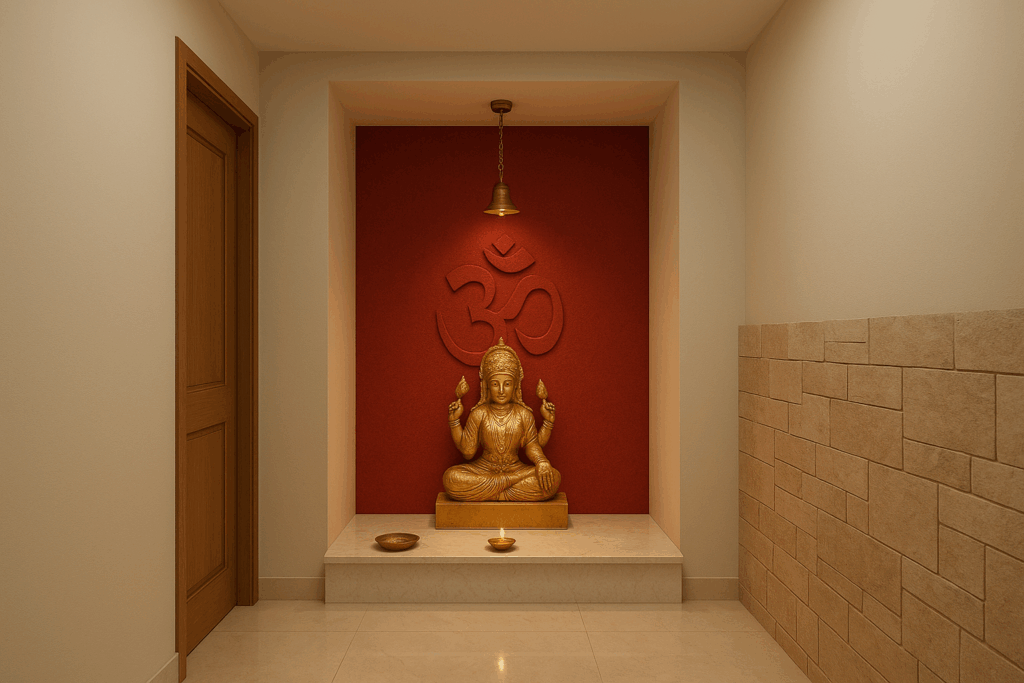
Every home has underutilized spaces — a corner beneath the staircase, a wall recess, or an entryway alcove. These are ideal for small pooja room designs for home that require minimal construction.
Custom-fit shelves, stone back panels, or metal jaalis can transform a neglected spot into a sacred retreat. To maintain harmony, use natural textures like sandstone, brass accents, and soft lighting. Add a miniature dome or carved frame to evoke traditional temple architecture in a compact format.
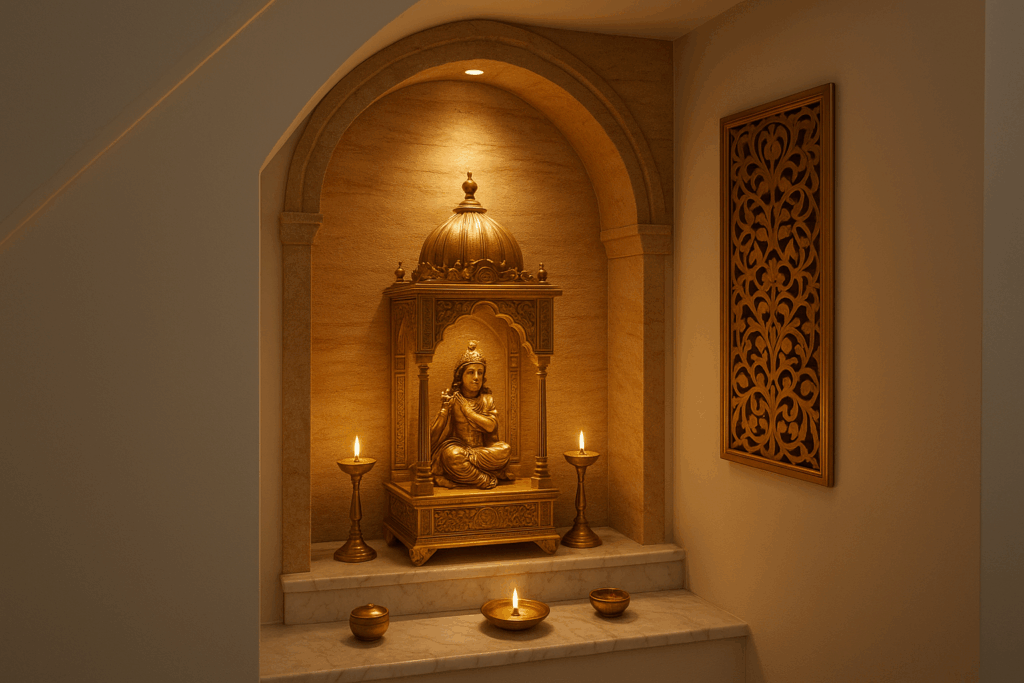
6. Floating Pooja Shelf with Backlighting
When space is extremely limited, floating shelves with LED backlighting can create an elegant mandir effect. This minimalistic design is one of the most space-efficient small pooja room designs for home for modern apartments.
Combine neutral wall colors with metallic brass idols and a small diya stand. Backlit marble or acrylic panels behind the idols create a sense of depth, turning even a small wall into a glowing spiritual feature.
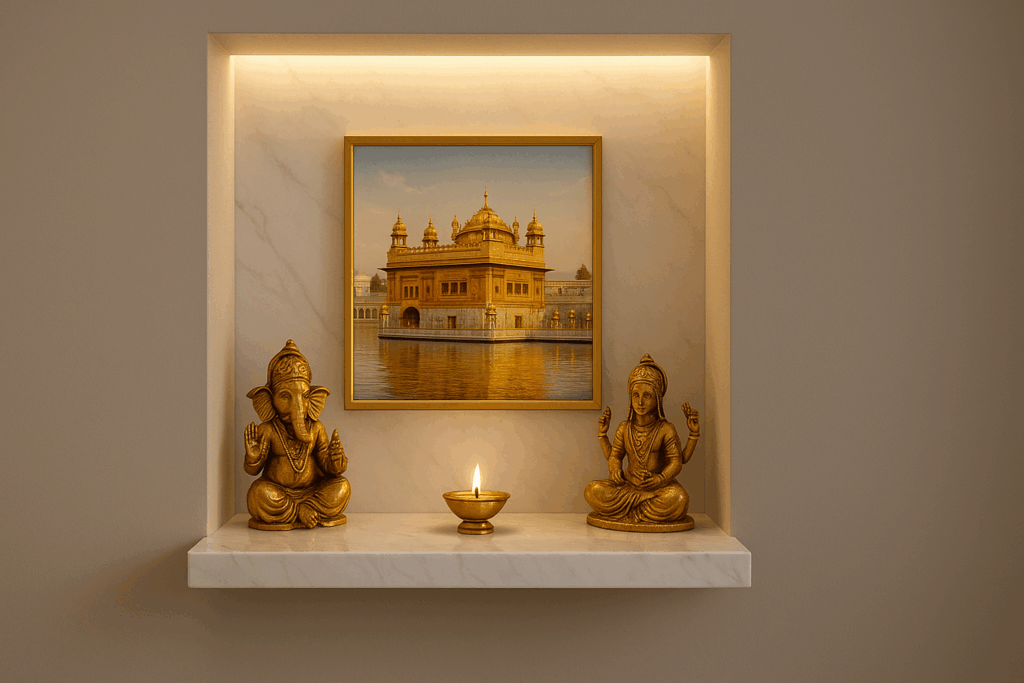
7. Traditional Ceiling and Lighting Concepts
Lighting defines atmosphere in pooja rooms. For small pooja room designs for home, a mix of direct and ambient lighting enhances focus and divinity. Pendant lamps, brass hanging diyas, or cove lights within the ceiling tray cast soft illumination over the idols.
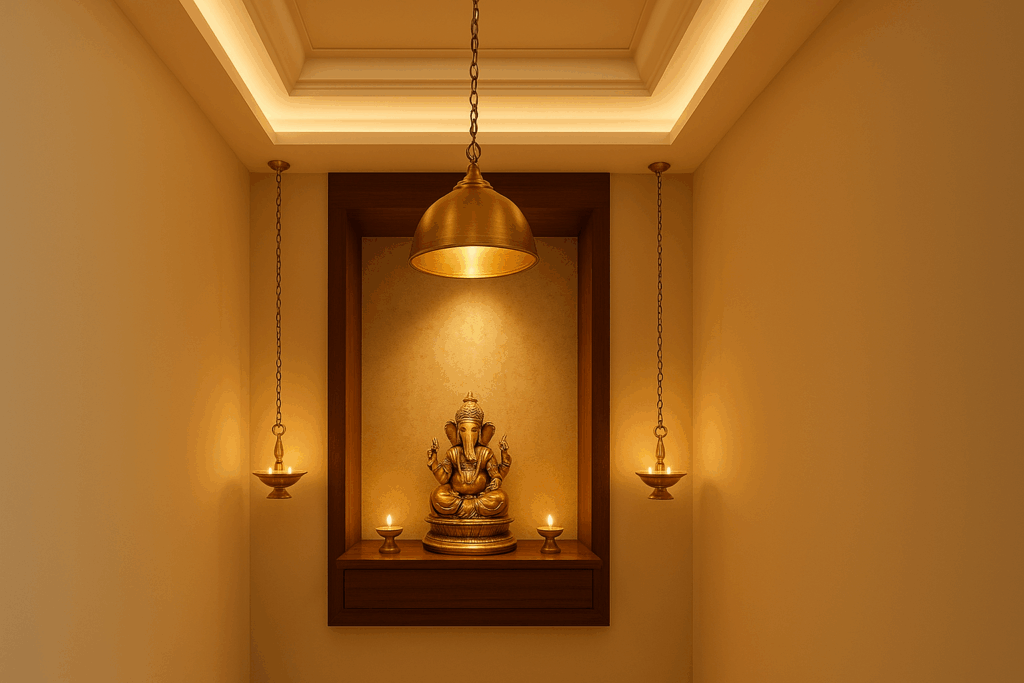
8. Color Palettes that Balance Calm and Culture
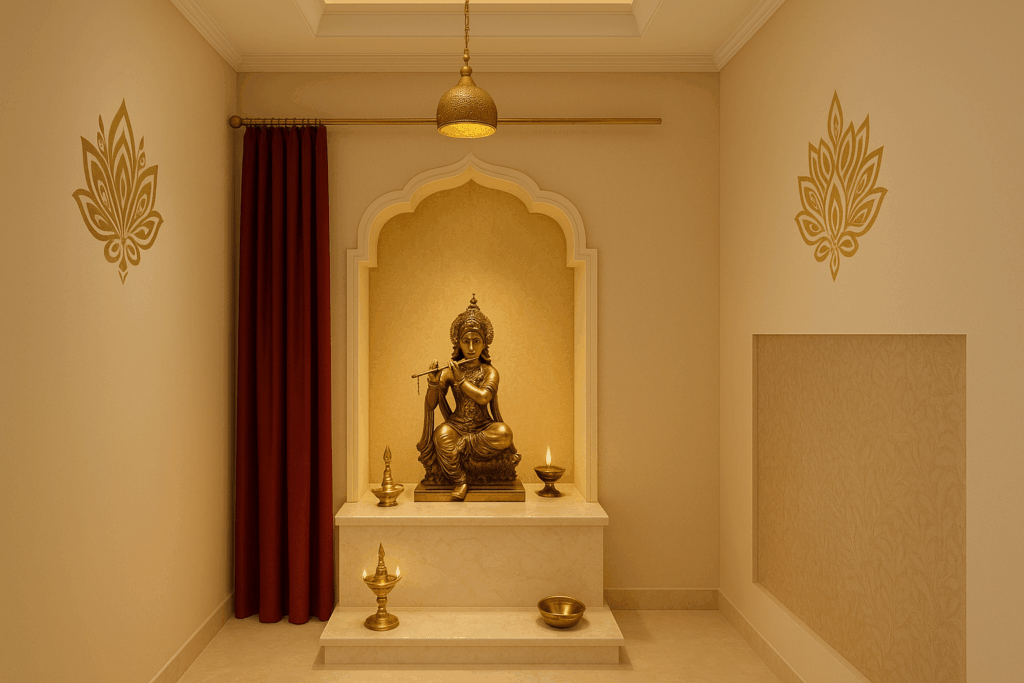
Color psychology plays a major role in worship spaces. Ideal small pooja room designs for home incorporate soft tones such as ivory, light yellow, beige, or sandalwood. These hues evoke calm and positivity.
You can add depth with accent elements — deep maroon curtains, gold motifs, or textured wallpapers behind the deity. For a modern approach, muted greys paired with brass details look elegant and contemporary, maintaining the divine essence.
9. Materials that Add Spiritual Texture
The charm of small pooja room designs for home lies in the thoughtful use of materials.
- Wood – Symbolizes warmth and grounding.
- Marble – Represents purity and timelessness.
- Brass and Copper – Offer sacred brilliance.
- Glass – Adds modern sophistication.
Using natural finishes like matte polish or rustic brass keeps the traditional feel intact, while high-gloss laminates and LED lighting modernize the overall look. The balance of texture is key to harmonizing spiritual and aesthetic goals.
10. Vastu and Placement Principles
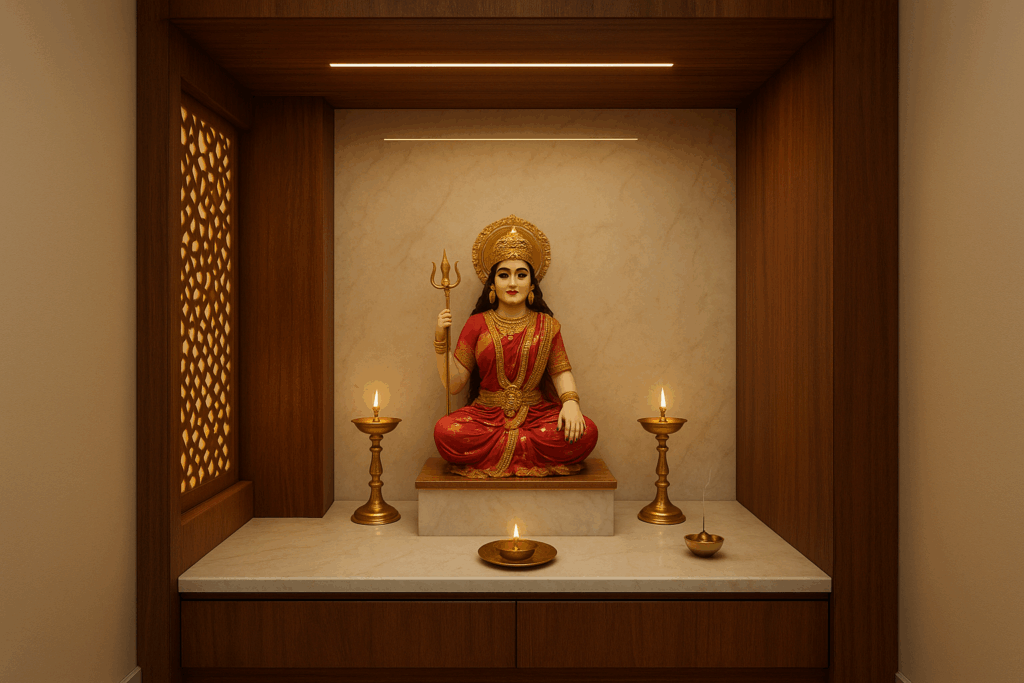
Following Vastu enhances the spiritual energy of small pooja room designs for home. The northeast corner (Ishan Kon) is considered ideal. The idols should face east or west, never south.
Keep the space clutter-free and elevate idols slightly above ground level. Avoid using dark colors or placing heavy storage above the altar. Including copper elements or natural stone ensures a positive energy flow.
11. Integrating the Pooja Room with Living Spaces
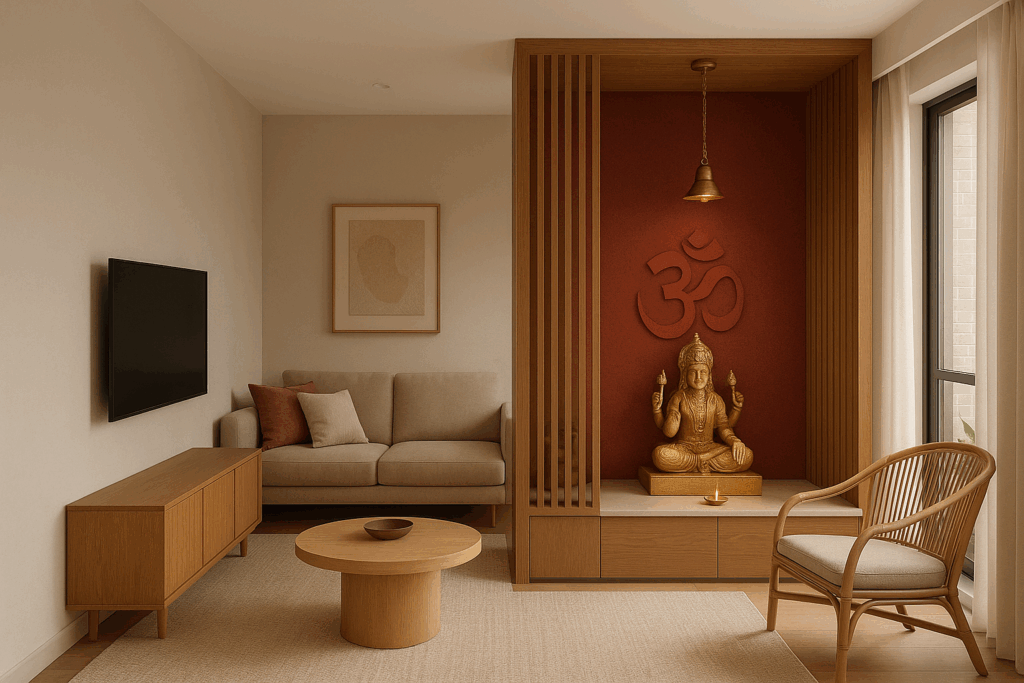
Open-concept homes benefit when the pooja area complements the overall theme. Modern designers create niches within living or dining zones that subtly integrate with decor.
For instance, a wooden panel with brass bells can act as both a partition and a decorative feature.
12. Decor Accents: Bells, Frames, and Art
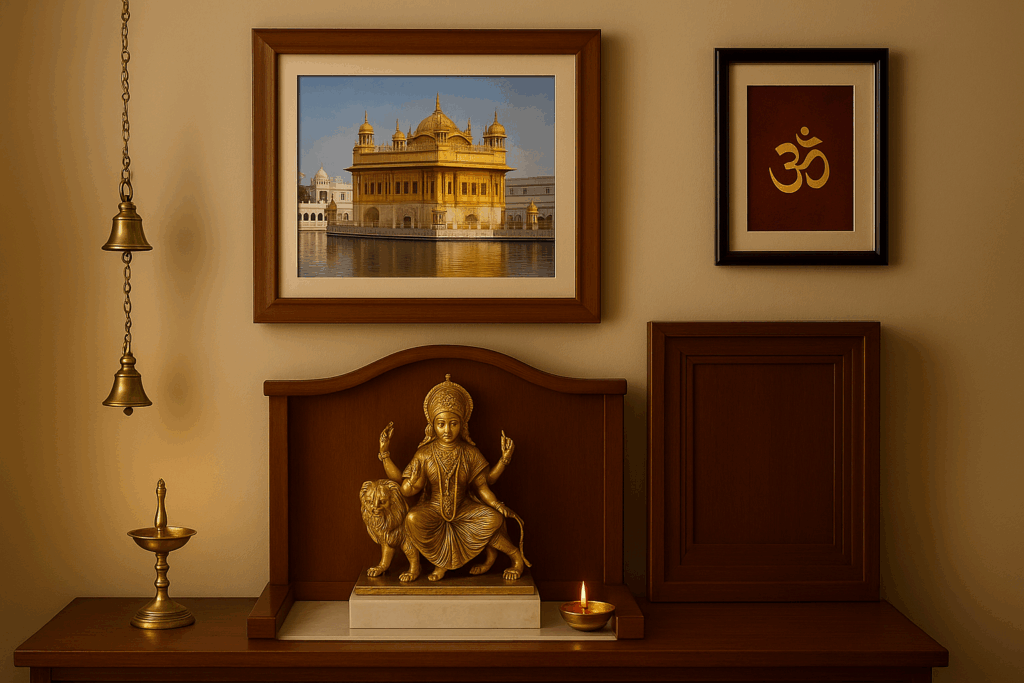
Traditional decor plays a huge role in making small pooja room designs for home feel complete. Temple bells, framed mantras, brass diyas, and stone idols reflect heritage.
Architects often use symmetrical placement to achieve a sense of order. Hanging bells or metallic chains at the entrance to the mandir area adds movement and rhythm — a gentle reminder of tradition amidst a modern setup.
13. Flooring and Platform Details
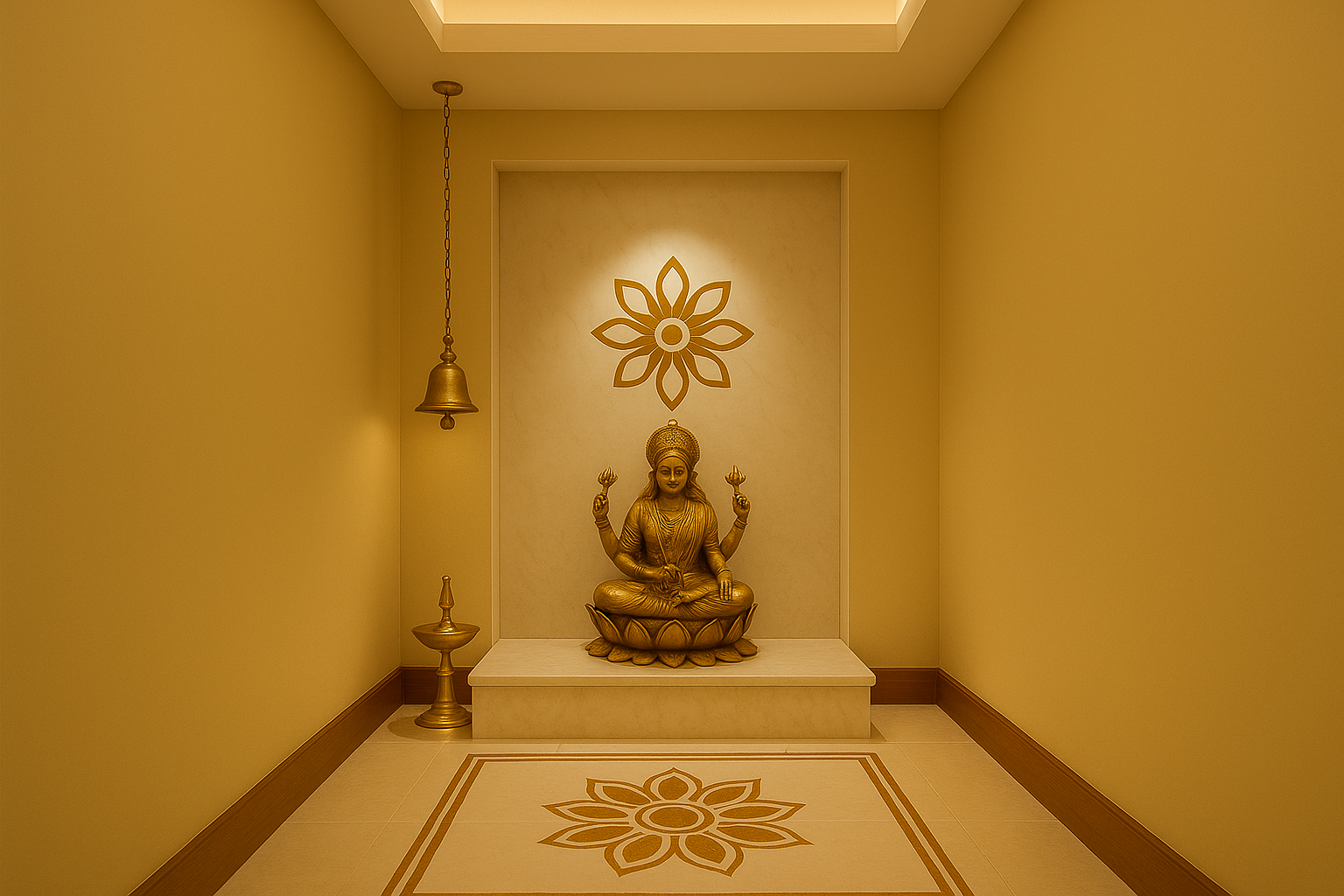
Even the flooring and platform levels matter. White marble, wooden laminates, or sandstone floors enhance serenity. Among trending small pooja room designs for home, raised marble platforms with step lighting are gaining popularity.
Adding a brass inlay border or rangoli pattern on the flooring creates a focal point. It’s both aesthetic and functional, guiding the visual flow toward the altar.
14. Storage and Functionality
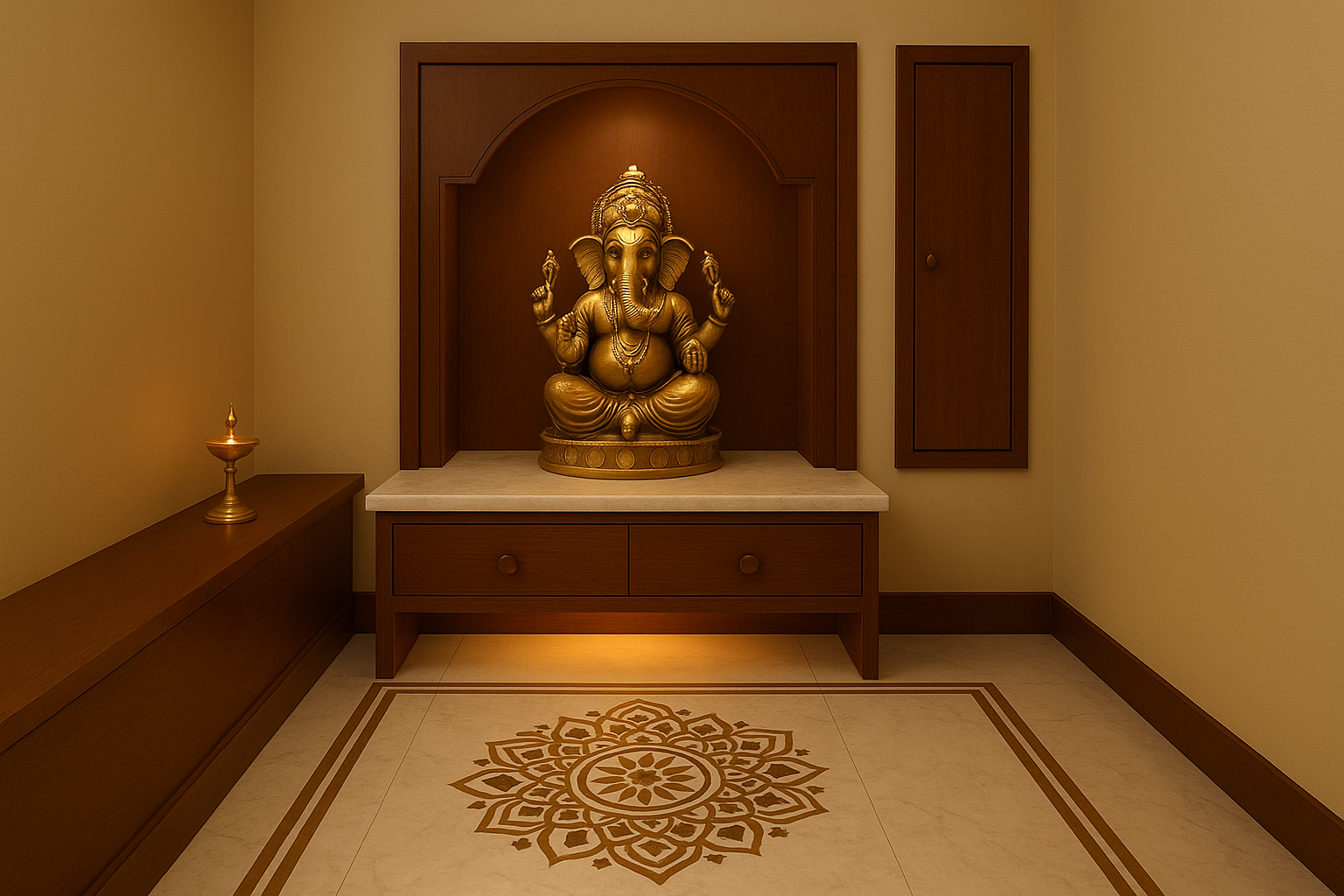
Aesthetics meet practicality when storage is integrated thoughtfully. Drawers below the altar or slim wall cabinets can store incense, oil, or religious texts. The trick is to conceal clutter while maintaining easy access.
Such efficient layouts make small pooja room designs for home truly functional for daily use — sacred yet manageable, elegant yet accessible.
15. How Architects Achieve the Perfect Balance
Architecturally, designing a pooja room is about proportion, light, and symbolism. An architect focuses on spatial rhythm — ensuring the sacred area feels distinct yet cohesive with the home.
Using modern materials like glass or MDF, while retaining symbols such as domes, bells, or kalash patterns, brings life to small pooja room designs for home that respect both tradition and innovation.
FAQs on Small Pooja Room Designs for Home
Q1: Which direction is best for pooja rooms according to Vastu?
Northeast is the most auspicious direction for small pooja room designs for home.
Q2: Can I design a pooja corner in my living room?
Absolutely. Many small pooja room designs for home include wall niches or wooden cabinets that blend seamlessly with modern decor.
Q3: What materials are best for compact pooja spaces?
Marble, teak wood, and brass are ideal for small pooja room designs for home because they’re durable and culturally symbolic.
Q4: How can I make a pooja area look spacious?
Use mirrors, white tones, and concealed lighting. This enhances the openness of small pooja room designs for home.
Conclusion: Harmony Between Tradition and Modernity
Ultimately, the success of small pooja room designs for home lies in achieving emotional warmth within modern constraints. When materials, light, and symmetry align, even the smallest mandir radiates serenity.
Whether your home follows a minimal aesthetic or a rich traditional one, this sacred corner brings balance, grounding, and gratitude into everyday life.
As an architect, I believe the future of Indian interior design will continue celebrating this balance — where faith meets finesse, and where every square foot still leaves room for the divine.